Singapore is rethinking how ordinary neighbourhood spaces can support its ageing population, bringing senior activities closer to places residents already use, including parks, community facilities and even unused spaces near MRT stations.
The approach forms part of Age Well SG, a national initiative involving the Ministry of Health (MOH), Ministry of National Development (MND) and Ministry of Transport (MOT), which aims to help older residents remain active, socially connected and independent within their communities.
Instead of expecting every senior to travel to a dedicated activity centre, the government is encouraging community organisations to bring programmes into familiar surroundings. The strategy recognises that meaningful social connections can develop in everyday places where people naturally gather.
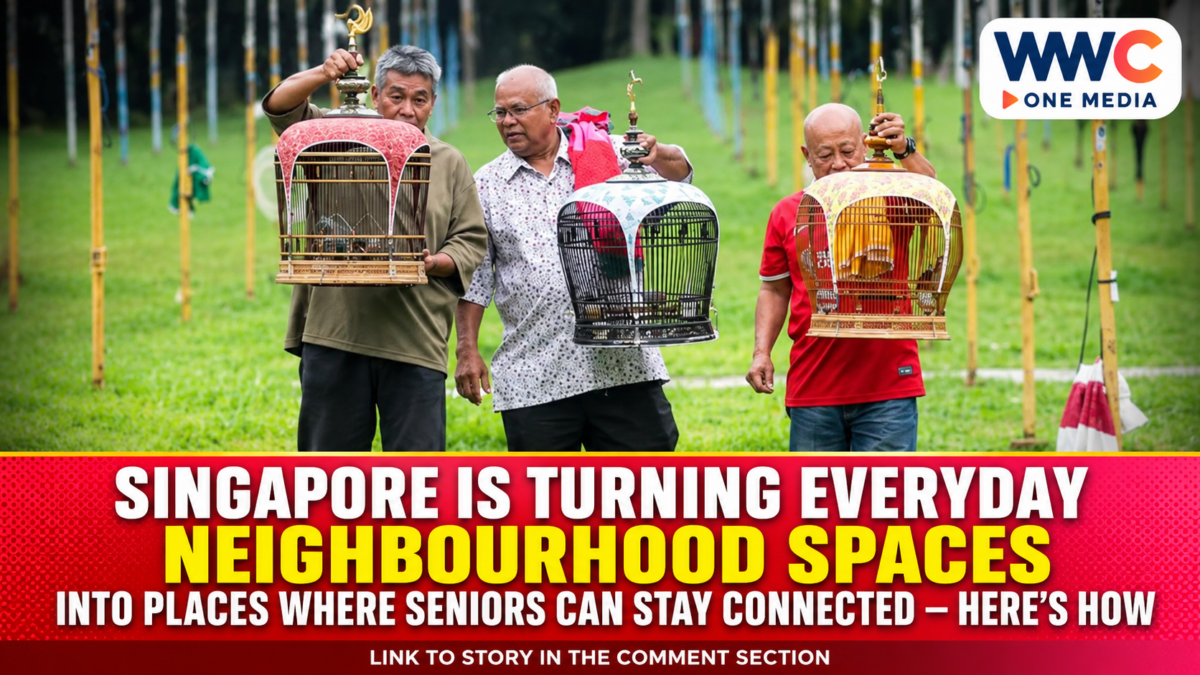
From communal activities in neighbourhood parks to Singapore’s traditional bird corners, the wider idea is that a community’s value is not measured only by its buildings and transport links, but also by the opportunities it creates for people to meet, participate and feel included.
Singapore’s Ageing Strategy Is Moving Beyond Dedicated Senior Centres
Singapore’s ageing population is creating new demands on housing, transport, healthcare and community infrastructure.
The People’s Association (PA) identifies 2026 as the year Singapore becomes a super-aged society, with one in four residents aged 65 and above.
This demographic shift is changing how neighbourhoods need to function.
A senior-friendly community requires more than accessible buildings. Older residents also need opportunities to exercise, develop friendships, participate in activities and maintain meaningful connections without travelling long distances.
The government’s Age Well SG programme addresses these needs through Active Ageing Centres (AACs), community healthcare services and improvements to neighbourhood infrastructure.
In a parliamentary response published on March 3, 2026, MOH explained that Silver Generation Ambassadors help identify seniors at risk of social isolation and connect them with buddying and befriending services.
Community befrienders visit these seniors at least once a month, while Active Ageing Centres organise communal dining, activities and volunteering opportunities.
This model places relationships at the centre of ageing support rather than treating older residents simply as recipients of assistance. Ministry of Health+1
Why Singapore Is Bringing Senior Activities Into Ordinary Public Spaces
A significant development came on April 2, 2025, when MOH and MND announced plans to make Active Ageing Centre activities more accessible through nearby communal spaces and semi-permanent facilities.
The initiative was designed to reach seniors living in residential areas where existing centres were less convenient to access.
The government expected the programme to bring services closer to more than 20,000 seniors over the following one to two years.
One example was Our Residents’ Hub, a pop-up communal facility launched at Jalan Mas Kuning Playground in West Coast.
Through partnerships involving the Agency for Integrated Care, National Parks Board and People’s Association, the facility provides opportunities for community and active ageing activities.
Programmes include communal dining and parkour, while exercise stations within the park give residents additional opportunities to remain physically active.
The announcement also identified an innovative use of transport infrastructure: Montfort Care was set to establish an Active Ageing Centre at the Marine Parade MRT incidental space in Joo Chiat.
These initiatives demonstrate how locations originally designed for other purposes can become useful community touchpoints.
The principle is straightforward: bringing activities closer to where people already live can make participation more convenient and help reduce barriers to social engagement. Ministry of Health
The Cultural Importance of Singapore’s Bird Corners
Singapore’s neighbourhood gathering places are not entirely new.
One example is the traditional bird corner, where bird enthusiasts gather to display their songbirds and enjoy the company of other hobbyists.
The historic Tiong Bahru Bird Corner is an example of how an ordinary neighbourhood location can develop into a recognisable social landmark.
The National Heritage Board’s Tiong Bahru Heritage Trail documents how residents and visitors once gathered around the bird corner, enjoying the sounds of pet birds while spending time with others in the neighbourhood.
The historical site demonstrates how shared interests can bring different generations and members of a community together.
Another example can be found in Kebun Baru, in Ang Mo Kio. The local community’s official heritage page features the neighbourhood’s bird-cage poles and describes its broader ambition to create a caring and inclusive environment for residents.
Its community facilities include lounge areas, sports amenities, a preschool and a senior care centre.
At Bedok Reservoir Park, the National Parks Board also identifies a bird-singing area where visitors can observe and listen to songbirds, alongside walking facilities and other recreational features.
These examples should not be confused with formally designated senior-care programmes. Rather, they illustrate how shared neighbourhood interests and familiar public spaces can contribute to a sense of community. nhb.gov.sg+2
MRT Stations Are Becoming Part of the Community Experience
Singapore’s transport infrastructure is also being considered as more than a system for moving passengers between destinations.
The Land Transport Authority (LTA) has explored placemaking initiatives designed to make transport facilities more welcoming and meaningful to surrounding communities.
In a September 29, 2023, publication, the authority explained how its Community Partnership Network works with residents and community organisations to improve public spaces.
The programme considers elements such as landscaping, artwork, community events and improvements to pedestrian environments.
One example was Recharge, a prototype developed with the Singapore University of Technology and Design and supported by government partners.
Introduced at a bus stop in Boon Lay in November 2022, the installation used pedal-powered equipment to allow commuters to charge their mobile phones while waiting for their buses.
Although the project was not specifically designed for older residents, it demonstrated how transport facilities could incorporate additional community-oriented functions.
LTA has also explored opportunities to repurpose infrastructure no longer needed for railway operations.
One proposal involves transforming a one-kilometre section of the railway viaduct near Tanah Merah MRT station into a green and active mobility corridor after its decommissioning.
The authority also identified the former Changi Depot as another potential location for redevelopment into a public destination.
These plans illustrate a wider approach to urban development in which existing infrastructure can acquire new uses that benefit surrounding communities. Placemaking: Hardware to Heartware+1
Why Social Connection Matters as Singapore’s Population Ages
Physical infrastructure is only one part of the challenge.
Older residents may have accessible homes, nearby transport and recreational facilities but still experience social isolation if they lack regular opportunities to interact with other people.
Singapore’s People’s Association has identified three broad priorities in its active ageing approach: care, connection and contribution.
The care component encourages neighbours to look out for older residents who may need assistance.
Connection focuses on helping people develop relationships through community networks and shared interests.
Contribution creates opportunities for seniors to participate in community activities rather than being viewed exclusively as recipients of support.
This approach is particularly important because ageing does not mean that people stop wanting to learn, work, volunteer or participate in neighbourhood life.
It also challenges the assumption that every older person requires the same kind of support.
Some may prefer exercise groups, others may enjoy gardening, bird-related activities, community meals or volunteering.
The objective is to provide opportunities that accommodate different interests and levels of ability.
WWC ONE MEDIA previously explored the challenges surrounding Singapore’s seniors living alone and the importance of neighbourhood support.
The issue is closely connected to the development of accessible community spaces because regular social interaction can make it easier for residents to maintain relationships and remain involved in their neighbourhoods.
Four Age Well Neighbourhoods Will Benefit More Than 110,000 Seniors
Singapore is also expanding its Age Well Neighbourhoods programme.
In an announcement dated May 7, 2026, MOH identified Bedok, Bukit Panjang and Tiong Bahru-Redhill as three additional locations.
These followed the inaugural Age Well Neighbourhood in Toa Payoh.
The government expects more than 110,000 seniors to benefit from the rollout of the four neighbourhoods.
The initiative combines several services and improvements:
- Active Ageing Centres offering activities and community engagement.
- Enhanced Home Personal Care for eligible seniors requiring assistance.
- Community Health Posts providing more accessible health services.
- Senior-friendly infrastructure supporting safer and more independent living.
MOH also reported that Singapore had expanded its network from 154 Active Ageing Centres in 2023 to more than 230 centres by May 2026.
More than 80% of seniors were living near an Active Ageing Centre touchpoint, based on the ministry’s announcement.
The expansion is significant because it connects social activities with practical support.
A neighbourhood can become more senior-friendly when residents can access community programmes, basic health services and assistance without having to travel far from home. Ministry of Health
The importance of familiar meeting places is also reflected in the challenges facing established neighbourhood businesses.
WWC previously examined the planned closure of a Marina Square café known for serving elderly customers.
Although commercial establishments and government-supported community facilities serve different purposes, both can become familiar places where people build everyday social connections.
What Happens Next
The next challenge for Singapore is ensuring that its growing network of senior-friendly spaces translates into meaningful participation.
Building facilities and establishing activity centres are important steps, but their effectiveness also depends on whether residents know about them, can access them and find programmes that match their interests.
The planned expansion of Age Well Neighbourhoods and the use of alternative community spaces provide a framework for reaching residents who might otherwise have difficulty participating.
Transport infrastructure will also remain important, particularly for seniors who need safer walking routes and convenient connections between homes, public facilities and MRT stations.
Singapore’s approach offers a useful lesson for other rapidly ageing Asian cities, including those in the Philippines.
Community development does not always require constructing an entirely new facility. Existing parks, neighbourhood gathering places, transport spaces and community buildings can also contribute to a more inclusive environment when planned and managed effectively.
Ultimately, the success of an ageing strategy should not be measured only by the number of senior centres constructed.
It should also consider whether older residents have places where they can maintain friendships, pursue their interests and continue contributing to the communities they call home.
Frequently Asked Questions
What is Singapore’s Age Well SG programme?
Age Well SG is a national initiative involving MOH, MND and MOT. It aims to help seniors remain active, socially connected and independent within their communities.
What are Active Ageing Centres?
Active Ageing Centres are community-based facilities that organise activities, encourage social interaction, provide outreach and connect older residents with relevant support services.
What are Singapore’s bird corners?
Bird corners are neighbourhood gathering places associated with bird enthusiasts who meet to display and appreciate songbirds. Historic examples include Tiong Bahru, while Kebun Baru maintains a recognisable bird-cage pole area.
Which Singapore neighbourhoods are included in the latest Age Well Neighbourhood expansion?
The three additional locations announced in May 2026 are Bedok, Bukit Panjang and Tiong Bahru-Redhill. They follow the inaugural Age Well Neighbourhood in Toa Payoh.
Why are MRT stations and parks important for senior-friendly communities?
They are familiar public spaces that can support accessibility, recreation and social interaction. Bringing activities closer to these everyday locations can make community participation more convenient for older residents.