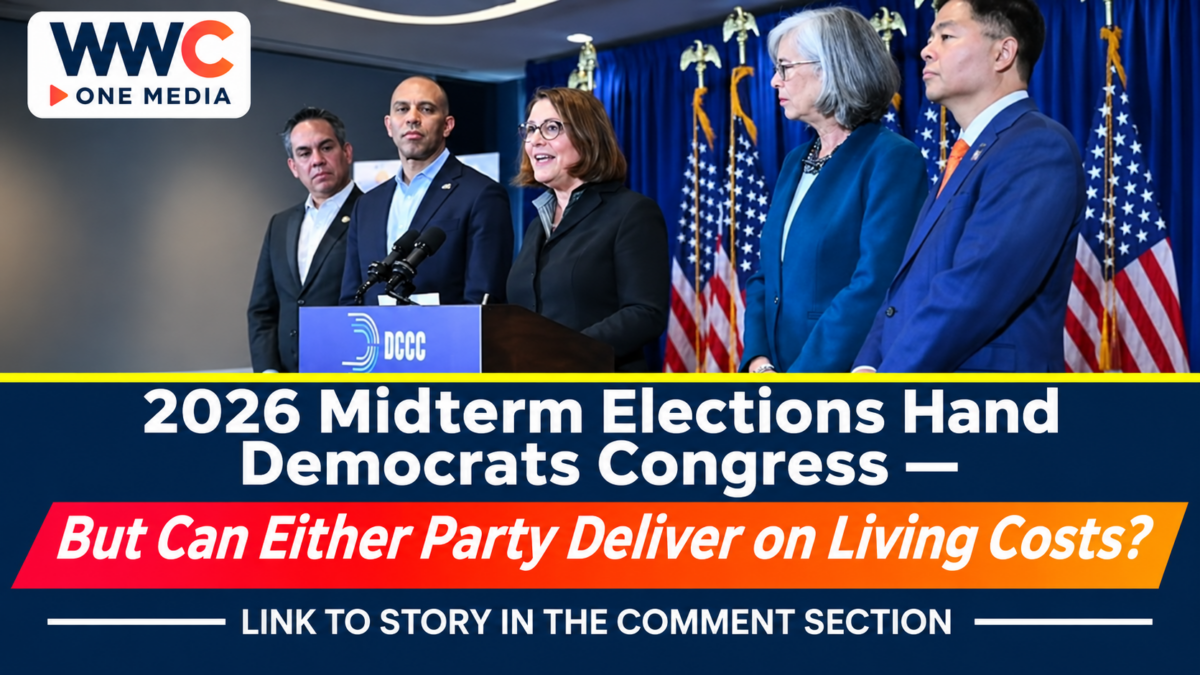
WASHINGTON, Nov. 15, 2026 — The 2026 midterm elections have put Democrats on course to control both chambers of the next US Congress, while President Donald Trump remains in the White House. In public statements issued after the Nov. 3 vote, Democratic and Republican congressional leaders have independently identified household costs as a problem their parties must address.
That shared diagnosis does not amount to agreement on solutions. The election has changed the balance of congressional power, but constitutional limits, internal party debates and unresolved final vote certifications complicate claims that voters endorsed any one policy package.
2026 Midterm Elections Change Congress, Not the Presidency
The congressional election was held on Nov. 3, the date established for federal House elections under US law. House Democratic leaders publicly celebrated winning the chamber, while Senate Democratic Leader Chuck Schumer described the party’s position on Nov. 12 as “55 seats and counting.” That was his statement about the developing results, not a certified final tally of all races.
The 120th Congress is scheduled to begin on Jan. 3, 2027. Until that transition, the present Congress continues its work under the existing leadership and rules. Election victories therefore do not give newly elected lawmakers immediate control over committee hearings, spending bills or nominations.
WWC previously reported on the Democrats’ projected capture of both chambers. The harder question now is how the incoming majority turns that electoral result into decisions that withstand the constitutional checks of divided government.
Both Parties Hear a Cost-of-Living Warning
On Nov. 9, House Democratic Leader Hakeem Jeffries publicly set out three priorities for the incoming majority: affordability, accountability and American values. His separate Nov. 4 letter seeking the speakership identified working groups on housing, healthcare, groceries and goods, gas and utilities, and caregiving.
Republican Senate leader John Thune offered a different interpretation of the defeat, but also acknowledged pressure on family budgets. In Nov. 9 Senate remarks, he pointed to grocery and fuel costs and called for more work on affordability, including permitting reform to expand energy infrastructure.
These are the leaders’ stated priorities, not a finding that every voter cast a ballot for the same reason. Election returns measure candidate choices. They do not, by themselves, measure the relative weight of inflation, immigration, healthcare, foreign policy or candidate quality in each person’s decision.
Analysis: The cross-party attention to living costs creates an opening for negotiations, even when the parties disagree sharply about tariffs, taxes, energy regulation or public spending.
A Majority Cannot Simply Override the President
Article I, Section 7 of the US Constitution requires legislation passed by both chambers to be presented to the president. When a president vetoes a bill, Congress generally needs two-thirds support in both chambers to override the veto.
That constraint matters because Democrats’ projected congressional majorities do not by themselves remove Trump’s veto power. Measures on healthcare, taxes or trade could still require compromise, narrower legislation or a difficult override attempt.
The coming Congress will also have oversight responsibilities, including hearings and reviews of executive-branch decisions. But investigating an agency is not the same as proving misconduct; a subpoena is not a conviction, and a proposal is not an enacted law.
WWC’s earlier examination of Democrats’ proposed congressional oversight priorities explores that institutional dimension. The distinction for readers is between powers Congress legally holds and outcomes it can actually secure.
Leadership Choices Could Shape the Policy Agenda
In the House, Jeffries’ Nov. 4 letter formally sought the speakership and promised members a meaningful role in an affordability-focused agenda. The next House must still organise and elect its speaker under its rules.
In the Senate, Schumer’s Nov. 12 statement said he had sufficient caucus support to continue as Democratic leader. Independent Senator Angus King publicly endorsed him that day, while leadership discussions remained politically consequential. These statements establish positions; they do not substitute for a completed organisational vote.
Republicans are making leadership decisions of their own. Thune announced on Nov. 10 that his colleagues had reelected him to lead the Senate Republican Conference in the 120th Congress. His remarks emphasised opposition to Democratic priorities alongside work with the president.
Analysis: Party leaders will influence what reaches the floor and which committees receive attention. But members from different states and constituencies still have incentives to disagree, even within a winning party.
Regional Wins Are Not Proof of a Permanent Realignment
Democrats’ gains have prompted questions about whether familiar political strongholds are becoming more competitive. Yet a midterm result captures one election at one moment, with its own candidates, turnout and local circumstances.
A meaningful claim about lasting change would require comparing official state results over several elections, examining turnout and registration patterns, and distinguishing between national and local contests. Without that work, declaring a permanent partisan shift would go beyond the available evidence.
WWC’s report on Democratic breakthroughs in southern states examines why some races have attracted particular attention. Its regional examples do not establish how those states will vote in 2028.
The same caution applies to interpreting a victory as a public endorsement of every position taken by a winning candidate. Voters choose between candidates and parties; they do not separately approve each proposed law.
What Happens Next
State election authorities will continue their certification processes where necessary. The current Congress resumes business before the new congressional term begins on Jan. 3, 2027, when the incoming chambers must organise, choose their leadership and establish committee assignments.
From there, the most meaningful tests will be measurable: whether Congress passes legislation addressing household expenses, whether the president signs it, and whether promised oversight follows legally established procedures. Campaign messages will matter less than documented actions.
For Philippine readers, US congressional choices may influence trade, foreign assistance and security debates. None of those effects is automatic, and their eventual impact will depend on specific legislation and executive decisions.
Frequently Asked Questions
Who won the 2026 US midterm elections?
Democratic congressional leaders reported winning control of the House and the incoming Senate majority after the Nov. 3 election. Final seat totals should be distinguished from individual states’ certification of results.
When does the new US Congress take office?
The 120th Congress begins on Jan. 3, 2027, under the constitutional timetable. The current Congress remains in office until then.
Can Democrats pass laws without Donald Trump’s approval?
They can pass legislation through Congress, but most bills require the president’s signature or a two-thirds override in both chambers after a veto.
What issues are congressional leaders prioritising?
Jeffries has emphasised affordability and oversight. Republican leader Thune has also identified household costs, while promoting policies including energy permitting reform.
Do the midterms predict the 2028 presidential election?
No. They establish the 2026 congressional outcome, but future elections will involve different candidates, turnout and conditions.