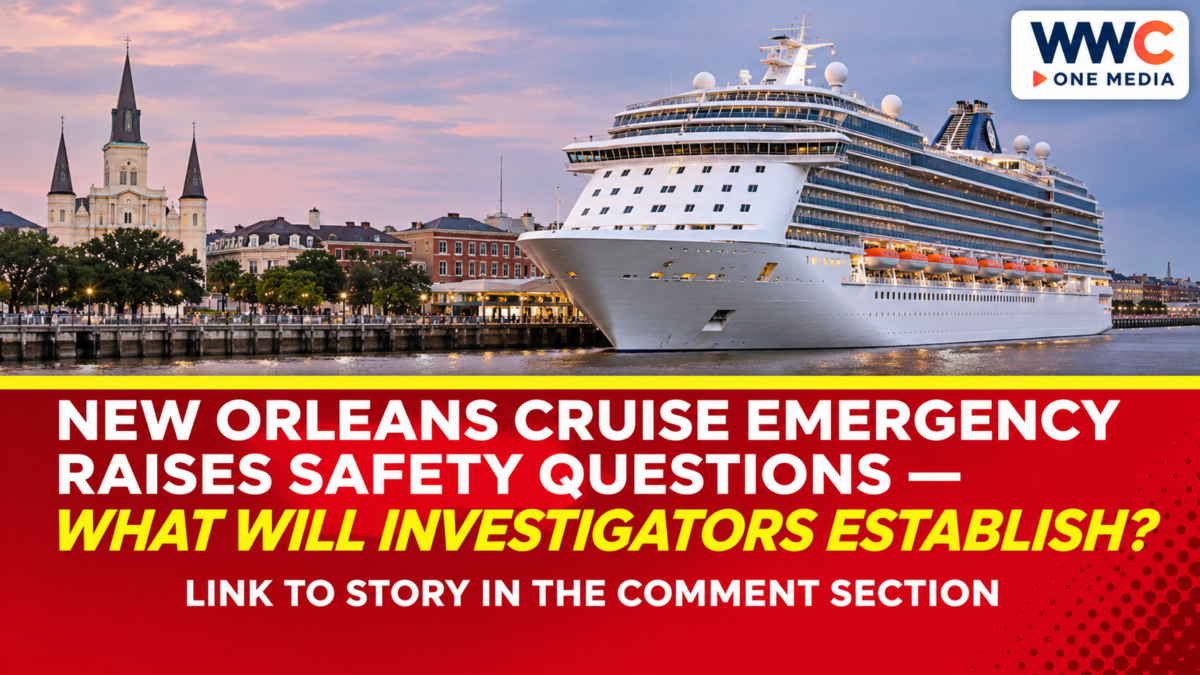
NEW ORLEANS, United States — Nov. 14, 2026. American Cruise Lines has publicly acknowledged an emergency involving its passengers and crew in New Orleans and thanked the US Coast Guard and local rescue teams for their response. Its statement says the company is arranging hotel accommodation and essential assistance for everyone who was aboard the vessel, while coordinating with government authorities.
The response follows reports of a tanker striking a docked passenger vessel on the Mississippi River on Nov. 13. The operator’s public notice confirms the rescue and passenger-support response, but does not provide a definitive casualty count, explain how the incident occurred or establish liability.
New Orleans cruise emergency: What the operator confirms
The company’s public media-page notice identifies the US Coast Guard, New Orleans Police and local emergency responders as agencies with which it is in contact. It thanks responders for their rescue efforts and states that accommodations are being arranged for people who were aboard.
They do not, by themselves, amount to a completed accounting of injuries, a formal marine-casualty finding or a conclusion about which vessel was responsible. A declaration that assistance is being provided should not be confused with a declaration that every passenger has received it.
The company’s official fleet directory lists American Heritage among its vessels. Its wider business focuses on domestic river and small-ship cruising, including voyages along the Mississippi River.
For passengers, practical assistance may include accommodation, communication about their possessions and instructions for onward travel. The actual entitlements of each passenger require examination of the booking terms and the circumstances; the operator’s general media notice is not a substitute for those terms.
Why collision investigations cannot be rushed
US Coast Guard policy treats marine-casualty reporting as a formal process. Its published guidance, interpreting Title 46 of the Code of Federal Regulations, requires timely notice of qualifying incidents after immediate safety concerns are addressed. Investigators may then examine the circumstances and decide what further reporting and inquiry are necessary.
But a notification or the opening of an inquiry is not proof of negligence, misconduct or a mechanical defect.
Whether a vessel lost steering, suffered electrical trouble, encountered a navigation problem or was affected by conditions on the river must be established through evidence. None of those scenarios should be elevated into a finding merely because it appears in an early account.
What passengers should understand about the response
The public statement from American Cruise Lines says it is settling people who were aboard into hotels and ensuring they have what they need.
However, the announcement does not specify the full range of assistance or a timetable for reimbursement. Travellers should preserve booking documents, transport receipts, medical records where applicable and written communications from the operator. Such records can help clarify what was provided and what further requests may need assessment.
Cruise emergencies differ from routine cancellations. The first task is immediate welfare; later questions can concern travel changes, the condition of the vessel, lost belongings, insurance and potential legal claims. Answers depend on the facts and applicable contracts, not on assumptions borrowed from other maritime incidents.
WWC has separately examined the difficulties customers can face when a residential cruise ship is detained during a financial dispute. That case involves very different circumstances, but it illustrates how important clear passenger information becomes when a voyage cannot proceed as planned.
The bigger stakes for river cruising
American Cruise Lines markets a fleet of US-flagged riverboats and small ships operating domestic itineraries. A river terminal is not an isolated tourism facility: it operates within a waterway used by numerous types of commercial vessels, making navigation coordination and contingency planning important.
An interruption can ripple through hotel bookings, ground transfers, terminal operations and planned excursions.
The company’s fleet and itinerary materials establish the scope of its river-cruise operations. They do not tell readers whether any future voyage has been cancelled or how much financial damage resulted from the New Orleans emergency.
For comparison, WWC’s earlier coverage of passengers left behind after the MV Odyssey’s departure from Cambodia explores a different category of cruise disruption. The incidents should not be conflated, but both demonstrate why communication, accommodation and onward travel arrangements matter to affected passengers.
Port design also shapes the visitor experience. WWC’s report on Singapore’s HarbourFront passenger-terminal upgrade describes investment in routine passenger processing. Such projects are distinct from emergency marine-casualty response; neither the presence of modern facilities nor a successful routine check-in process can establish that a waterway is free from navigational risk.
What the official records do not yet establish
The operator’s direct notice does not identify a verified number of people injured, publish a list of those involved or explain the technical cause. It does not provide a definitive accounting of ship damage or the time needed for recovery operations.
Reports circulating during the immediate aftermath have described the tanker and cruise ship by name, numbers of passengers and later hospitalisations. Those details require confirmation in an accessible original port, municipal, Coast Guard or hospital statement before they can be carried as verified facts in this primary-record-only article.
Nor does the Coast Guard’s general investigation guidance confirm that a particular board has been convened for this incident. Formal appointments, preliminary findings and any final safety recommendations should be reported only when the relevant agency publishes them.
What happens next
The immediate priorities are continuing assistance to the people affected and any directions issued by the responsible local and federal authorities. Passengers should rely on direct operator communications and official emergency channels for practical arrangements.
For the wider public, the key next document will be a formal agency update establishing the event timeline, verified totals and the scope of any investigation. It would be premature to assign fault before that evidence is available.
The central question is no longer whether the company has acknowledged an emergency response; it has. The unresolved issue is what the investigation will establish about the circumstances and how the operator and authorities will address the consequences for those involved.
FAQ
Did American Cruise Lines confirm a New Orleans emergency?
Yes. Its official website thanks federal and local rescue teams, confirms coordination with authorities and says people who were aboard are being helped with hotels and necessities.
Has the cause of the reported ship collision been confirmed?
Not in the original operator statement reviewed. Possible technical or navigational explanations should not be treated as confirmed findings.
How many passengers were injured?
The operator’s direct public notice does not provide a verified injury total. A precise figure has therefore been excluded from this primary-record-only article.
Who investigates serious vessel accidents in US waters?
The US Coast Guard has marine-casualty reporting and investigative responsibilities under federal rules. The scope of an investigation depends on the incident and relevant agency decisions.
What should affected cruise passengers keep?
Retain booking information, receipts, assistance notices and relevant communications. Exact refunds, compensation or reimbursement depend on contracts, insurance and applicable legal requirements.