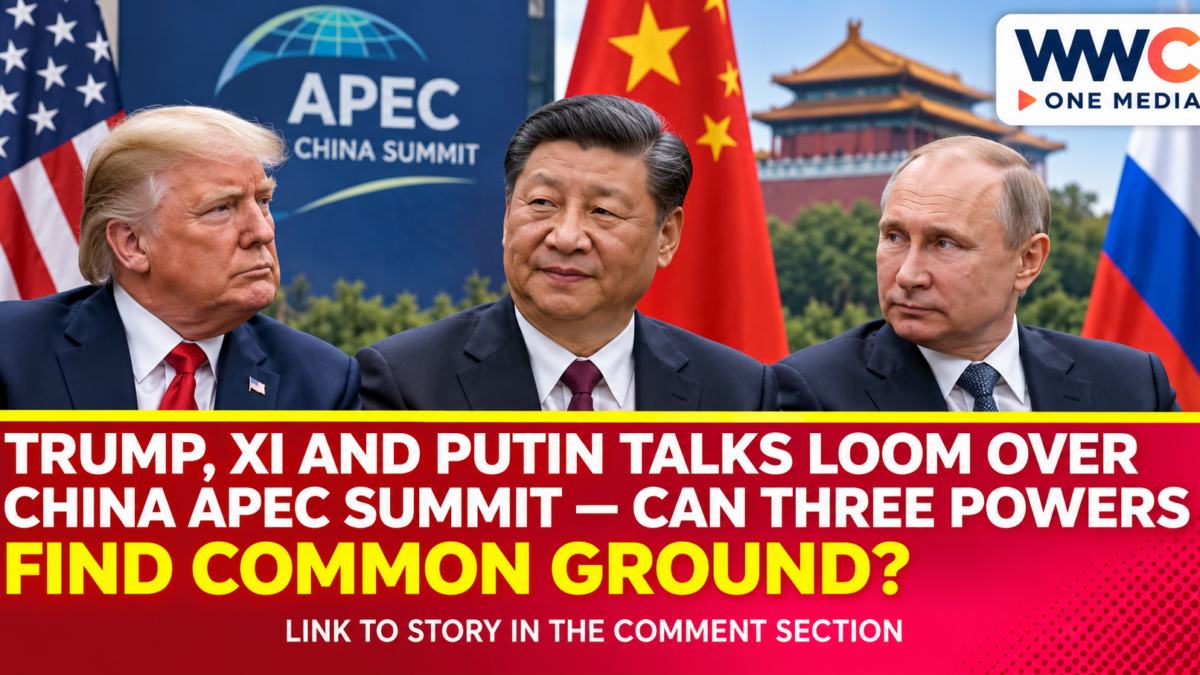
MANILA, Philippines — Nov. 14, 2026. China has confirmed that President Xi Jinping will chair the Asia-Pacific Economic Cooperation (APEC) leaders’ gathering in Shenzhen on Nov. 18–19, while its foreign ministry has acknowledged communication about a possible meeting involving US President Donald Trump and Russian President Vladimir Putin. A final, publicly accessible government schedule specifying a three-leader meeting on Nov. 19 was not established in the primary documents reviewed for this article.
APEC’s programme is confirmed, but a three-leader meeting would be separate. The questions are whether they meet, what they discuss and whether any outcomes are implemented.
Trump Xi Putin Meeting: What China Has Confirmed
China’s foreign ministry announced on Nov. 13 that the 33rd APEC Economic Leaders’ Meeting will take place in Shenzhen on Nov. 18–19 under the theme “Building an Asia-Pacific Community to Prosper Together.” Xi is scheduled to chair the gathering, deliver remarks, host a welcome banquet and hold bilateral meetings with foreign leaders.
The APEC Secretariat independently lists the leaders’ meeting for the same dates. Its official programme places the CEO Summit on Nov. 17–18, ahead of the leaders’ gathering, so the events should not be confused.
China addressed the proposed trilateral meeting more directly during a Nov. 9 foreign ministry briefing. Spokesperson Guo Jiakun said Beijing maintained communication with the relevant parties, but offered no details about the agenda. This confirms diplomatic contact, not that a particular room, time or joint declaration has been agreed.
The documents reviewed did not include a directly accessible White House schedule confirming the reported Nov. 19 appointment or a final Kremlin-hosted agenda. Until such a primary record is available, a meeting should be described as under discussion rather than an accomplished diplomatic breakthrough.
APEC’s Economic Agenda Is Broader Than Great-Power Talks
APEC is a forum of 21 member economies. Its official materials identify cooperation in trade, innovation and regional economic resilience as priorities for the 2026 host year. That programme matters regardless of any separate meeting.
At a Nov. 3 briefing, the APEC Secretariat highlighted digital transformation, artificial intelligence, supply-chain resilience, energy security and food systems. Ministers subsequently discussed stronger regional connectivity and emerging technologies ahead of the leaders’ gathering.
The Philippines participates in the same Asia-Pacific economic system through exports, manufacturing supply chains and services. Any major-power discussion on tariffs or technology controls could attract attention, but the summit’s regional agenda should not be reduced to a single proposed encounter.
WWC’s coverage of Manila’s preparations for the ASEAN summit and Trump’s expected regional travel provides the immediately preceding Philippine diplomatic context. ASEAN and APEC are different forums, with different participants and procedures, even when visiting leaders attend events in both.
Nuclear Arms Control Faces a Publicly Documented Obstacle
China’s foreign ministry had already explained its position on three-way nuclear disarmament negotiations. At an Oct. 16 briefing, spokesperson Mao Ning argued that US and Russian nuclear capabilities were not comparable to China’s and that bringing Beijing into trilateral negotiations at this stage would be neither reasonable nor realistic.
That is China’s negotiating position, not an independent arsenal assessment. The US and Russia have a separate history of bilateral limits, including the New START Treaty.
The US State Department’s treaty documentation says New START was extended through February 4, 2026. Its original framework placed verifiable limits on certain deployed strategic nuclear systems and included notification and inspection arrangements. The record establishes the treaty’s scheduled expiry, not the terms of any future replacement.
A summit conversation could open a diplomatic channel, but an arms-control treaty would require far more: defining covered weapons, negotiating reciprocal commitments, designing verification and completing applicable domestic approval procedures. No such new trilateral agreement was found in the records inspected.
WWC previously examined US-China discussions about reciprocal nuclear-site visits. That context illustrates the difference between discussing transparency measures and formally granting inspectors access under an enforceable arrangement.
Trump and Xi Have an Existing Diplomatic Record
The White House documented a September state visit by Xi to Washington, including bilateral talks and public statements about cooperation. The official record establishes that the two leaders have met recently; it does not mean their disagreements were fully resolved.
Trade questions remain particularly relevant to the Asia-Pacific. A temporary easing of certain restrictions can reduce immediate friction, while disputes over critical minerals, market access and technology continue to affect business planning.
WWC’s report on China extending selected rare-earth export-control suspensions explains why time-limited measures should not be confused with permanent settlements. That distinction also applies to any assurances leaders may make in Shenzhen.
The official material reviewed does not establish that a new trilateral summit will approve tariff reductions, change export controls or conclude an agreement about ongoing wars. Those outcomes would require their own government statements and operative documents.
What This Could Mean for Asia-Pacific Businesses
Analysis: The potential value of a high-level meeting lies less in the symbolism of three presidents appearing together than in whether their governments create reliable channels for specific problems. Such channels could reduce uncertainty, but a meeting without substantive commitments would not by itself change commercial rules.
Manufacturers need to know which components they can buy and sell. Logistics companies need predictable border and shipping requirements. Investors need to distinguish legally effective policy changes from proposals made during diplomatic conversations.
For Philippine companies, there is no reason to assume a meeting would automatically strengthen the peso, lower import costs or settle trade disputes. Currency movements, transport costs and investment decisions depend on many factors beyond one diplomatic event.
The useful test is whether governments identify concrete commitments, deadlines and responsible agencies. An encouraging photograph can signal a willingness to talk; it cannot substitute for those details.
What Happens Next
The confirmed next milestone is the APEC leaders’ meeting in Shenzhen on Nov. 18–19. Any three-way Trump-Xi-Putin session on Nov. 19 needs separate confirmation through an authoritative schedule or statement, and the contents of any discussion should be verified after it takes place.
Whether the leaders find common ground on nuclear risks, trade or other security questions remains uncertain. For now, official records support diplomatic communication and a scheduled regional summit—not a concluded three-power bargain.
Frequently Asked Questions
When is the 2026 APEC summit in Shenzhen?
The official schedule places the APEC Economic Leaders’ Meeting on Nov. 18–19, 2026, in Shenzhen, China.
Is a Trump-Xi-Putin meeting confirmed for Nov. 19?
China acknowledged communication about a possible three-way meeting, but the primary records reviewed did not establish a final, publicly accessible schedule for that specific session.
Will the three leaders sign a nuclear arms treaty?
No such agreement is established. China has publicly objected to joining trilateral nuclear disarmament negotiations under the conditions it described in October.Why does the summit matter to the Philippines?