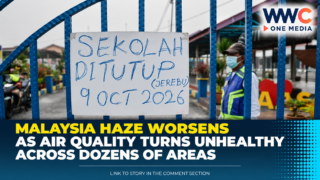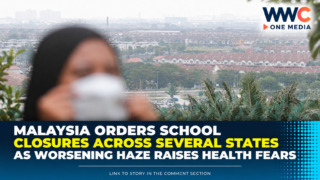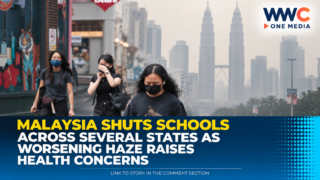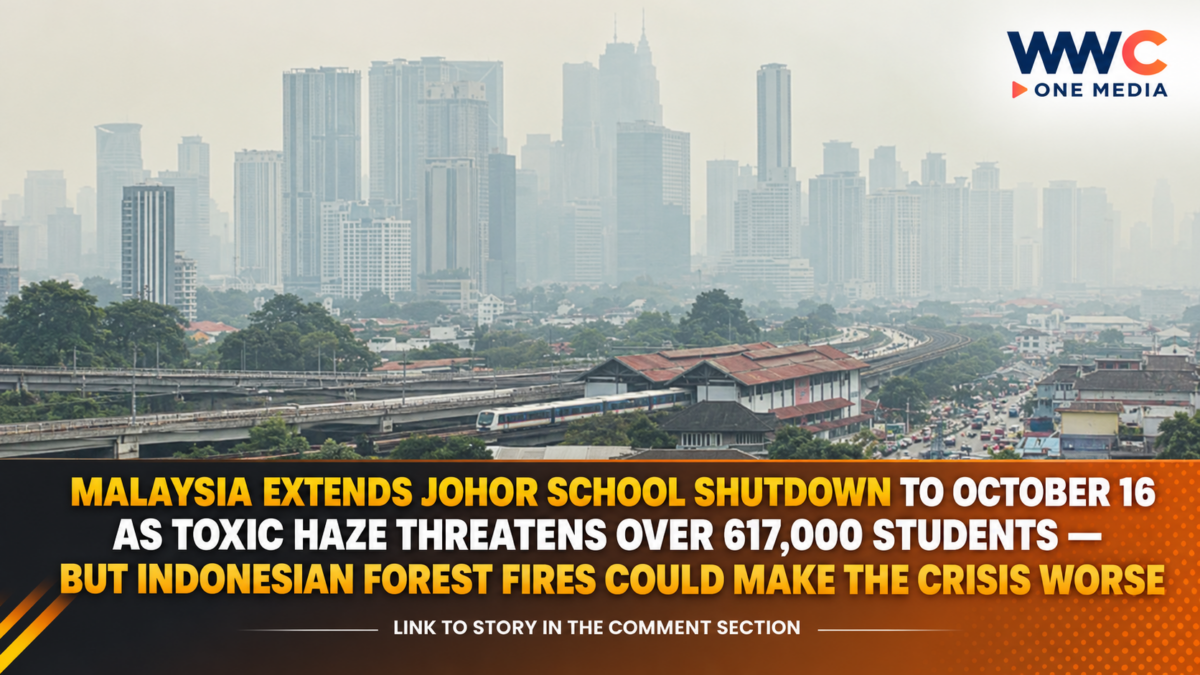
JOHOR BAHRU, MALAYSIA — More than 617,000 students across Johor will remain out of classrooms after Malaysian authorities extended the closure of all schools and educational institutions until Friday, October 16, as worsening haze continues to threaten public health. The emergency measure affects 1,198 schools, while forecasts of pollution-bearing winds from Indonesia’s Kalimantan region between October 13 and 15 have raised concerns that unhealthy air could persist across southern Malaysia. But the bigger question is whether the regional haze crisis will ease before another round of school and business disruptions becomes necessary.
Johor is extending its statewide school shutdown as Malaysia continues battling unhealthy air pollution linked to the regional haze emergency.
The southern Malaysian state’s government confirmed on Saturday, October 10, that all schools and educational institutions would remain closed for five more days, from Monday, October 12, through Friday, October 16.
The extension follows an earlier two-day closure on October 8 and 9.
According to Channel NewsAsia, the order affects approximately 1,198 schools and 617,258 students, including institutions administered by Malaysia’s Education Ministry and state government religious schools.
The decision was announced by Johor Education and Information Committee chairman Dr Muhammad Naqib Md Ghazali.
Authorities said protecting students, teachers and education personnel from unhealthy air was the immediate priority.
However, weather forecasts indicate that the problem may not disappear quickly.
Winds from Kalimantan, Indonesia, expected between October 13 and 15 could transport additional pollution across national borders.
That possibility is creating uncertainty over when normal classroom instruction can safely resume.
Johor Extends School Closures for Five More Days
The latest announcement marks the second round of education restrictions in Johor within a week.
Schools were initially ordered to close on Thursday, October 8, and Friday, October 9, as haze conditions deteriorated.
Instead of reopening on Monday, October 12, institutions will now remain shut through October 16.
The extension applies throughout Johor, not only to districts recording the worst pollution readings.
According to Malaysia’s national news agency Bernama, the decision followed an assessment of air quality, expected wind movements, atmospheric conditions and health risks.
Muhammad Naqib said the extension was made in accordance with the direction of Johor Regent Tunku Mahkota Ismail, who emphasized the safety and well-being of the state’s population.
The statewide measure is intended to limit the exposure of children and education workers while authorities monitor the evolving conditions.
Officials have not guaranteed that physical classes will resume immediately after October 16.
Any further decision will depend on updated air-quality and health assessments.
More Than 617,000 Students and 1,198 Schools Affected
The scale of the closure makes it a major disruption to Johor’s education system.
Figures reported by The Star and cited by CNA indicate that 617,258 students across 1,198 schools are affected.
The closures include both Education Ministry schools and religious schools administered by the Johor state government.
For families, the decision creates logistical challenges involving childcare, supervision and daily routines.
Parents working outside the home may need to rearrange schedules or coordinate alternative arrangements.
Students face another interruption to classroom learning.
School administrators must manage lesson plans, academic deadlines and scheduled evaluations while monitoring official announcements.
However, the state government’s decision reflects a precautionary judgment that continued exposure to unhealthy air would present greater risks.
The actual number of additional school days affected will depend on whether authorities extend the closure again.
Johor Warns of More Haze From Indonesia Between October 13 and 15
One of the most important factors behind the extended shutdown is the weather outlook.
Johor officials are monitoring predicted wind movements from Kalimantan, Indonesia, between October 13 and 15.
Those winds could transport additional pollution into southern Malaysia.
Kalimantan is located on the Indonesian portion of the island of Borneo and has experienced environmental concerns associated with forest and land fires.
During regional haze events, smoke and fine particulate pollution can travel considerable distances depending on wind direction and atmospheric conditions.
However, the forecast of pollution-bearing winds does not guarantee that Johor’s air quality will deteriorate further.
The severity of any impact will depend on actual fire activity, weather patterns, rainfall and atmospheric circulation.
Authorities also warned that relatively stagnant atmospheric conditions could prevent pollutants from dispersing quickly.
These risks contributed to the decision to keep schools closed through the forecast period.
Air Pollution Index Readings Reach Unhealthy Levels
Malaysia monitors pollution through its Air Pollutant Index, known as the API or IPU.
The index summarizes air-quality conditions using pollutant measurements.
Under Malaysia’s classifications:
- 0–50: Good
- 51–100: Moderate
- 101–200: Unhealthy
- 201–300: Very unhealthy
- Above 300: Hazardous
According to Bernama, Johor authorities considered pollution readings in the range of approximately 170 to 180 when deciding to extend the closure.
Those figures fall within the unhealthy category.
CNA also reported that, as of 9 AM on Sunday, October 11, 15 monitoring areas across Malaysia had unhealthy air quality, including eight in Johor.
These readings demonstrate that the haze remains a significant concern.
However, pollution conditions can change throughout the day and differ by location.
A reading reported at one monitoring station should not be treated as the current measurement for every district in Johor.
Residents should consult official monitoring services for updates.
Why Haze Is Especially Dangerous for Children
Haze is not simply reduced visibility.
Smoke from vegetation fires can contain fine particulate matter and other pollutants capable of irritating the respiratory system.
One of the most concerning pollutants is PM2.5, referring to particles with diameters of 2.5 micrometers or smaller.
These fine particles can travel deep into the lungs.
Exposure may worsen asthma and other respiratory conditions and can contribute to cardiovascular risks.
Children are especially vulnerable because their lungs are still developing and they may spend substantial time outdoors.
People with existing heart or lung conditions, pregnant individuals and older adults can also face increased risks from unhealthy air.
For students, activities such as physical education, outdoor assemblies and sports may increase exposure if conducted during severe haze.
Closing schools reduces the need for students to travel and participate in regular school activities during periods of poor air quality.
However, the measure does not eliminate pollution exposure in homes or other indoor environments.
Malaysia Moves Classroom Learning Online and Into Homes
To limit disruption to education, Johor authorities have instructed schools to continue home-based teaching and learning where appropriate.
The system is commonly known in Malaysia as Pengajaran dan Pembelajaran di Rumah, or PdPR.
It allows teachers and students to maintain some educational activities without requiring normal classroom attendance.
Schools may use digital platforms, learning materials or other arrangements suited to student circumstances.
However, online or home-based learning can pose challenges.
Not every household has reliable internet service, sufficient devices or a quiet environment for studying.
Younger children may require adult supervision.
Families with several school-aged children can also face difficulties sharing equipment.
Officials have therefore emphasized continuation of learning according to what is practical.
The closure should not be interpreted as a five-day cancellation of all educational responsibilities.
Examinations and Academic Assessments Postponed
Students scheduled to take school assessments during the closure period will receive revised arrangements.
Muhammad Naqib confirmed that academic evaluations falling between October 12 and 16 would be postponed and rescheduled.
The Johor State Education Department and relevant authorities will determine the revised dates.
The decision is intended to prevent students from being required to attend examinations in unhealthy conditions.
It also allows schools to avoid making separate decisions that might produce inconsistent arrangements across the state.
Students and parents should monitor announcements directly from their schools and the education department.
The state has not announced one universal replacement date for all affected examinations.
Schedules may vary depending on the institution and the assessment involved.
Other Malaysian States Have Also Closed Schools
Johor is not the only part of Malaysia affected by the haze.
Reuters reported on October 9 that the Malaysian Education Ministry ordered school closures across several states and federal territories following a deterioration in air quality.
The measures affected areas including the country’s administrative and federal capitals.
The response illustrates the geographic reach of the pollution episode.
However, school closure decisions differ according to local conditions and government instructions.
Some states have since reported improvements.
For example, The Star reported on October 10 that schools in Kedah, Kelantan and Terengganu were scheduled to operate normally on Sunday, October 11, after air quality improved.
It is therefore inaccurate to describe every Malaysian school as remaining closed through October 16.
The five-day extension applies specifically to Johor under the announcement covered by CNA.
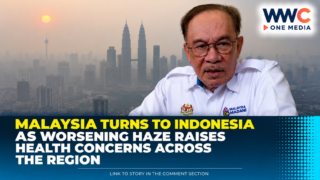
Regional Haze Renews Pressure on Indonesia and ASEAN
The deterioration in air quality has revived concerns about transboundary haze in Southeast Asia.
Smoke from forest and land fires can cross international borders and affect neighboring populations.
Malaysia, Singapore and Indonesia have experienced repeated regional haze emergencies.
The pollution can disrupt schools, outdoor work, transportation, tourism and other economic activities.
It can also increase demand for healthcare services among people experiencing respiratory symptoms.
ASEAN countries have established mechanisms to address transboundary haze, including cooperation on prevention, monitoring and fire management.
However, effective action depends on national enforcement, land-use management, weather conditions and cooperation among affected governments.
The current emergency highlights the limitations of responding only after pollution reaches unhealthy levels.
Reducing future haze requires attention to the conditions that allow large-scale vegetation fires and smoke emissions to develop.
Singapore Also Monitors Regional Haze Conditions
Singapore has been closely monitoring the same regional haze episode.
Poor air quality can affect both sides of the Johor Strait, although the severity and timing of pollution may differ.
Singaporean authorities have communicated with Indonesian counterparts regarding forest fires and potential assistance.
The concern reflects the interconnected nature of the region’s atmosphere.
Smoke originating in one country can affect communities hundreds of kilometers away.
However, Malaysia and Singapore use different air-quality reporting systems.
Malaysia’s API and Singapore’s Pollutant Standards Index, or PSI, should not be assumed to be numerically interchangeable.
Anyone comparing readings must account for differences in how the indices are calculated and reported.
The safest approach is to use each country’s official monitoring service and health guidance.
How the Haze Could Affect Johor’s Economy
The extension primarily targets education, but a prolonged haze episode could have wider economic consequences.
Johor is an important industrial, logistics, commercial and tourism center.
Its close economic connection with Singapore means that changing local conditions can influence activities across the border.
Poor air quality may reduce demand for outdoor recreation and complicate certain types of work.
Businesses relying on outdoor operations may need to adjust schedules or provide additional protective measures.
Families affected by school closures may face extra childcare costs or changes to work arrangements.
However, the latest closure announcement does not establish that Johor’s factories, shopping centers, border crossings or all other businesses have been ordered to shut.
Nor does it establish a specific monetary loss to the state economy.
Those consequences would require separate reporting and reliable economic data.
What Families Should Do During the Closure
Parents and students should follow official instructions from the Johor State Education Department and their individual schools.
During unhealthy haze, reducing unnecessary outdoor exposure can help protect vulnerable individuals.
Practical precautions may include limiting strenuous outdoor exercise, keeping indoor spaces protected from outside smoke when feasible and using appropriate air filtration.
A properly fitted particulate respirator, such as an N95, may help reduce exposure to airborne particles when outdoor activity cannot be avoided.
Ordinary loose-fitting masks do not provide the same level of particulate protection.
People experiencing significant breathing difficulties, chest pain or worsening respiratory symptoms should seek medical advice.
Families should also check whether examinations and scheduled school events have been postponed.
These recommendations are general precautions and do not replace instructions issued by local health or education authorities.
Will Johor Schools Reopen on October 19?
The scheduled extension ends on Friday, October 16.
Under the existing plan, the next ordinary weekday following the closure is Monday, October 19.
However, authorities have not made an unconditional commitment that all institutions will reopen on that date.
The Johor government has stated that further decisions will depend on prevailing air quality and health assessments.
This is especially important because wind conditions and regional fire activity can change rapidly.
If pollution improves, normal operations may become feasible.
If the haze persists or worsens, further restrictions could be considered.
No additional extension beyond October 16 had been confirmed in the October 11 reports reviewed.
Families should therefore treat October 19 as a possible resumption date, subject to official announcements, rather than a guaranteed reopening.
The Bigger Picture: Johor’s School Shutdown Exposes a Recurring Regional Challenge
Johor’s decision to keep 1,198 schools closed through October 16 is an emergency measure designed to protect students and education workers.
More than 617,000 students face another week away from classrooms, while schools prepare home-based lessons and reschedule assessments.
But the crisis extends beyond school timetables.
Authorities are monitoring unhealthy pollution readings and possible additional haze from Kalimantan.
The episode illustrates how quickly environmental conditions in one part of Southeast Asia can affect daily life across national borders.
It also raises a longer-term policy question.
Governments can temporarily close schools and advise people to remain indoors, but those measures primarily manage exposure after pollution has already developed.
Preventing repeated haze emergencies requires stronger fire prevention, environmental monitoring and regional cooperation.
Malaysia has confirmed that Johor’s schools will remain closed until October 16, affecting more than 617,000 students as unhealthy haze persists.
But the bigger concern is the possibility of additional pollution arriving from Indonesia between October 13 and 15, potentially delaying the region’s recovery.
For families, the immediate priority is protecting children’s health while keeping education on track. For Southeast Asia’s governments, the harder challenge is preventing another regional haze emergency before classrooms have to close again.