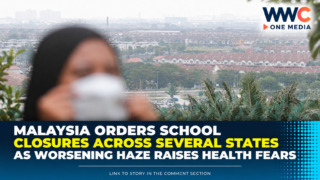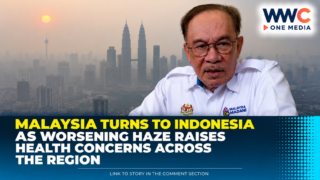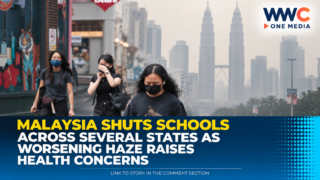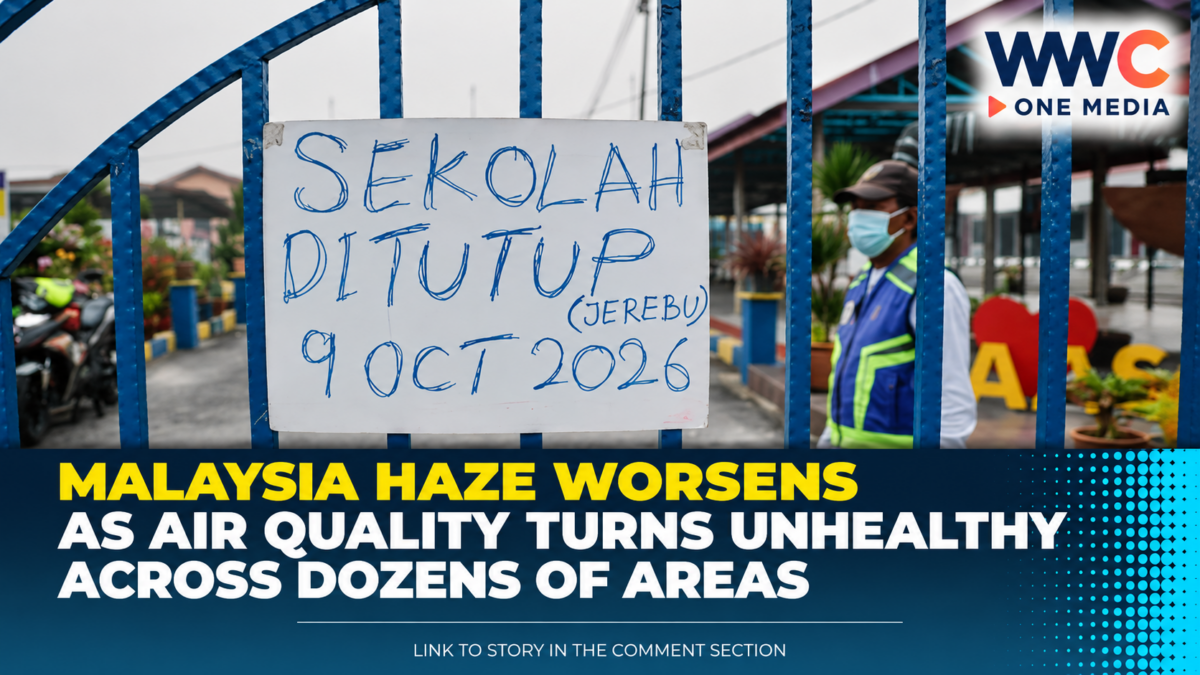
KUALA LUMPUR — Haze has blanketed large parts of Malaysia, pushing air pollution to unhealthy levels across dozens of monitoring locations and prompting authorities to close schools in several states to protect students and teachers.
As of 8.30am on Friday (Oct. 9), 38 of Malaysia’s 68 air-quality monitoring stations recorded unhealthy readings, according to the Department of Environment (DOE). None recorded good air quality, while 30 reported moderate conditions.
Seremban in Negeri Sembilan recorded the country’s highest Air Pollutant Index (API) reading at 186. Bandaraya Melaka followed at 184, while Nilai in Negeri Sembilan, Bukit Rambai in Melaka and Segamat in Johor each recorded 183.
The worsening conditions have raised public-health concerns as smoke from forest and land fires in neighbouring Indonesia continues to drift across the region. Authorities have stepped up monitoring and introduced precautionary measures, including school closures and home-based learning in affected areas.
Schools close as haze spreads across Malaysia
The Education Ministry ordered schools in areas where API readings exceeded 180 to suspend physical classes from Friday, Oct. 9. Schools in districts where readings remain above 150 for three consecutive days must also close from Monday, Oct. 12, under the ministry’s latest directive.
Affected institutions are required to conduct home-based teaching and learning so students can continue their lessons while exposure to polluted air is reduced.
The measures followed growing concern about the impact of haze on children and school personnel. Malaysia’s King, Sultan Ibrahim, had also raised concerns about the health and safety of students amid worsening air quality.
Johor had already ordered all schools in the state to close on Oct. 8 and 9. The two-day closure affected 617,258 students across 1,198 schools under the Education Ministry, according to the state’s education and information committee chairman, Dr Muhammad Naqib Md Ghazali.
Schools involved in scheduled assessments were told to postpone them, while home-based lessons were arranged during the closure.
The ministry has instructed state education departments, district education offices and schools to monitor local pollution readings and take action in accordance with the latest guidelines.
Seremban, Melaka and Johor among the worst-affected areas
The latest readings show that unhealthy air quality is affecting multiple states, particularly across Peninsular Malaysia.
In addition to Seremban’s reading of 186, several locations recorded levels close to or above the 180 mark:
- Bandaraya Melaka: API 184
- Nilai, Negeri Sembilan: API 183
- Bukit Rambai, Melaka: API 183
- Segamat, Johor: API 183
- Johan Setia, Selangor: API 182
- Tangkak, Johor: API 181
Other affected areas included Pasir Gudang, Shah Alam, Alor Gajah and several locations in Perak, Pahang and the Greater Klang Valley.
Under Malaysia’s API classification, readings from 101 to 200 are considered unhealthy, 201 to 300 are very unhealthy, and readings above 300 are hazardous.
Although none of the monitoring stations recorded very unhealthy conditions in the 8.30am nationwide snapshot, the number of locations with unhealthy readings shows the extent of the current pollution episode. Conditions can vary throughout the day and from one location to another, so residents are advised to check updated readings for their specific areas.
Indonesian fires blamed for cross-border haze
Malaysia’s DOE has attributed the haze to prolonged dry weather and fires in Indonesia, particularly in Sumatra and Kalimantan.
The ASEAN Specialised Meteorological Centre detected 210 hotspots in Sumatra and 94 in Kalimantan, Indonesia, as well as one hotspot in Pahang, according to information released by the department on Oct. 8.
Satellite monitoring also detected moderate to thick transboundary haze over southern and central Sumatra, Singapore, southern Peninsular Malaysia and parts of Kalimantan.
Hotspots indicate locations where satellite instruments detect elevated temperatures that may be associated with fires. They do not necessarily mean every hotspot represents a confirmed active fire, but the combined observations point to widespread fire activity contributing to regional smoke pollution.
The recurring haze problem reflects the cross-border nature of air pollution in Southeast Asia. Smoke generated by fires can travel across national boundaries depending on wind direction and weather conditions, affecting communities far from the original fire locations.
Malaysia has increased monitoring and inspections in fire-prone areas, including peatlands and landfill sites, as authorities respond to the prolonged hot and dry weather.
Health officials urge residents to limit outdoor exposure
Unhealthy air quality can affect people differently depending on the level and duration of exposure, as well as their age and underlying health conditions.
Children, older adults and people with asthma or other respiratory and cardiovascular conditions may be particularly vulnerable. Exposure to haze can cause irritation of the eyes, nose and throat, coughing and breathing discomfort.
Residents in affected areas should monitor official air-quality updates and reduce strenuous outdoor activities when pollution levels are unhealthy. Keeping windows and doors closed when outdoor air is particularly polluted, where practical, can also help limit indoor exposure.
People who must spend time outdoors may consider a well-fitting particulate respirator, such as an N95, especially when haze is dense. Ordinary cloth masks are less effective at filtering fine particles.
Anyone experiencing significant breathing difficulties, chest pain or worsening respiratory symptoms should seek medical attention.
The DOE advises the public to refer to Malaysia’s official Air Pollutant Index Management System (APIMS) for current readings, rather than relying solely on figures from independent air-quality platforms, which may use different measurement methods.
Authorities step up monitoring as conditions remain uncertain
Malaysia’s government continues to monitor the situation as the haze affects schools, daily activities and public health.
The effectiveness of measures to reduce exposure will depend partly on how pollution levels change over the coming days. Rainfall and shifts in wind direction may help improve conditions in some locations, while continued dry weather and ongoing fires could prolong the episode.
Residents are encouraged to follow official announcements on school closures and other precautionary measures, particularly if API readings in their districts rise further.
The latest readings underline the scale of the challenge: unhealthy air is no longer confined to a small number of locations, and no monitoring station recorded good air quality in the nationwide morning snapshot.
For now, the priority is to limit exposure, protect vulnerable groups and monitor the movement of haze as authorities work to manage the immediate effects of the regional fires.