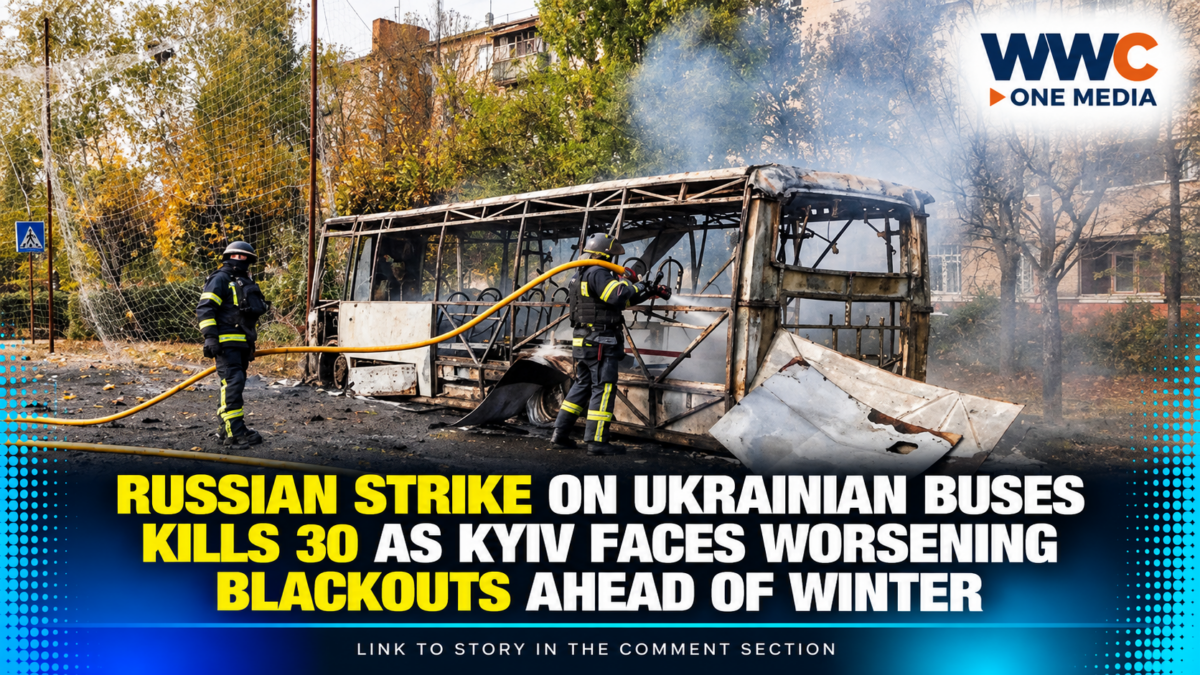
Russian Attack Near Ukrainian Public Buses Kills 30 as Kyiv Blackouts Deepen
KYIV, Ukraine — A Russian-guided bomb exploded near passenger buses in eastern Ukraine, killing 30 people and injuring at least 18, Ukrainian authorities said Thursday, October 8, as a broader wave of Russian attacks intensified pressure on the country’s civilian infrastructure and worsened power outages in Kyiv.
The strike occurred near a bus stop in Kramatorsk, a frontline city in the Donetsk region, where public transportation was suspended as security conditions deteriorated.
The attack came amid renewed Russian missile and drone strikes across Ukraine, including a deadly assault on a residential building in Pryluky a day earlier. The escalating attacks have heightened concerns over civilian safety and Ukraine’s ability to protect essential services as colder weather approaches.
The latest developments also prompted Ukrainian President Volodymyr Zelenskyy to renew calls for stronger air defenses and additional military support from Western partners.
Kramatorsk Bus Strike Leaves Dozens Dead and Injured
The attack near the public buses was among the deadliest reported incidents in Ukraine during the latest wave of Russian strikes.
Authorities said the explosion occurred near a bus stop in Kramatorsk, where civilians were using public transportation. The Donetsk regional administration subsequently announced the suspension of public transport in Kramatorsk and neighboring Sloviansk because of the deteriorating security situation.
Regional officials accused Russia of deliberately targeting civilians. Those allegations have not been independently established through a complete public investigation.
The attack also complicated rescue efforts, with local authorities reporting additional drone activity during the emergency response.
The loss of life has renewed concerns about the vulnerability of ordinary Ukrainians who depend on buses and other public services in communities close to the front line.
For residents, the disruption extends beyond the immediate attack: suspended transportation can make it harder to travel to work, obtain supplies and reach essential services in an already dangerous environment.
Separate Missile Strike Kills 22 in Pryluky
The Kramatorsk attack followed a Russian missile strike on a residential building in Pryluky, in northern Ukraine, on Wednesday.
Ukrainian authorities reported that 22 people were killed, including five children, while at least 54 others were injured.
Rescue workers searched the damaged building for survivors as emergency personnel continued their response.
The two attacks underscored the growing human cost of the latest wave of aerial strikes, with residential areas and civilian infrastructure affected in different parts of the country.
Zelenskyy visited Pryluky alongside British Foreign Secretary David Lammy, who announced additional sanctions against Russia, according to reporting on the visit.
The Ukrainian president used the visit to emphasize the need for additional defensive capabilities, arguing that international support must translate into practical assistance capable of protecting civilians.
Kyiv Faces Emergency Power Outages as Winter Approaches
While eastern Ukraine grappled with the deadly bus strike, Kyiv faced worsening electricity disruptions following additional Russian attacks.
Ukraine’s national grid operator ordered emergency power outages in the capital, according to the Associated Press report published by The Korea Times.
Emergency outages differ from scheduled rolling blackouts because they are introduced when the electricity system faces immediate pressure. During such measures, regular outage schedules may be suspended while operators work to stabilize supply.
The disruptions came as Russia intensified attacks on infrastructure that supports Ukraine’s economy and everyday life.
Recent strikes have affected energy facilities and other infrastructure, increasing pressure on the country as it prepares for winter, when reliable electricity and heating become particularly important.
Ukrainian officials urged households to prepare emergency supplies, store drinking water and maintain backup power options where available.
The outages also highlight how attacks on infrastructure can affect people far from the immediate strike locations, disrupting daily routines and adding uncertainty for families and businesses.
Kyiv Police Defuse Unexploded Missile Warheads
The security situation in the capital remained tense after Kyiv police reported that bomb-disposal specialists had defused two unexploded ballistic missile warheads that landed near residential buildings.
The warheads were each estimated to weigh about half a ton, according to authorities.
Separately, Russian drone strikes in Kyiv’s Obolonskyi and Desnianskyi districts on Wednesday killed four people and injured 12, including four children, police said.
The incidents added to the pressure on emergency responders, who have been working to address casualties, assess damage and reduce risks from unexploded weapons.
The reports also underscored the challenges facing Ukrainian air defenses as Russian forces continue to launch attacks against targets across the country.
Zelenskyy Appeals to NATO for More Air Defense Support
Zelenskyy renewed his appeal for Western countries to provide additional air-defense capabilities, ammunition for combat aircraft and interceptor systems.
He warned that Russian missile and drone attacks could intensify as winter approaches, making further defensive assistance increasingly important.
The Ukrainian president also said a Ukrainian delegation would travel to the United States for discussions with representatives of President Donald Trump, including Jared Kushner and Steve Witkoff.
The planned meetings were expected to address strengthening Ukraine’s air defenses and other issues related to the war.
Kyiv has repeatedly argued that additional defensive equipment is necessary to protect cities, energy infrastructure and civilians against continuing aerial attacks.
Western governments have provided Ukraine with military, financial and humanitarian assistance since Russia launched its full-scale invasion in February 2022. However, the scale and pace of additional support remain central issues in diplomatic discussions.
Ukraine Reports Strikes on Russian Infrastructure
Ukraine also reported attacks on infrastructure inside Russia as the two countries continued their long-range aerial campaign.
Russian technology company Yandex said a data center in the Ryazan region had been damaged in a Ukrainian drone attack, taking the facility offline.
Ukraine’s General Staff separately said Ukrainian forces struck a major oil refinery complex in Salavat. The claim had not been independently verified in the reporting available at the time.
Russian regional authorities also reported drone activity in the Omsk region, while an independent Russian news outlet reported a fire at an oil refinery. Officials had not confirmed that report.
The developments illustrate how the conflict increasingly extends beyond the front lines, with both countries reporting attacks involving infrastructure and industrial facilities.
Civilian Safety Remains a Central Concern
The latest attacks have intensified concerns over the protection of civilians as the war continues.
The strike near the buses in Kramatorsk disrupted public transportation and caused a major loss of life. The separate attack in Pryluky killed residents of a residential building, while the worsening electricity situation in Kyiv added pressure on households preparing for winter.
Ukrainian officials have accused Russia of deliberately targeting civilians and civilian infrastructure. Moscow has denied deliberately targeting civilians, while the circumstances of individual strikes require examination of available evidence and independent investigations.
The attacks also pose a broader challenge for Ukraine’s emergency services, which must respond to casualties, repair damaged infrastructure and maintain essential services while facing continuing security threats.
What Comes Next for Ukraine?
Ukraine now faces the combined challenges of protecting frontline communities, maintaining electricity supplies and securing additional air-defense support.
The latest strikes are likely to keep civilian protection and military assistance high on the agenda as Ukrainian representatives prepare for discussions with U.S. officials.
For communities such as Kramatorsk, the immediate priority is responding to the casualties and assessing the security risks that forced public transportation to stop.
In Kyiv, the focus is also on stabilizing electricity supplies and helping residents prepare for potential further disruptions.
As winter approaches, the effectiveness of Ukraine’s air defenses and the resilience of its energy infrastructure will be crucial to protecting civilians and maintaining essential services.
WWC ONE MEDIA G,A