SEOUL — Seoul is looking beyond its domestic startup pool as it seeks new sources of economic growth, putting foreign entrepreneurs and global technology talent at the center of a broader strategy to build the capital into an international business hub.
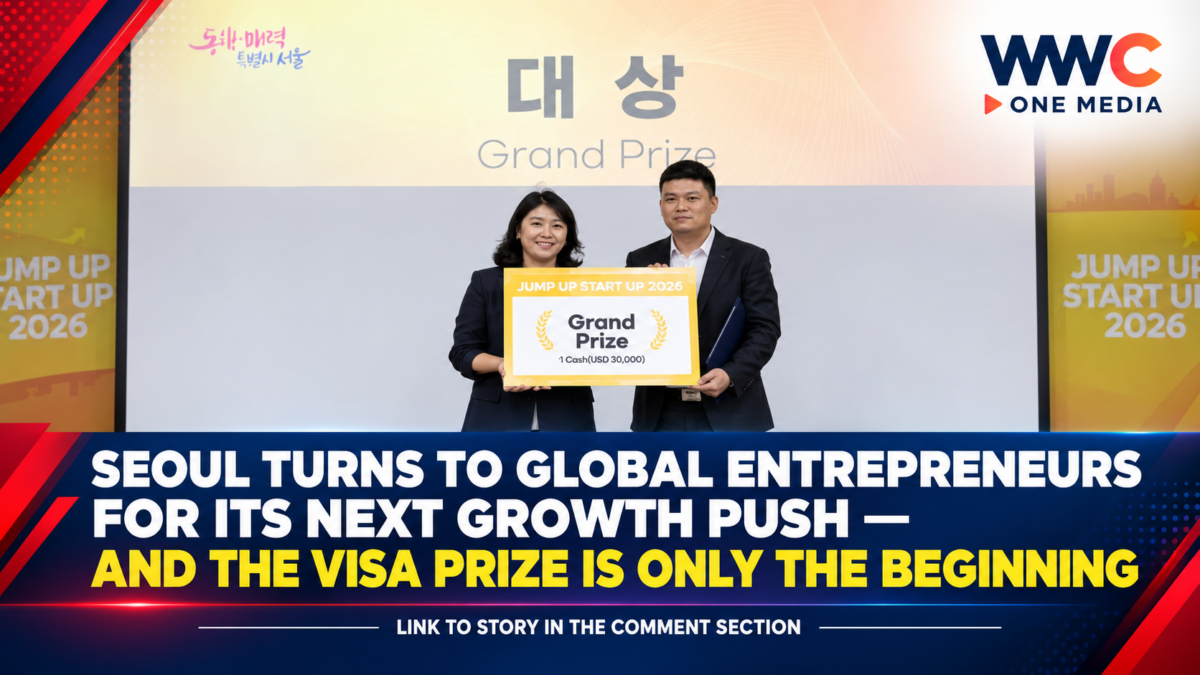
The latest signal came from the city’s second annual “Jump Up, Start Up” competition, where Ukrainian entrepreneur Oleksandr Yuhai and his startup, NeuroDetectYO, took the top prize with an artificial intelligence platform designed to predict fall risks among older adults.
The win came with 2 million won ($1,500) in prize money — but an additional reward could prove far more important for foreign founders: 30 points toward Korea’s D-8-4 technology startup visa.
Seoul Wants Foreign Founders to Build — Not Just Visit
The competition attracted 40 teams from around the world, with nine finalists representing countries including Germany, Indonesia, the United States and Uruguay.
Their business ideas covered a range of sectors, including AI, health care, education technology and food technology, reflecting the types of industries Seoul hopes can contribute to future growth.
“Foreign entrepreneurs are creating new business opportunities in Seoul based on their unique experiences and technological expertise,” Sohn Hyeong-kwon, director of foreign immigration at the Seoul Metropolitan Government, said.
The city says it plans to continue supporting foreign founders as they turn innovative ideas into businesses operating in Seoul.
The Startup Visa Could Be a Major Piece of the Puzzle
For international entrepreneurs, however, launching a company in Korea can involve more than developing a promising product.
The D-8-4 technology startup visa operates under a points system, with applicants required to reach at least 60 points out of 300, alongside technical or intellectual-property requirements.
That makes programs such as Seoul’s startup competition potentially significant for foreign founders trying to establish longer-term business operations in Korea.
Through the Seoul Global Center and the government’s OASIS startup immigration system, foreign entrepreneurs can receive support ranging from startup training to corporate registration and office incubation.
AI, Global Markets and a Changing Seoul Startup Scene
The competition’s other finalists highlight the international direction of Seoul’s entrepreneurship strategy.
Germany’s John Heinemann, who led FlixFluent, took second place with an AI-powered Chrome extension designed to help users learn foreign languages through streaming content.
Third place went to Dots, an AI platform created by Uruguayan entrepreneur Maria Noel De La Paz Suzacq to help Korean startups connect with Latin American markets.
The emphasis on international founders also comes as Seoul expands programs connecting foreign talent with Korean companies.
A separate Seoul initiative, Seoul Job Connect 2026, is targeting 100 participating companies and more than 3,000 foreign job seekers for an international recruitment event scheduled for November. The city says local companies increasingly need talent with overseas marketing, market-analysis and foreign-language skills.
From International Students to Business Builders
Seoul’s approach is increasingly focused on keeping international talent in the Korean economy after people arrive for study or other opportunities.
The city says its goal is not simply to attract global talent temporarily, but to encourage foreign entrepreneurs to establish businesses and build their futures in Seoul.
There is already an example of that pathway. Last year’s Jump Up, Start Up winner, AI travel platform Konnect, founded by Indian entrepreneur Ravi Sankar, subsequently secured backing through Korea’s government-matched TIPS investment program.
For Seoul, the bigger question now is whether these programs can convert international talent into sustained companies, investment and jobs.
With foreign entrepreneurs increasingly being positioned as part of the city’s growth strategy, Seoul’s startup experiment is moving beyond a simple pitch competition — toward a longer-term attempt to make global founders part of the capital’s economic future.
WWC ONE MEDIA G,A