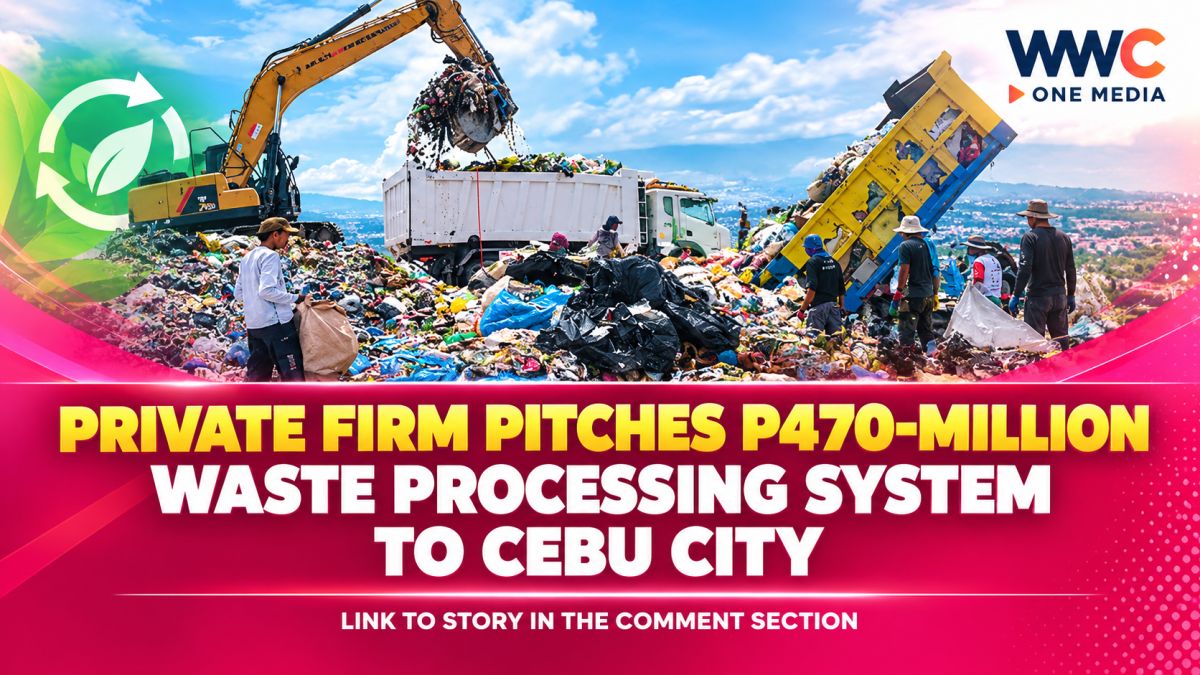
A private company has proposed a P470-million mechanical waste-processing system to Cebu City as the local government searches for a longer-term solution to its mounting garbage disposal crisis.
Suki Trading Corp. submitted a letter of intent to Mayor Nestor Archival seeking to supply, install, test and commission two sets of equipment: an Advanced Waste Solution with Environmental Pollution Control Device 500 and an automatic garbage segregation machine. The proposal was placed on the City Council’s agenda for deliberation but has not yet been approved or awarded.
According to the company’s proposal, the system could process up to 700 tons of mixed municipal waste per day based on a 20-hour operating schedule. The automatic segregation equipment would separate recyclable materials such as glass, tin cans, plastics and paper, as well as biodegradable waste, before residual materials undergo further processing.
The proposed AWS-EPCD500, described as a pyrolysis machine, has a rated capacity of 10 tons per hour. The facility would require an estimated 5,000 square meters to one hectare of land, with the South Road Properties or another suitable site identified as possible locations.
Under the proposed system, recyclable materials would be processed separately. Glass bottles could be pulverized for potential use in concrete hollow blocks, while tin cans would be compressed for recycling. Plastic waste would be shredded and processed into other products, while food waste would undergo composting to produce soil enhancer.
The package also includes wet and dry scrubbers and other pollution-control equipment. Suki Trading said it would assist the city in securing environmental permits and compliance documents, including testing for furan and dioxin emissions and securing Environmental Technology Verification from the Department of Science and Technology.
The company also offered to provide a covered steel structure for the equipment, personnel training and one year of maintenance and warranty coverage. Its proposed payment schedule would release funds in stages based on contract signing, equipment delivery, installation and final acceptance.
The proposal comes as Cebu City continues to deal with the aftermath of the Jan. 8 collapse of the Binaliw landfill, which killed 36 people and forced the city to divert its garbage to Aloguinsan. The city currently spends about P4.2 million to P4.5 million each day hauling waste to the municipality, according to city officials.
Cebu City generates roughly 700 tons of garbage daily, although eco-stations divert an estimated 40 to 50 tons from disposal. Several attempts to secure a solid waste disposal facility through bidding have also failed to attract qualified bidders.
The proposed system would shift part of the city’s approach from simply transporting waste to landfills toward mechanical segregation, recycling and processing. Any implementation, however, would still require technical, environmental, financial and procurement evaluation, as well as an appropriate site and the necessary regulatory approvals.