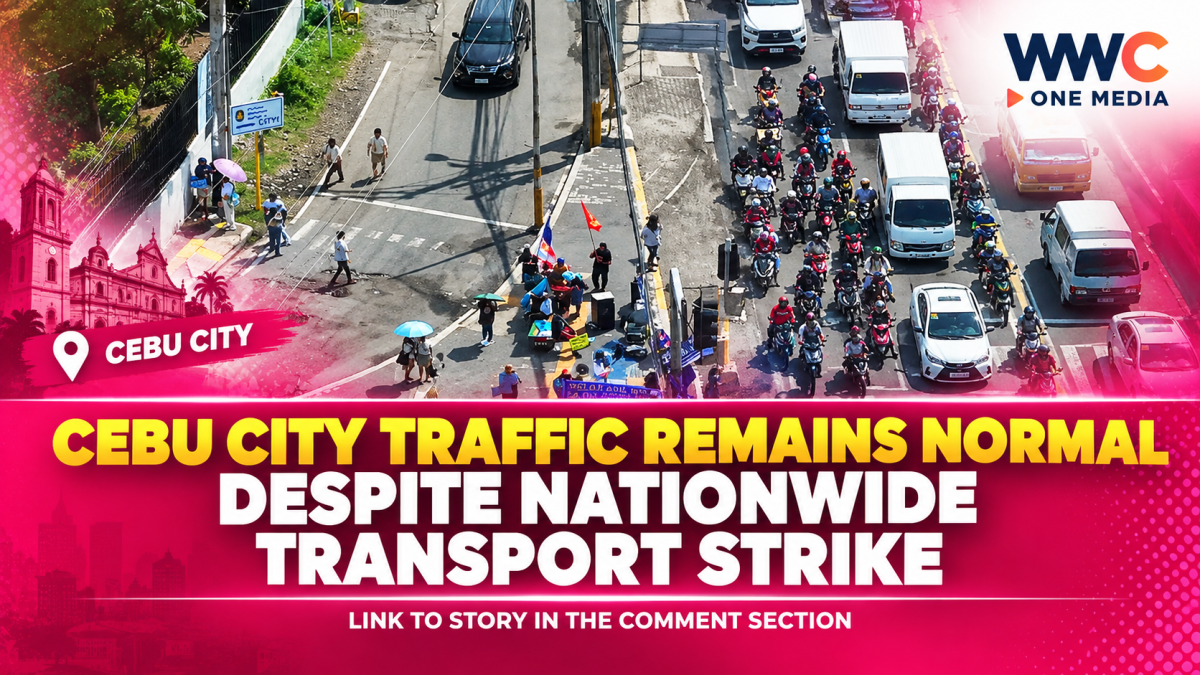
Traffic flow in Cebu City remained normal on Tuesday morning, September 29, despite the nationwide transport strike, with many public utility vehicles continuing to operate.
Cebu City Councilor Dave Tumulak said the assessment was based on the city’s monitoring of closed-circuit television cameras along major roads. He said public transportation remained available in many parts of the city despite the planned strike activities.
Tumulak said he had coordinated with the Land Transportation Franchising and Regulatory Board so that provincial buses could be granted special permits to serve Cebu City commuters if transportation becomes insufficient.
Provincial buses were also placed on standby as a contingency measure. City buses that had earlier been deployed were later returned to their regular base after authorities determined that regular public utility vehicles were still adequately serving commuters.
The transport strike, which is scheduled to continue until Wednesday, September 30, was organized by transport groups over concerns including rising fuel prices, drivers’ income, fuel taxes and government policies affecting the transport sector.
Piston-Cebu had announced plans to suspend operations from around 7 a.m. until the afternoon on Tuesday, with strike centers established at several locations. However, Tumulak said a transport federation officer confirmed that its members had not joined the strike and that public transportation continued to operate.
The situation comes just one day after higher public transport fares took effect in Cebu. Traditional jeepney fares increased by P1, while fares for modern public utility vehicles rose by P2 following the implementation of an earlier-approved fare adjustment.
Tumulak said the city respects the right of drivers and operators to hold rallies and recognized the concerns raised by transport workers. At the same time, he emphasized the need to prevent commuters, particularly workers, from being unnecessarily affected by disruptions.
For now, city officials continue to monitor traffic and public transportation conditions as the strike proceeds, with additional buses available should regular services become insufficient.