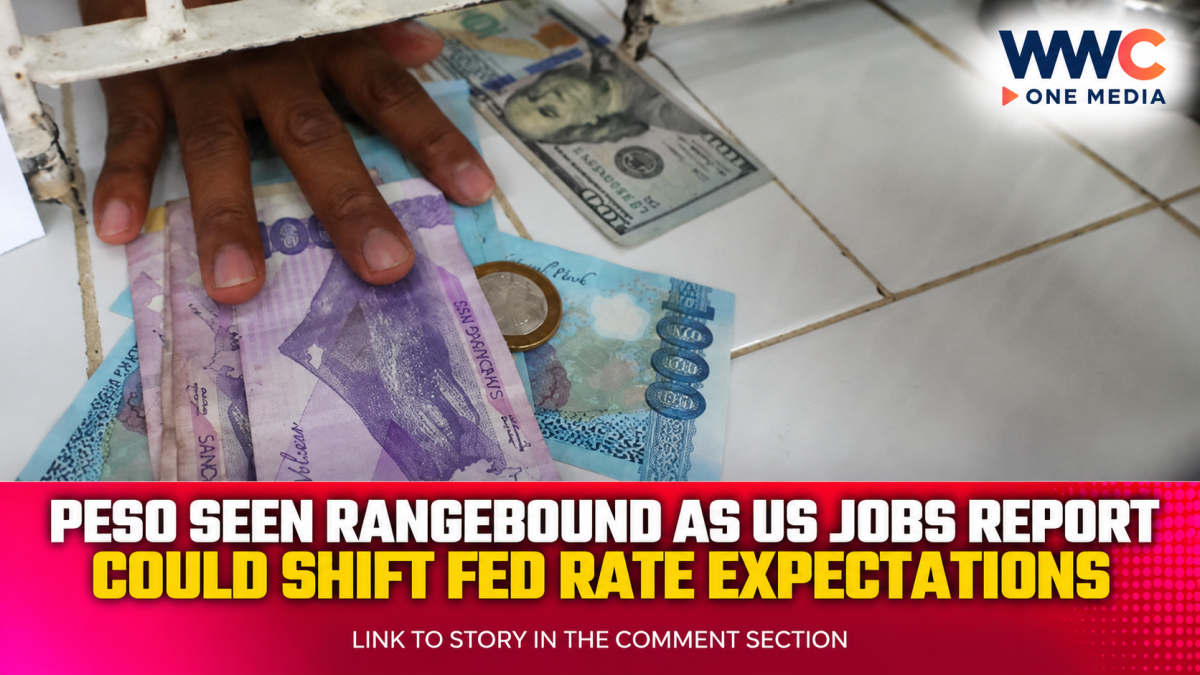
The Philippine peso may trade within a narrow range against the US dollar this week as investors await fresh US employment data that could influence expectations for the Federal Reserve’s next interest-rate moves.
The local currency closed at ₱62.745 per dollar on Friday, Sept. 25, slightly weaker than its ₱62.71 finish a day earlier. Market participants are now looking to the US jobs report for signals about the strength of the American economy and the direction of monetary policy.
The employment figures are particularly important because expectations surrounding the Federal Reserve have become more uncertain. Recent US economic data and comments from policymakers have produced competing signals over whether additional rate increases will be necessary to contain inflation.
The Fed has already raised its policy rate, while officials remain divided over how much further monetary tightening may be required. St. Louis Federal Reserve President Alberto Musalem recently said further increases could be needed because inflation remains above the central bank’s 2% target.
The US labor market is therefore likely to receive close attention. A stronger-than-expected jobs report could reinforce expectations that the Fed will maintain a tighter policy stance, potentially supporting the dollar. Conversely, weaker employment figures could alter market expectations about future rate moves.
That relationship matters for the peso because changes in US interest-rate expectations can influence global capital flows and the relative attractiveness of dollar-denominated assets. Higher US yields can place pressure on emerging-market currencies, while expectations of easier US monetary policy can reduce some of that pressure.
The peso has already experienced significant volatility this year. It recently approached the ₱63-per-dollar level, with the currency recording several record lows during September as higher oil prices and changing expectations for US monetary policy weighed on the local unit.
Oil prices remain another important variable for the Philippine currency. Because the Philippines is heavily dependent on imported energy, higher crude prices can increase demand for US dollars to pay for imports while also adding pressure to the country’s external position and inflation outlook.
Domestic monetary policy is also becoming increasingly relevant. The Bangko Sentral ng Pilipinas raised its Target Reverse Repurchase Rate by 25 basis points to 5% on Sept. 24, citing the need to anchor inflation expectations and contain broader price pressures.
The BSP’s decision came as the peso remained under pressure from external factors, particularly movements in the dollar, oil prices and global interest-rate expectations. The combination means local currency markets are being influenced by both Philippine monetary policy and developments in the US.
Market participants are therefore expected to monitor not only the headline US employment figure but also other details such as payroll growth, unemployment and wage trends. Those indicators can provide clues about whether the US economy is cooling sufficiently or whether inflationary pressures could remain persistent.
The peso’s recent movements show how sensitive the currency has become to changes in global financial conditions. Earlier in September, the currency reached a fresh record low near ₱62.86 per dollar before recovering somewhat as traders adjusted positions ahead of the Fed’s policy decision.
For Philippine businesses and consumers, sustained peso weakness can have broader consequences. Imported fuel, raw materials, machinery and other dollar-priced goods become more expensive in peso terms, potentially affecting operating costs and consumer prices.
The coming US employment report therefore represents another important data point for currency markets, but it will be considered alongside inflation, oil prices, Fed communications and global risk sentiment. The peso’s direction could remain sensitive to changes in those factors as investors reassess the outlook for US interest rates.
The bigger question for currency markets is whether the next batch of US labor data will reinforce the current dollar strength or provide investors with grounds to reassess expectations for the Fed — with the peso remaining caught between global monetary policy and domestic economic pressures.