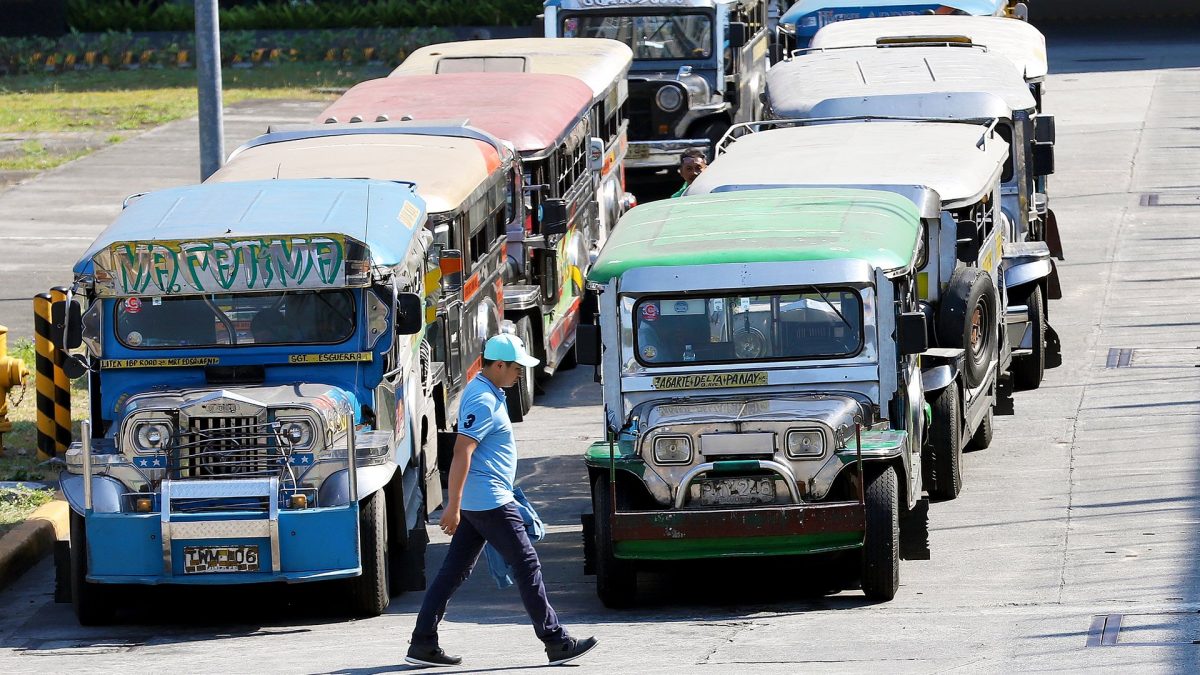
The jeepney fare hike took effect today, Monday, 28 September, and commuters across the Philippines are now paying more. The minimum fare on a traditional jeepney is now P14, up from P13, for the first four kilometres. Higher rates also start today for modern jeepneys, city and provincial buses, airport taxis, TNVS rides and point-to-point buses. The increase lands on the first day of a three-day transport strike, and just before an expected diesel price rollback on Tuesday.
For more on the stories shaping daily life at home, visit our Philippines news hub.
The new fares, at a glance
The Land Transportation Franchising and Regulatory Board (LTFRB) posted the new rates in a Saturday advisory after the Department of Transportation (DOTr) lifted its suspension of the previously approved increases, Philstar.com reported.
- Traditional jeepney: P14 for the first 4 km, plus P2 for every added kilometre.
- Modern jeepney: P17 for the first 4 km (from P15), plus P2.40 per added kilometre.
- Metro Manila and city buses: P15 (ordinary) and P18 (air-conditioned) for the first 5 km, then P2.49 and P2.98 per added kilometre.
- Provincial buses: P12 for the first 5 km on ordinary buses. Each added kilometre costs from P2.20 (ordinary) to P3.35 (luxury).
- TNVS base fares: P55 for hatchbacks, P65 for sedans, P75 for AUVs/SUVs and P165 for premium vehicles, plus P15 per kilometre.
- Airport taxis: P115 for the first 500 metres.
- Point-to-point buses: 15% on top of each route’s current fare.
- Provisional rates: Regular taxi flag-down becomes P65. UV Express goes to P2.60 per km (traditional) and P3 per km (modern).
What a typical trip now costs
These three sample trips use the new published rates. The totals are our own calculations, and the LTFRB fare guide is the final word on what you pay.
- 7 km on a traditional jeepney: P14 + (3 × P2) = P20.
- 7 km on a modern jeepney: P17 + (3 × P2.40) = P24.20.
- 10 km on an air-conditioned city bus: P18 + (5 × P2.98) = P32.90.
Students, senior citizens and persons with disabilities still get the full 20% discount required by law. On a traditional jeepney, that makes their minimum fare P11.25, the Daily Tribune reported. Acting LTFRB chairman Greg Pua Jr. said drivers may use the nearest 25-centavo amount when applying the discount, but the fare itself cannot be rounded off to P11 or P12.
Strike days: 28 to 30 September
Manibela is on strike from today until Wednesday. PISTON will join on Tuesday and Wednesday, 29 and 30 September, GMA News reported. Both groups are protesting high fuel costs. PISTON has called the P1 increase an insult for traditional jeepney drivers, who it says spend about P3,000 a day on diesel, according to Pilipino Star Ngayon. Manibela says it wants a P2 increase.
The LTFRB has warned that operators who stop running can get a show-cause order and a minimum fine of P5,000 for a first offence. A second offence can lead to suspension, and a third to cancellation. Fleet operators with fewer than 60% of units on the road for a certain period risk having their franchise declared abandoned.
In Albay, face-to-face classes at all levels are suspended on 29 and 30 September, and schools will switch to alternative learning modes, the Daily Tribune reported. In Metro Manila, police will run “Libreng Sakay” free rides for stranded commuters, NewsWatch Plus reported.
Why fuel is at the centre of it
The fare increases follow three straight weeks of steep pump price hikes. Last week alone, diesel rose P8.82 a litre, gasoline P4.88 and kerosene P6.47, BusinessMirror reported. Some relief now appears to be coming. Industry estimates point to a cut of P7 to P7.50 a litre for diesel and P0.50 to P1 for gasoline on 29 September. The Department of Energy has said diesel could fall by as much as P8 and kerosene by about P6, Philstar.com reported. Oil companies had not announced their final figures at the time of writing.
Separately, President Marcos signed Executive Order 125 on 25 September, suspending excise taxes on LPG and kerosene. The suspension does not cover LPG used for petrochemicals or as vehicle fuel, or kerosene used as aviation fuel. The DOE had certified that the 30-day average price of Dubai crude reached US$99.41 a barrel, above the US$80 trigger in Republic Act 12316. We covered the lead-up in our report on the planned LPG and kerosene tax suspension.
What it means for you
- Your commute costs more from today. A short jeepney ride now costs at least P14, or P17 on a modern jeepney. Longer trips cost more with each added kilometre.
- A missing fare sign does not make the new fare invalid. The LTFRB says drivers may charge the new rates while it lets them print the fare guide from its website or Facebook page. Physical fare matrices will be required within three to six months.
- Plan ahead for Tuesday and Wednesday. Leave early, check your local government’s pages for class and work advisories, and look for police free-ride units if you get stranded.
- Pump prices may drop, but fares will not. Tuesday’s expected diesel rollback does not change today’s fare increase, which is already in effect.
For background, read how the LTFRB first moved toward a fare increase and why bus operators pushed to lift the suspension.
Sources: Philstar.com, GMA News, Daily Tribune, Pilipino Star Ngayon, NewsWatch Plus, BusinessMirror, The Philippine Star.