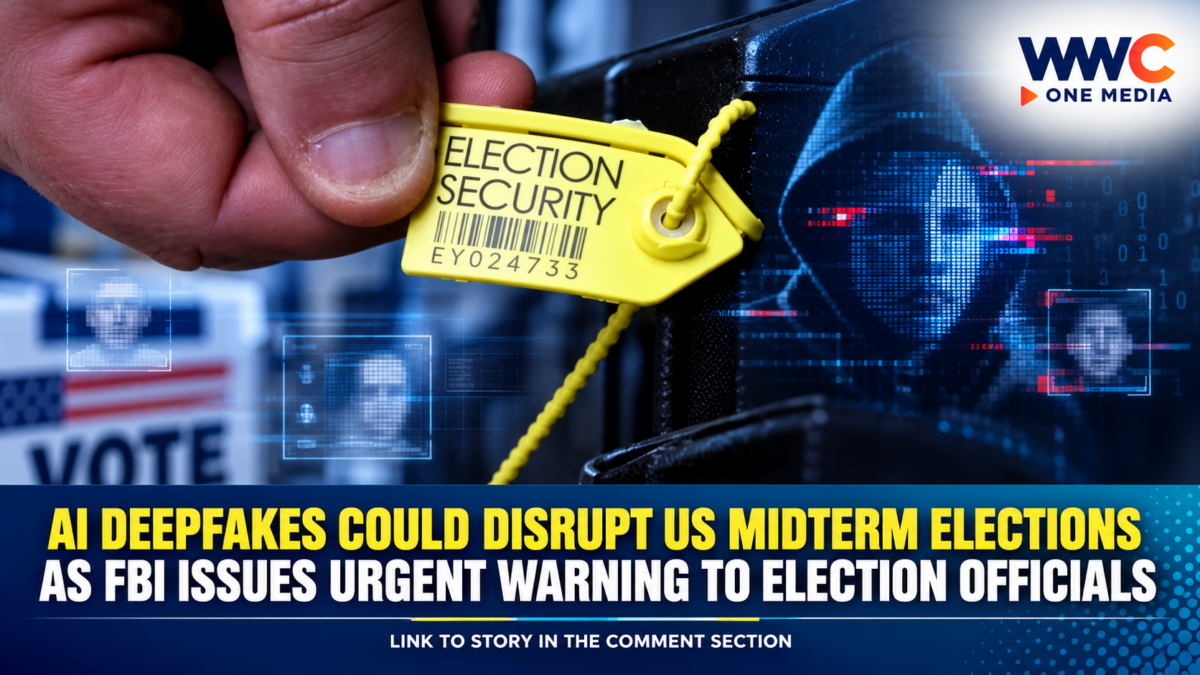
The United States government is raising the alarm over a growing digital threat ahead of the November 2026 midterm elections, warning election officials, political candidates and the public to prepare for increasingly sophisticated artificial intelligence-powered scams, fake messages and deepfake content that could undermine confidence in the electoral process.
The Federal Bureau of Investigation (FBI) and the Cybersecurity and Infrastructure Security Agency (CISA) issued a joint cybersecurity warning on October 16, urging election officials and campaign organizations to strengthen their digital defenses against malicious actors who could exploit artificial intelligence to steal sensitive information, impersonate trusted individuals and disrupt election operations.
According to the advisory, cybercriminals may use artificial intelligence to produce convincing phishing emails and fraudulent text messages designed to trick election workers into revealing passwords, login credentials and other confidential information.
The agencies warned that election officials, political candidates and their organizations are particularly attractive targets because they have access to sensitive voter registration records, government information and confidential campaign communications.
What makes the latest threat especially concerning is how artificial intelligence is changing the sophistication of online deception.
Traditional phishing emails often contained obvious warning signs, including spelling mistakes, awkward grammar and suspicious wording. However, advanced AI tools can now generate messages that sound natural, use local languages and imitate the communication styles of legitimate organizations.
This makes fraudulent messages significantly harder to distinguish from genuine correspondence, increasing the possibility that unsuspecting employees could click malicious links or unknowingly surrender sensitive information.
The FBI and CISA also highlighted the growing danger of AI-generated audio and video, including deepfakes that imitate the voices and appearances of real people.
Criminals could exploit these technologies to impersonate government officials, campaign representatives or trusted colleagues, potentially convincing election workers to disclose confidential information or take unauthorized actions.
The warning reflects a broader concern that artificial intelligence is making cyberattacks faster, cheaper and easier to carry out on a larger scale.
AI Deepfakes Could Become a Major Election Disinformation Weapon
Beyond stealing passwords and personal information, artificial intelligence could also be used to spread misleading political content during the election period.
Deepfake videos, fabricated photographs and cloned voices could make it appear that candidates or government officials made statements they never actually delivered.
Such material could spread rapidly across social media, particularly during politically sensitive moments when voters are looking for updates about candidates, voting procedures and election developments.
The Brennan Center for Justice previously examined these risks in its research on artificial intelligence and election security.
Its research highlighted scenarios in which AI-generated audio could imitate election officials and falsely instruct workers to change polling arrangements. Other examples involved fabricated photographs of election workers, fraudulent government websites and AI-generated messages designed to spread misinformation.
The research also emphasized that attackers do not necessarily need sophisticated technical expertise to create convincing deceptive material. Some publicly accessible AI tools can produce realistic content at relatively low cost.
These developments create an additional challenge for election authorities, which must respond quickly when false information begins circulating online.
FBI Warns Election-Related Scams Could Also Target Voters
The latest warning comes as the FBI separately cautions Americans about election-related fraud schemes ahead of the November midterms.
In another October 15 advisory, the bureau warned that scammers could exploit the election by using candidates’ names, photographs, campaign logos and slogans to solicit fraudulent donations, sell merchandise that is never delivered or steal personal information.
Artificial intelligence could make these schemes more convincing by generating realistic voices, photographs and written communications that impersonate candidates, campaign organizations and government agencies.
This means the risks extend beyond election offices. Ordinary voters could also become targets of fraudulent fundraising appeals, misleading political advertisements and impersonation scams.
The FBI has urged the public to remain cautious when receiving unexpected election-related requests for money or personal information.
Concerns Grow Over Election Security and Foreign Interference
The growing use of AI-generated political content is also intensifying concerns about foreign influence operations and attempts to undermine public confidence in American elections.
A Washington Post report published October 4 highlighted concerns among state election officials about foreign adversaries, including Russia, potentially using digital disinformation to deepen political divisions and create distrust in election results.
The report also described concerns about reduced federal election-security support and difficulties in maintaining information-sharing arrangements between federal agencies and state authorities.
Although misinformation campaigns and cyberattacks are not new, artificial intelligence could significantly increase their speed, scale and sophistication.
Election officials must therefore prepare not only for conventional cyberattacks but also for coordinated campaigns involving fake identities, fabricated communications and manipulated digital content.
Importantly, the FBI and CISA warning does not establish that voting machines or ballot-counting systems have been compromised. Its focus is on preventing cybercriminals from exploiting election-related communications, sensitive information and digital infrastructure.
Election Officials Urged to Strengthen Digital Defenses
As the November elections approach, cybersecurity awareness and rapid verification are becoming increasingly important.
Election offices and campaign organizations are being encouraged to recognize suspicious messages, protect login credentials and strengthen their cybersecurity practices.
Multi-factor authentication, secure communication channels, employee cybersecurity training and careful verification of unexpected requests can help reduce the risk of successful attacks.
Voters are also encouraged to rely on official election websites and verified government announcements rather than sharing unconfirmed information circulating on social media.
The challenge facing American election authorities is no longer limited to protecting physical voting equipment and election facilities. They must also defend the information environment in which voters receive news, evaluate candidates and make decisions.
With AI-generated content becoming increasingly realistic, even an apparently authentic voice recording, photograph or official-looking announcement may require independent verification.
As the United States moves closer to its November 2026 midterm elections, the latest FBI and CISA warning underscores how artificial intelligence is becoming a growing cybersecurity and election-integrity challenge.
The ability to create convincing fake information is becoming more accessible, leaving election officials with less time to identify deception before it spreads.
And with millions of Americans preparing to vote, the battle against election interference may increasingly depend on whether authorities and voters can distinguish authentic information from AI-generated deception.