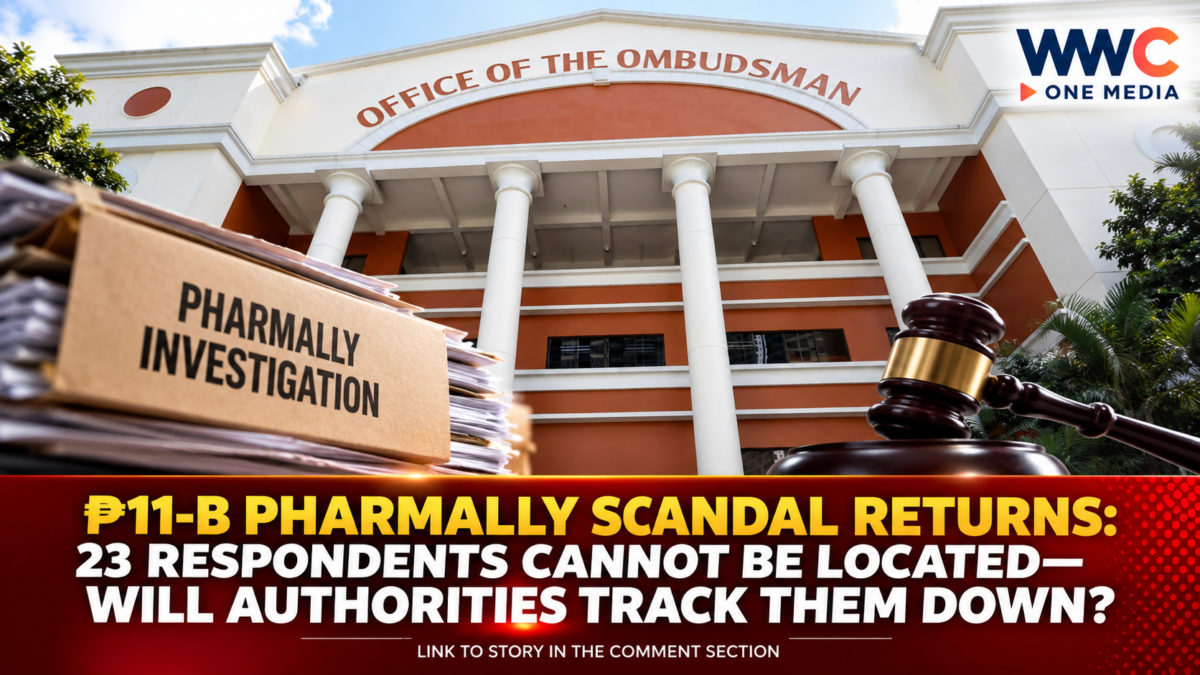
MANILA, Philippines — The multibillion-peso Pharmally scandal is facing another major development after the Office of the Ombudsman filed a plunder complaint involving 46 individuals over alleged irregular government purchases of medical supplies during the COVID-19 pandemic. Ombudsman Jesus Crispin Remulla said 23 respondents could not be located at their known addresses despite efforts to find them, raising concerns about the progress of efforts to pursue accountability.
The complaint covers alleged anomalies involving the procurement of personal protective equipment, COVID-19 testing kits and other pandemic-related supplies. The Ombudsman’s announcement renews scrutiny of government transactions that became the subject of congressional investigations and public controversy during the Duterte administration. [Source: GMA News, October 16, 2026; Philstar, October 17, 2026.]
23 Respondents Reportedly Cannot Be Located
Remulla said investigators had been unable to locate 23 of the 46 respondents at their known addresses. The individuals reportedly include Pharmally executives and personnel, people associated with businessman Michael Yang, and former personnel of the Procurement Service of the Department of Budget and Management (PS-DBM).
Among those identified in reports by GMA News and Philstar are:
- Huang Tzu Yen — Pharmally chairman
- Twinkie Dargani — Pharmally president
- Mohit Dargani — Pharmally corporate secretary and treasurer
- Linconn Uy Ong — Pharmally director
- Krizle Grace Mago — Pharmally head of regulatory affairs
- Lin Wei Xiong — Pharmally financial manager
- Michael Yang — businessman and former economic adviser to former president Rodrigo Duterte
- Mervin Ian Tanquintic — former PS-DBM personnel
The reports also identify other individuals connected to Pharmally and Pai Li Holdings.
The inability to locate respondents at their listed addresses does not, by itself, establish that they are deliberately evading authorities or prove that they are guilty of the allegations. Their legal status and the next steps in the proceedings will depend on the applicable investigative and judicial processes.
Why the Pharmally Scandal Matters
Pharmally Pharmaceutical Corporation became the focus of intense scrutiny after securing billions of pesos in government contracts for COVID-19 supplies despite having reported paid-up capital of only ₱625,000 when it entered the market.
The Senate Blue Ribbon Committee investigated the procurement arrangements in 2021 and 2022, examining contracts awarded through the PS-DBM and questions about the supplier’s financial capacity, government procurement procedures and the handling of public funds.
A Commission on Audit special audit also identified procurement and fund-management lapses involving the Department of Health and the PS-DBM. These findings intensified questions about how pandemic funds were transferred, administered and spent during a national emergency.
In a separate development reported by the Philippine Daily Inquirer, the Court of Appeals upheld administrative findings against former budget undersecretary Lloyd Christopher Lao and other former officials in connection with an irregular contract involving ₱4.2 billion worth of COVID-19 supplies. The ruling reinforced scrutiny of the procurement process, although administrative liability and criminal guilt are distinct legal matters.
Who Are the Key Figures in the Case?
Lloyd Christopher Lao, the former head of the PS-DBM, and businessman Michael Yang are among the respondents identified by Remulla in the latest reporting.
Lao previously pleaded not guilty before the Sandiganbayan in a case concerning alleged anomalous purchases of medical supplies from Pharmally. A plea of not guilty means the accused contests the criminal charge; it is not a finding of guilt.
The case has also involved Pharmally executives and other individuals linked to the supplier and its business dealings. Allegations against respondents must be assessed individually through the evidence and the appropriate legal proceedings.
What Happens Next?
The latest plunder complaint places renewed attention on the Ombudsman’s efforts to investigate alleged irregularities involving pandemic procurement. Locating respondents may be an important step in advancing proceedings, but the ultimate outcome will depend on the evidence, the legal process and decisions by the appropriate authorities.
For Filipinos who lived through the pandemic, the controversy remains significant because it concerns the use of public money intended to help protect lives during a national health emergency.
The central questions remain: Can authorities locate the respondents, establish the allegations with sufficient evidence, and bring the appropriate cases through the justice system?
The bottom line: The filing of the ₱11-billion plunder complaint marks a significant development in the long-running Pharmally controversy. However, the allegations remain subject to due process, and no respondent should be presumed guilty solely because their name appears in a complaint or because authorities have been unable to locate them.