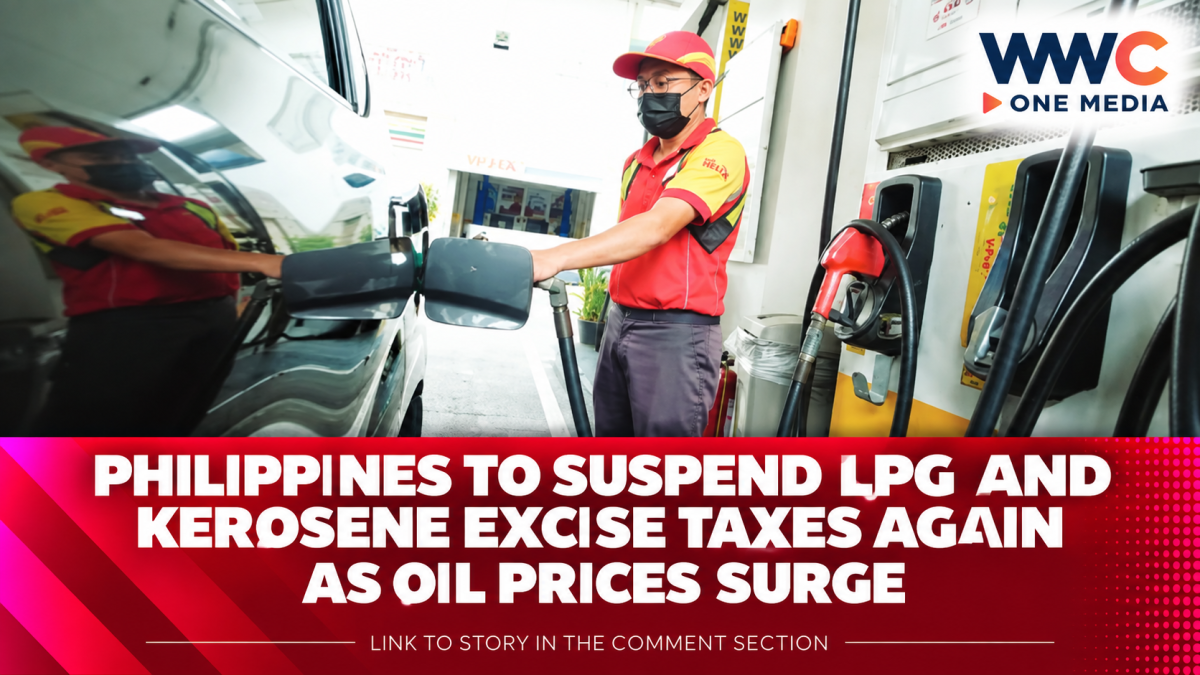
The Philippine government is preparing to suspend excise taxes on liquefied petroleum gas (LPG) and kerosene again next week as elevated global oil prices continue to put pressure on households and the economy.
Finance Secretary Frederick Go said he had signed the recommendation for the tax suspension, which still requires approval from President Ferdinand Marcos Jr. If approved, the measure is expected to take effect next week and remain in place for up to three months, or until the end of 2026.
The move follows the Department of Energy’s certification that the one-month average price of Dubai crude reached $99.41 per barrel from Aug. 13 to Sept. 11. This was well above the $80-per-barrel threshold under Republic Act No. 12316, which allows the President to suspend or reduce fuel excise taxes upon the recommendation of the Development Budget Coordination Committee.
If implemented, the suspension would remove the existing excise tax of P3.36 per kilogram on LPG and P5.60 per liter on kerosene. The same products were previously granted tax relief for three months beginning in April, but the taxes were restored in July after oil prices fell below the statutory threshold.
The government is not currently recommending a similar suspension for gasoline and diesel. Go said removing those taxes could reduce government revenue by about P12 billion per month, while the Development Budget Coordination Committee concluded that the benefits would be less targeted because higher-income households generally consume more of these fuels.
Instead, the government plans to rely on targeted assistance for vulnerable sectors while maintaining the excise taxes on gasoline and diesel. Go also said he supports revenue-reduction measures when there are corresponding measures to replace the revenue that would be lost.
The latest tax-relief plan comes after another steep round of fuel-price increases this week. Pump prices rose by P4.88 per liter for gasoline, P8.82 for diesel and P6.47 for kerosene, reflecting continued volatility in international oil markets.
The suspension is being considered as the Philippines continues to deal with the effects of elevated global oil prices linked to the conflict and supply disruptions in the Middle East. The country remains heavily dependent on imported fuel, leaving domestic prices vulnerable to movements in international crude markets.
For households that rely on LPG for cooking and kerosene for daily needs, the measure could provide some relief if approved and implemented. The government, however, will also have to balance the reduction in fuel-related tax collections against the need to protect consumers from higher energy costs.
The next step rests with the President, who must act on the DBCC recommendation before the new suspension can take effect.