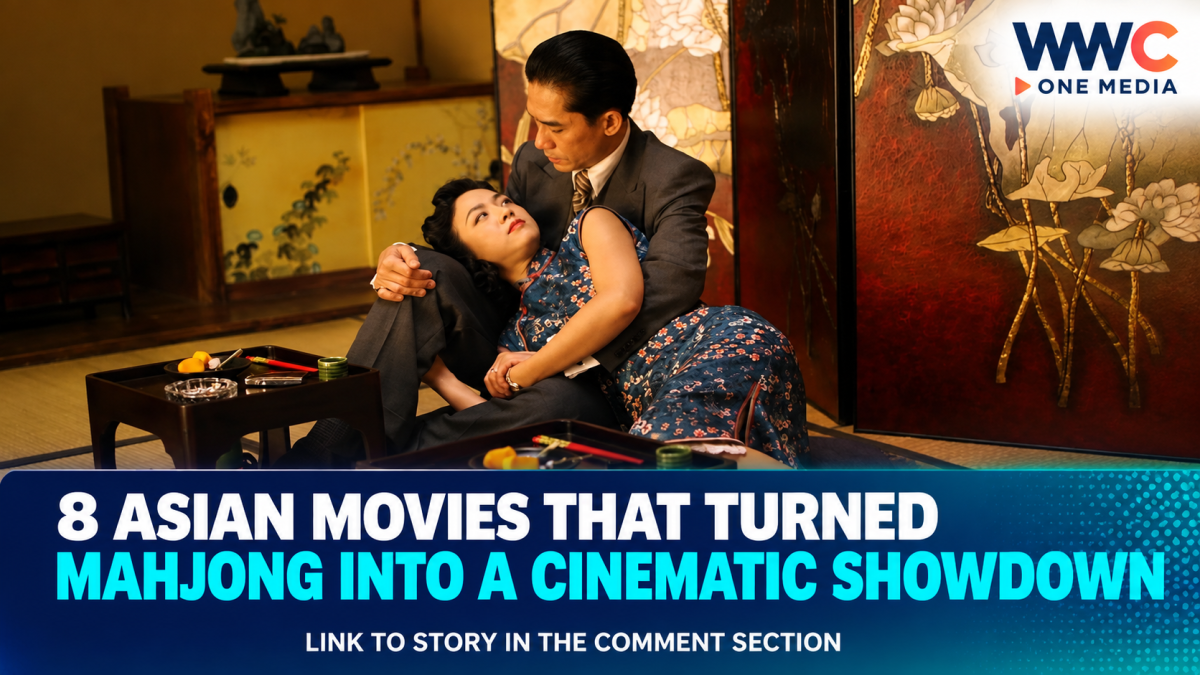
Mahjong may be played around a square table with 144 tiles, but Asian filmmakers have repeatedly transformed the traditional game into a powerful storytelling device. Across decades of cinema, mahjong has represented luck, family, rivalry, social status, cultural identity and even psychological warfare.
From Hong Kong gambling comedies to Hollywood dramas, these eight films show how the clacking of mahjong tiles can become just as dramatic as an action sequence.
- Mahjong Heroes (1981)
Directed by Li Pei-chuan and written by Wong Jing, Mahjong Heroes helped establish the formula for Hong Kong mahjong cinema. The story follows an outsider who helps an inexperienced player challenge a gambling tycoon attempting to take over his family’s business through rigged games.
The film treats every discard and draw almost like a physical attack, bringing the intensity of martial-arts cinema to the mahjong table.
- God of Gamblers (1989)
Chow Yun-fat’s stylish gambler in God of Gamblers became one of the most recognizable figures in Asian gambling cinema. Directed by Wong Jing, the film combines mahjong, poker and dice with elaborate action and psychological battles.
Its slow-motion entrances, extravagant style and high-stakes confrontations helped establish a visual language that later films would imitate and parody.
- All for the Winner (1990)
Stephen Chow brought his signature absurdist comedy to the mahjong genre with All for the Winner. He plays Sing, a seemingly naive player whose supernatural abilities turn him into an extraordinary gambler.
The film was conceived as a parody of God of Gamblers but became a major success in its own right, replacing serious gambling drama with supernatural tricks and outrageous comedy.
- The Joy Luck Club (1993)
Wayne Wang’s adaptation of Amy Tan’s novel uses mahjong in a very different way. Rather than focusing primarily on gambling, the film connects the game with family history, immigration and generational memory.
The mahjong table becomes a meeting point between mothers and daughters, connecting stories of wartime China with life in San Francisco and turning the game into a symbol of cultural inheritance.
- Fat Choi Spirit (2002)
Andy Lau stars as a gifted mahjong player in this festive comedy directed by Johnnie To and Wai Ka-fai. His character’s extraordinary luck is paired with a lesson about sportsmanship and learning how to accept both victory and defeat.
Set against a Lunar New Year atmosphere, the film blends fast-paced comedy with the idea that character and luck are closely connected.
- Kung Fu Mahjong (2005)
This film takes the mahjong formula into martial-arts territory. A diner waiter with an exceptional memory for all 144 tiles becomes an unlikely hero, while physical fights collide with games of mahjong.
Its combination of kung fu, comedy and gambling helped turn the traditional table game into another vehicle for Hong Kong-style action entertainment.
- Lust, Caution (2007)
Ang Lee’s acclaimed wartime drama uses mahjong in a far more serious setting. In Japanese-occupied Shanghai, Tang Wei’s character participates in mahjong games with the wives of powerful collaborators while secretly carrying out an espionage mission.
The constant sound of tiles provides cover for conversations and creates an atmosphere where apparently casual games conceal political danger and psychological tension.
- Crazy Rich Asians (2018)
The mahjong scene between Rachel Chu and Eleanor Young became one of the film’s most discussed cultural moments. Rather than using the game simply as a contest of skill, the scene turns the table into a confrontation over tradition, family expectations and personal sacrifice.
The sequence helped introduce mahjong and its cultural significance to a new generation of international audiences.
Across these films, mahjong takes on remarkably different meanings. It can be a source of comedy, a symbol of family and heritage, a test of character, or a setting for manipulation and conflict.
That versatility helps explain why the game has remained such a recognizable cinematic device across Asian and international films. What looks like a simple game of tiles can become a stage where characters reveal what they value, what they fear and how far they are willing to go to win.