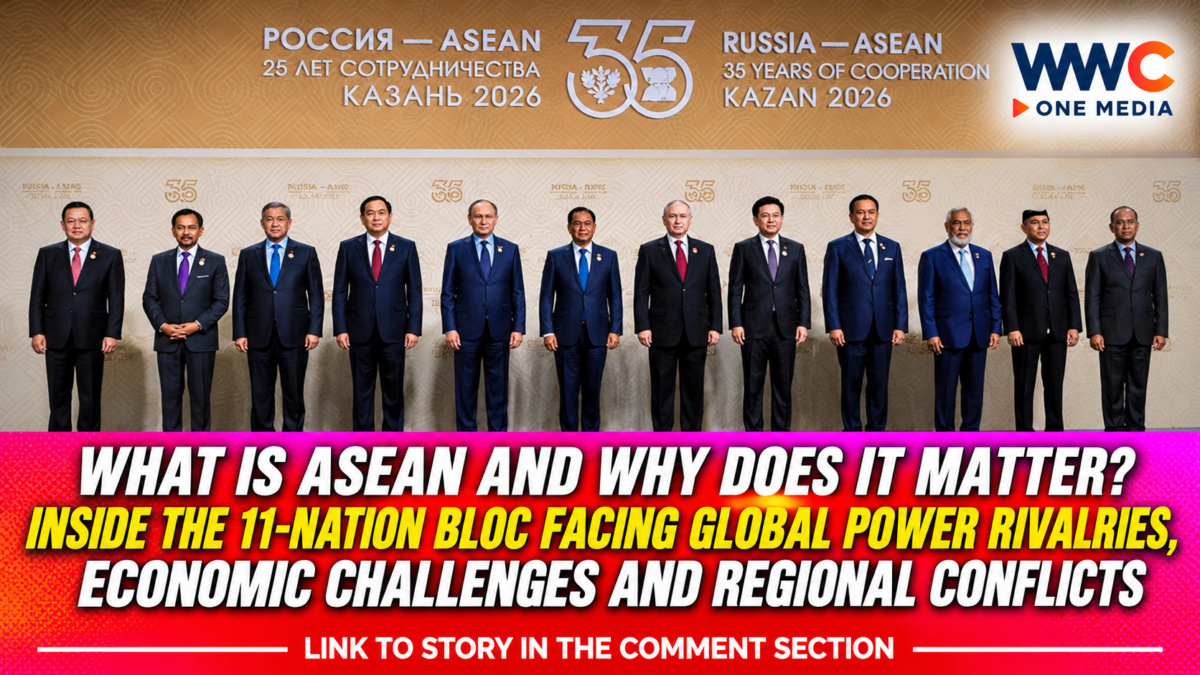
The Association of Southeast Asian Nations (ASEAN) is one of the most influential regional organisations in the world, bringing together 11 countries with a combined population of nearly 700 million and an economy worth approximately US$4.3 trillion. But as geopolitical tensions intensify, regional conflicts continue and global economic uncertainty threatens trade and energy supplies, the bloc faces one of the most challenging periods in its history.
The Philippines is at the centre of this diplomatic moment as it prepares to host the 49th ASEAN Summit in Manila from November 15 to 17, 2026. Leaders are expected to discuss energy security, artificial intelligence, regional trade, environmental concerns and some of Southeast Asia’s most difficult political and security disputes.
The gathering is attracting international attention because the decisions made by ASEAN governments could affect not only Southeast Asia but also major economies and global powers with strategic interests in the region.
But what exactly is ASEAN, how powerful is it, and why should ordinary people across Southeast Asia care about what happens during its meetings?
What Is ASEAN and Why Was It Created?
ASEAN stands for the Association of Southeast Asian Nations. It is a regional organisation established to promote cooperation, economic development, peace and stability among Southeast Asian countries.
It was founded on August 8, 1967, when Indonesia, Malaysia, the Philippines, Singapore and Thailand signed the Bangkok Declaration.
At the time, Southeast Asia was experiencing political uncertainty, ideological divisions and security tensions. The founding countries recognised that closer regional cooperation could help prevent conflict, strengthen diplomatic relationships and create opportunities for economic growth.
Rather than forming a military alliance or a government above individual countries, ASEAN developed as an organisation built around consultation, cooperation and mutual respect for national sovereignty.
Its membership gradually expanded. Brunei joined in 1984, followed by Vietnam in 1995, Laos and Myanmar in 1997, and Cambodia in 1999.
Timor-Leste became ASEAN’s 11th member in October 2025, marking a major milestone in the organisation’s expansion and bringing another Southeast Asian nation into its regional framework.
ASEAN’s 11 Member Countries and Its Growing Economic Influence
ASEAN now represents a substantial share of the world’s population and economic activity.
Its 11 members are:
- Brunei Darussalam
- Cambodia
- Indonesia
- Laos
- Malaysia
- Myanmar
- The Philippines
- Singapore
- Thailand
- Vietnam
- Timor-Leste
The bloc had a combined population of approximately 693.2 million in 2025, equivalent to around 8.4% of the global population.
Its combined economic output reached approximately US$4.3 trillion, which would make it the world’s fifth-largest economy if the member countries were treated as one economic unit. ASEAN goods trade was reported at approximately US$4.4 trillion.
These figures demonstrate why international governments and businesses are paying close attention to Southeast Asia.
The region is home to major manufacturing centres, financial hubs, agricultural producers, technology companies, shipping routes and rapidly expanding consumer markets.
Indonesia is a major economy with significant natural resources and a large domestic market. Singapore is an international financial and logistics centre. Vietnam and Thailand are important manufacturing bases, while Malaysia plays a major role in electronics and semiconductor supply chains.
The Philippines contributes through its services industry, workforce, consumer market, manufacturing sector and strategic location along important regional maritime routes.
Together, these countries form an economic region with considerable influence over international trade and investment.
However, ASEAN is not a single country or a fully unified economy. Each member maintains its own government, laws, currency, economic policies and national interests.
How ASEAN Affects Trade, Jobs and Everyday Life
One of ASEAN’s most important objectives is to make it easier for businesses and goods to move across Southeast Asia.
Through the ASEAN Economic Community, member countries have pursued deeper economic integration by reducing trade barriers, improving market access and encouraging investment across the region.
The goal is to establish a more connected regional market and production base.
For businesses, stronger integration can create opportunities to sell products in neighbouring countries, access suppliers, expand manufacturing operations and participate in regional supply chains.
For consumers, regional trade can increase product availability and strengthen competition. For workers, investment and business expansion can create employment opportunities in manufacturing, logistics, tourism, technology and other industries.
ASEAN has also developed trade relationships with major economies outside the region.
One important agreement is the Regional Comprehensive Economic Partnership (RCEP), which connects ASEAN members with China, Japan, South Korea, Australia and New Zealand.
RCEP is among the world’s largest free-trade agreements by economic coverage and provides a framework for improving trade rules, market access and regional supply-chain cooperation.
However, economic integration remains incomplete. Different national regulations, non-tariff barriers, infrastructure gaps and uneven levels of development continue to make cross-border business more complicated.
The challenge is to turn regional economic agreements into practical benefits for businesses and ordinary citizens.
Why ASEAN Matters to the United States and China
ASEAN’s importance goes beyond trade. Its location and collective diplomatic influence make it a strategic partner for major global powers.
The United States and China both have significant economic, diplomatic and security interests in Southeast Asia.
China has maintained its position as ASEAN’s largest trading partner since 2009, while ASEAN has been China’s largest trading partner since 2019, according to ASEAN data.
The United States also maintains important commercial, diplomatic and security relationships with several ASEAN members, including the Philippines, Singapore, Thailand and Vietnam.
As competition between Washington and Beijing intensifies, Southeast Asian governments face increasing pressure to protect their national interests while maintaining relationships with both powers.
This is where ASEAN’s principle of centrality becomes important.
ASEAN centrality means that Southeast Asian countries seek to remain at the centre of regional diplomatic and security discussions rather than allowing larger powers to determine the region’s future without their participation.
Through ASEAN-led meetings, smaller countries can engage major powers collectively and influence discussions on trade, maritime security, economic cooperation and regional stability.
The bloc also provides a diplomatic platform where China, the United States, Japan, India, Russia and other international partners can engage with Southeast Asian governments.
However, maintaining this central role is becoming more difficult as geopolitical competition grows and individual ASEAN members have different strategic relationships with major powers.
The South China Sea Dispute Is Testing ASEAN Unity
One of the most difficult issues confronting ASEAN is the South China Sea dispute.
The Philippines, Vietnam, Malaysia and Brunei have formal claims in the contested waterway, while China maintains extensive maritime claims that overlap with those of several Southeast Asian countries.
The South China Sea is strategically important because it is a major international shipping route and supports fishing, energy exploration and other economic activities.
For the Philippines, the dispute has direct implications for maritime security, fishing communities, national sovereignty and access to resources within its maritime zones.
ASEAN and China have been negotiating a proposed Code of Conduct intended to establish guidelines for managing behaviour and reducing the risk of confrontations in the disputed waters.
Negotiators have reportedly reached provisional agreement on approximately 80% of the proposed text. However, the parties are expected to miss their goal of completing the agreement by the end of 2026.
Major disagreements remain over the geographical scope of the code, the interpretation of important provisions and whether the final agreement should be legally binding.
The delay is significant for the Philippines, which has made progress on the agreement a priority during its 2026 ASEAN chairmanship.
Negotiations are expected to continue in 2027, when Singapore takes over the rotating chairmanship.
The remaining disagreements highlight a central weakness of ASEAN: countries may agree on the importance of regional stability but still have difficulty reaching a common position when national interests and territorial claims are involved.
Myanmar’s Civil War Remains a Major Challenge
Another major test for ASEAN is the continuing political and humanitarian crisis in Myanmar.
The country has experienced prolonged conflict following the military takeover in 2021, which removed the elected government and triggered widespread resistance and armed fighting.
ASEAN adopted a Five-Point Consensus in 2021, calling for an end to violence, dialogue among concerned parties, humanitarian assistance and the appointment of a special envoy to help facilitate negotiations.
However, the initiative has failed to stop the fighting or produce a lasting political settlement.
The crisis has exposed the limitations of ASEAN’s approach to non-interference in the domestic affairs of member countries.
ASEAN generally avoids imposing political decisions on individual governments. While this principle helps preserve cooperation among countries with different political systems, it can also make it difficult for the bloc to respond decisively when a member experiences a serious internal crisis.
The situation in Myanmar remains an important item on the regional agenda, particularly as neighbouring countries deal with the humanitarian, security and economic consequences of prolonged instability.
Thailand-Cambodia Tensions and Regional Stability
ASEAN is also dealing with tensions between Thailand and Cambodia over their long-running border dispute.
Although a ceasefire has held since December 2025, the underlying disagreements remain unresolved.
The situation matters because a serious escalation could threaten regional stability, disrupt border communities and complicate cooperation among ASEAN members.
The bloc’s ability to encourage dialogue and support peaceful solutions is particularly important when disputes involve two of its own members.
ASEAN’s credibility depends partly on whether it can help prevent disagreements from developing into prolonged confrontations.
Energy Security, Artificial Intelligence and Climate Concerns on Manila’s Agenda
The 49th ASEAN Summit comes at a time when economic and environmental challenges are increasingly connected to regional security.
Energy security is expected to be a major topic as conflict in the Middle East threatens fuel supplies and creates uncertainty over prices.
For countries that depend heavily on imported oil and gas, disruptions to international energy markets can affect transportation, electricity generation, manufacturing and household expenses.
The Philippines has also placed artificial intelligence and digital development among its priorities during its 2026 ASEAN chairmanship.
AI could create opportunities in education, financial services, manufacturing, healthcare and public administration. However, governments must also consider data protection, cybersecurity, workforce disruption and unequal access to technology.
Another regional concern is transboundary pollution, particularly haze caused by forest and land fires.
Months of Indonesian wildfires have affected air quality in neighbouring Singapore and Malaysia, demonstrating how environmental problems can cross national borders.
These challenges require cooperation because no single country can completely address regional energy disruptions, pollution or technological risks on its own.
Why ASEAN Cannot Operate Like the European Union
One common misconception is that ASEAN functions like the European Union.
Although both organisations promote regional cooperation, their structures and powers are very different.
The European Union has institutions with authority over certain matters affecting its member states. ASEAN, by contrast, does not have a central body with the power to impose decisions on its members.
Its decision-making process relies heavily on consultation, consensus and respect for national sovereignty.
This approach allows countries with different political systems, economic conditions and foreign-policy interests to remain part of the same regional organisation.
However, consensus can also slow decision-making. A disagreement among members can make it difficult to produce a strong collective response, especially on sensitive security and political issues.
ASEAN also lacks the enforcement powers to compel governments to follow every regional decision.
This explains why the bloc can be effective in encouraging dialogue and economic cooperation but less effective in resolving some of the region’s most difficult political and security crises.
What the 2026 Manila ASEAN Summit Could Mean for the Philippines
The upcoming summit gives the Philippines an important opportunity to demonstrate its diplomatic influence and leadership in Southeast Asia.
As ASEAN chair for 2026, the country has helped set the agenda for regional discussions and hosted meetings involving Southeast Asian governments and international partners.
The November 15–17 summit is expected to focus on energy security, artificial intelligence, transboundary pollution, Myanmar, Thailand-Cambodia tensions and the South China Sea.
US President Donald Trump is also expected to hold a special summit with ASEAN leaders on November 17 and meet Philippine President Ferdinand Marcos Jr.
The gathering could strengthen the Philippines’ diplomatic relationships with major powers while providing an opportunity to push for regional cooperation on issues affecting its national interests.
For Filipino businesses, closer regional integration could create opportunities in trade, investment, digital services and supply-chain development.
For ordinary Filipinos, the effects could eventually reach employment, consumer prices, energy costs, travel and the country’s ability to protect its maritime interests.
However, hosting a major diplomatic gathering does not automatically guarantee agreements or immediate economic benefits. The real measure of success will be whether discussions lead to practical commitments and follow-through.
ASEAN’s Future Depends on Whether Its Members Can Act Together
ASEAN has grown from a five-country organisation established in 1967 into an 11-member regional bloc representing nearly 700 million people.
Its economic influence, international partnerships and diplomatic role make it an important part of the global political and economic landscape.
But its future will depend on how effectively its members manage their differences.
The bloc must balance economic integration with national interests, maintain constructive relationships with major powers, address security threats and respond to political and environmental crises.
The South China Sea dispute, Myanmar’s continuing conflict and tensions between Thailand and Cambodia show that regional unity is not always easy to maintain.
At the same time, cooperation on trade, energy, digital development and financial stability demonstrates why ASEAN remains important.
For the Philippines, the Manila summit is an opportunity to show that Southeast Asian countries can help shape their own future rather than simply react to decisions made by larger powers.
ASEAN may not have the authority to force its members to act as one, but its collective voice remains a significant diplomatic asset.
The bigger question is whether 11 countries with different political systems, economic priorities and security interests can remain united as global tensions intensify. With the Philippines preparing to host world leaders in Manila, will ASEAN emerge as a stronger regional force — or will its internal divisions expose the limits of its influence when the region needs unity the most?