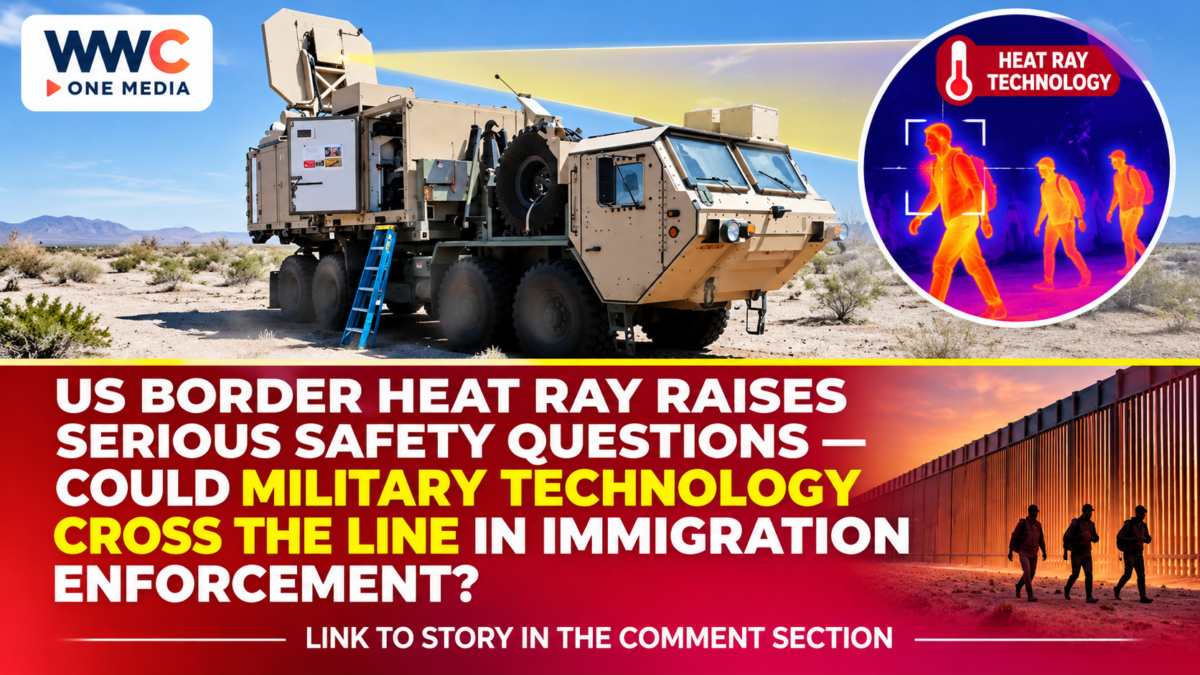
WASHINGTON — The prospect of using military-developed heat-ray technology along the United States–Mexico border has raised fundamental questions about how far immigration authorities should be permitted to go in enforcing border security.
The US border heat ray debate comes against the backdrop of an official border modernisation strategy that prioritises advanced technology, stronger enforcement capabilities and closer coordination with military authorities.
However, the introduction of technology designed to physically deter individuals would raise different legal and humanitarian considerations from conventional surveillance systems.
At the centre of the issue is a critical distinction: developing technology to strengthen national security does not automatically establish that every potential application is lawful, necessary or appropriate.
A publicly accessible authorisation confirming operational deployment of heat-ray technology against migrants has not been established.
US Border Heat Ray Debate Highlights Changing Enforcement Priorities
The US Border Patrol’s 2025–2029 strategy outlines an extensive modernisation programme intended to strengthen the country’s ability to detect and prevent unauthorised border crossings.
Its objectives include improving physical infrastructure, expanding surveillance capabilities, incorporating advanced data analytics and strengthening coordination with domestic and international law enforcement partners.
The strategy also identifies cooperation with the Department of Defense and the National Guard as part of broader efforts to improve operational capabilities.
While these priorities establish a framework for technological development, they do not constitute blanket authorisation for every military-developed enforcement device.
Surveillance equipment primarily helps authorities identify and monitor activity. Technology intended to physically affect individuals introduces additional considerations involving bodily safety, the circumstances surrounding its use and legal accountability.
These distinctions are particularly important in an environment where immigration enforcement decisions can affect individuals with different legal circumstances.
The broader controversy surrounding reported changes to US immigration arrest policies also underscores the importance of distinguishing internal policy discussions from formally confirmed enforcement decisions.
Why Less-Lethal Technology Does Not Mean Risk-Free Enforcement
Less-lethal weapons are generally intended to provide law enforcement personnel with alternatives to potentially deadly force.
Their designation, however, does not guarantee that their application will be harmless.
International human rights guidance recognises that inappropriate use of these devices can result in serious injuries or fatalities.
The central question is therefore not simply whether a technology was designed to avoid killing people, but whether its use would be justified in the circumstances of a particular encounter.
Any consideration of heat-based deterrence at the border would need to address the possibility of unintended harm to vulnerable individuals.
Children, older adults, people with disabilities and individuals experiencing medical emergencies should be among the considerations in any comprehensive safety assessment.
Environmental conditions could introduce additional risks.
For example, if individuals react unpredictably to physical discomfort in an unfamiliar or hazardous environment, the consequences may extend beyond the immediate effects of the technology itself.
These are potential safety concerns requiring evaluation, not evidence that such incidents have already occurred at the US–Mexico border.
What US Border Enforcement Rules Actually Allow
The published January 2021 US Customs and Border Protection use-of-force policy establishes standards governing physical force during law enforcement activities.
It requires authorised officers to assess whether force is objectively reasonable and necessary under the circumstances.
It also addresses warnings where feasible, medical assistance following relevant incidents and the obligation to discontinue physical force once resistance ends or the situation is controlled, subject to applicable restraint requirements.
These principles are relevant to discussions about introducing new enforcement technologies.
The existence of an immigration violation does not, by itself, settle whether a particular application of force is reasonable.
The circumstances of the encounter, the conduct of the individuals involved and any identifiable threats must also be considered.
A technology’s availability to officers would therefore be a separate matter from the legality of its application in an individual incident.
Immigration Status and Access to Asylum Remain Separate Legal Issues
Another important consideration involves individuals seeking protection under US immigration law.
Section 1158 of Title 8 of the United States Code establishes a statutory framework through which individuals arriving in or already present in the United States may apply for asylum, subject to applicable exceptions and procedures.
The provision does not guarantee asylum approval, nor does it eliminate the government’s authority to enforce immigration laws.
Nevertheless, physical deterrence raises questions about how authorities would preserve access to legally applicable protection procedures.
Immigration enforcement involves more than preventing entry. It also requires distinguishing between different legal circumstances and determining which statutory procedures apply.
WWC ONE MEDIA’s previous coverage of US immigration enforcement involving permanent residents and foreign workers provides additional context on the complexity of immigration status.
The ongoing legal questions surrounding Kilmar Ábrego García’s deportation case also highlight the importance of legal procedures and accountability in immigration operations.
Human Rights Standards Put Civilian Safety at the Centre
International guidance on less-lethal weapons emphasises necessity, proportionality and the protection of human life.
Under these principles, potentially harmful enforcement measures should not be employed when less harmful alternatives can adequately address the situation.
Independent safety assessments and effective oversight would be particularly important when considering technologies originally developed for military purposes.
For the United States and other Asia-Pacific economies, the wider policy question extends beyond immigration.
Governments pursuing advanced security technologies must also consider whether existing oversight mechanisms are sufficient to address new risks.
Greater technological capability can improve national security operations, but appropriate safeguards remain essential to maintaining public confidence and protecting individual rights.
What Happens Next?
Any confirmed move towards operational use of heat-ray technology at the US–Mexico border would warrant scrutiny of its legal authorisation, medical safety assessments, operating restrictions and accountability mechanisms.
Clear distinctions should be maintained between research, equipment evaluation, formal approval and actual operational use.
Until publicly available records establish those developments, claims that US authorities have already deployed such technology against migrants should not be treated as confirmed.
The broader challenge is whether governments can modernise border enforcement while maintaining the legal and humanitarian protections that govern the exercise of state power.
Advanced technology may expand the options available to immigration authorities. It does not remove their responsibility to use those powers lawfully.
Frequently Asked Questions
Has the US deployed heat rays against migrants?
Operational deployment against migrants has not been independently established through the primary records reviewed for this article.
Are less-lethal enforcement weapons completely safe?
No. Improper use can result in serious injuries or death, making safety assessments, training and oversight essential.
What is the US Border Patrol’s 2025–2029 strategy?
It is an official framework for strengthening border security through infrastructure improvements, technological modernisation, workforce development and interagency cooperation.
Can people arriving at the US border apply for asylum?
US federal law establishes procedures for applying for asylum, subject to statutory exceptions, applicable restrictions and individual eligibility requirements.
What legal principles govern the use of force?
Relevant principles include necessity, objective reasonableness, proportionality and accountability, depending on the applicable legal and policy framework.