
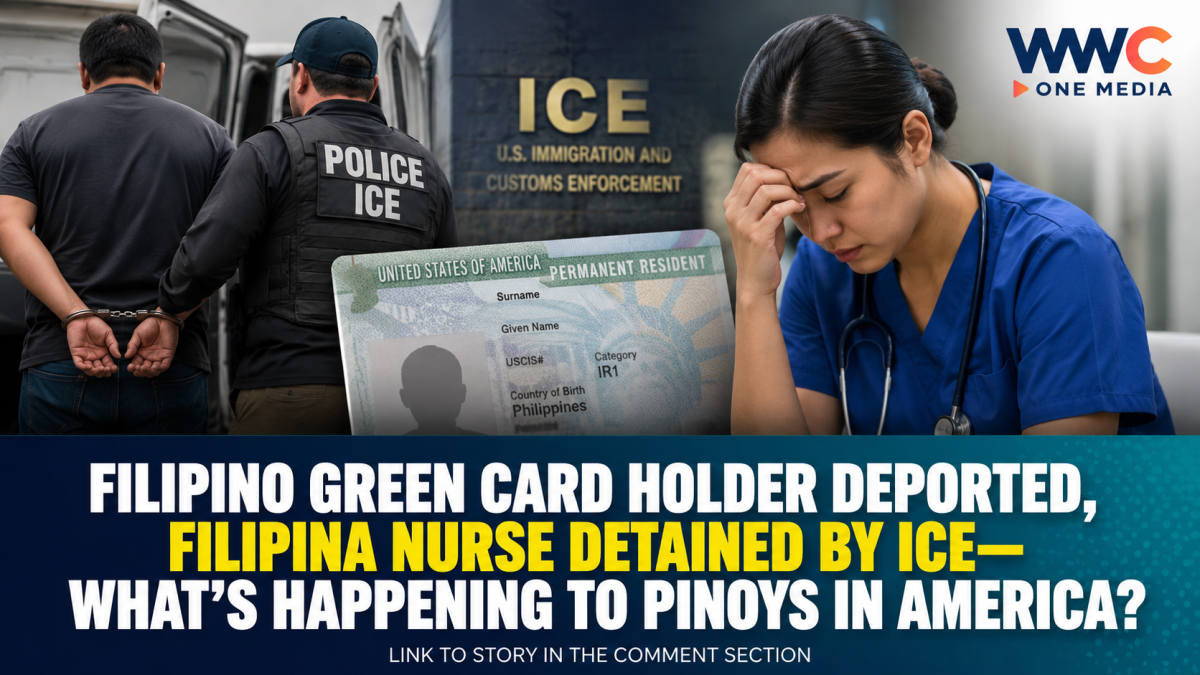
Two separate cases involving Filipinos have drawn fresh attention to the increasingly কঠোর immigration enforcement climate in the United States—a longtime green card holder was deported after a final removal order, while a 22-year-old Filipina nurse with valid work authorization remains in immigration custody as her family seeks answers.
The cases have sparked concern among Filipino communities in the US, particularly as immigration enforcement policies increasingly affect people with different immigration backgrounds—including lawful permanent residents, workers with legal authorization, and other migrants with pending cases.
Filipino green card holder deported after final removal order
A Filipino man who entered the United States as a lawful permanent resident in 2004 was deported on August 18, 2026, according to the US Department of Homeland Security (DHS). An immigration judge had issued a final order of removal against him on July 2.
DHS identified the man as an alleged member of the Asian Boys gang and cited a criminal record that included convictions for voluntary manslaughter, aggravated assault with a firearm and possession of a controlled substance.
His deportation followed a criminal case connected to the 2018 killing of a US Navy sailor on a San Diego freeway. Prosecutors said the sailor had stopped to help what appeared to be a disabled vehicle when he was fatally shot by one of the people inside. The Filipino man later pleaded guilty to voluntary manslaughter and other charges and was sentenced in 2020 to nine years and eight months in state prison. The actual shooter was convicted of first-degree murder and sentenced to life in prison without parole.
The case highlights an important point often misunderstood in immigration debates: holding a green card does not make a non-citizen immune from deportation, particularly when an immigration court issues a final removal order based on qualifying criminal convictions.
Filipina nurse detained despite valid work authorization
In a separate case in Arizona, 22-year-old Filipina registered nurse Mariae Nacu, known to family and friends as “LC,” was detained by US Immigration and Customs Enforcement (ICE) after being taken into custody at Phoenix Sky Harbor International Airport.
According to reports from her family and a fundraising campaign organized by her boyfriend, Nacu has valid employment authorization, no reported criminal history, and had been working as a registered nurse in an acute-care telemetry unit in Phoenix. Her loved ones say she entered the United States legally and has a pending immigration case.
Her family has appealed for public support while seeking clarity over her detention. According to an update cited in reports, a hearing in her immigration case is scheduled for September 4.
Her case has generated particular concern because employment authorization allows an immigrant to legally work in the United States, but a work permit alone does not necessarily resolve or determine a person’s underlying immigration case. The exact circumstances and legal basis for Nacu’s detention have not been publicly detailed in the reports reviewed.
A wider immigration crackdown is reaching beyond undocumented migrants
The two Filipino cases come as the Trump administration continues to expand immigration enforcement and tighten restrictions affecting different categories of foreign nationals.
Recent reporting by the Associated Press and Reuters said the administration has also pursued policies affecting people who entered the United States legally, including plans involving the revocation of certain business and tourism visas held by people who later sought asylum. The developments underscore how rapidly changing immigration policies can affect individuals with very different legal circumstances.
The cases have added to growing anxiety among immigrant communities, where families are increasingly seeking legal advice and monitoring immigration proceedings closely.
What happens next?
For the deported Filipino man, DHS says the removal process has already been completed following a final immigration court order.
For Nacu, however, her case remains unresolved. Her upcoming immigration hearing could provide more clarity about her legal status and the government’s basis for continuing her detention.
For now, the two cases serve as a stark reminder for Filipinos living and working in the United States: immigration status is not always defined by a single document. A green card, work permit or pending immigration application can each carry different legal rights—and different risks—depending on the individual’s circumstances.
As Nacu’s family waits for answers and her immigration case moves forward, many Filipino-Americans are watching closely, asking a question that is becoming increasingly urgent amid the shifting enforcement landscape:
Who could be affected next?




Leave a Reply