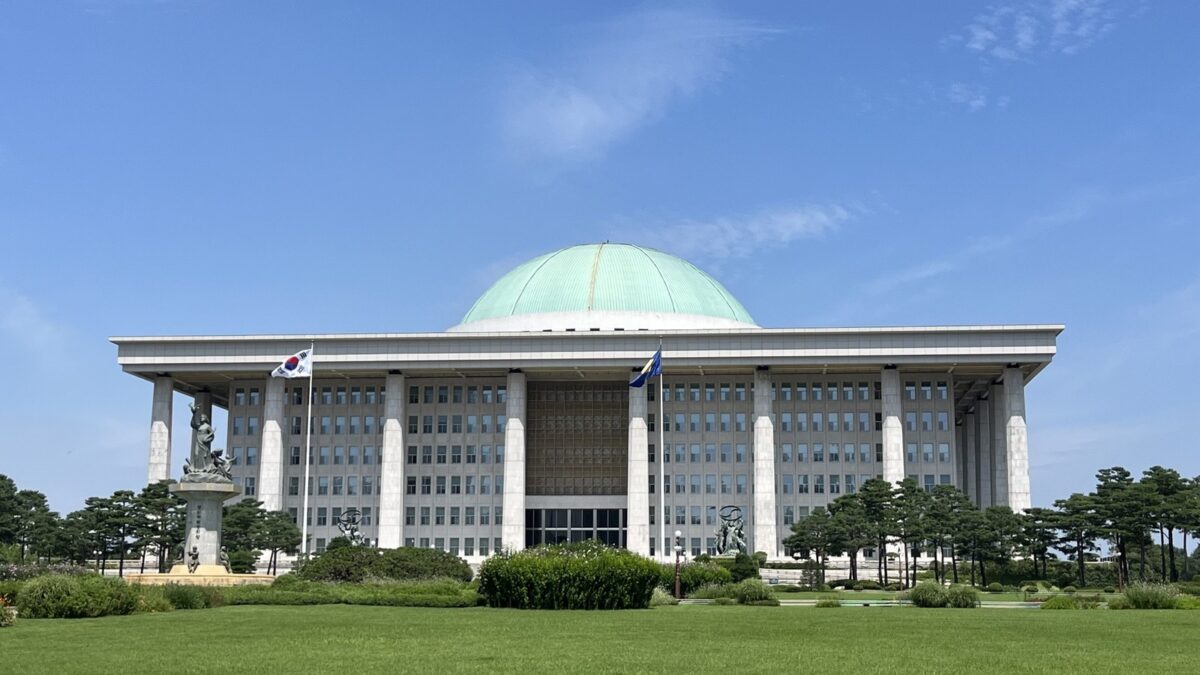
South Korean President Lee Jae Myung on Monday, November 2, unveiled the largest budget in the country’s history, pledging to “boldly invest in AI and future growth engines” as chip exports power Asia’s fourth-largest economy.
In his budget address to the National Assembly, Lee said total spending for 2027 would rise 12.8 percent to 820.9 trillion won, about $610 billion, CNBC reported. WWC One Media tracks Asia’s tech race; more from Seoul is on our South Korea hub.
At the center of the plan is artificial intelligence. “We will invest 21.3 trillion won, nearly twice this year’s amount, in AI and the three megaprojects of semiconductors, physical AI and AI data centres,” Lee said, as quoted by DW.
A national AI model as a “strategic asset”
On top of that, Lee pledged 4.7 trillion won for frontier AI development, with the goal of building a sovereign AI model with what he called the “world’s highest performance.” DW quoted him describing the model as “a national strategic asset.”
The government also plans to train 2,000 specialists to “lead semiconductor design and the regional semiconductor industry,” and to widen AI education for students, job seekers and current workers, according to CNBC. South Korea already runs university “contract departments,” where students enroll in company-linked degrees with pathways to jobs at firms such as Samsung Electronics and SK Hynix.
Defense spending rises too. CNBC reported that the defense budget is set to grow 8.2 percent to 73.3 trillion won. “We will rapidly transform into a smart, elite, and powerful military by establishing a hybrid manned and unmanned system based on AI, robots, and drones,” Lee said. The plan also raises social security spending for young people.
Chip exports give Seoul room to spend
The spending push comes on the back of a strong export run. Shipments surged 93.7 percent from a year earlier to a record $115.3 billion in October, CNBC reported, citing Korea Customs Service data released on Sunday. Exports reached $930 billion in the first 10 months of the year, passing $900 billion for the first time, and the country posted a $42.5 billion trade surplus in October.
DW noted that South Korea is on track to top $1 trillion in exports this year, which would make it the fourth country to reach that mark after the United States, China and Germany. The country is home to two of the world’s biggest memory chip makers, and the AI boom has sent demand for memory chips soaring.
The International Monetary Fund expects South Korea’s economy to grow 3.3 percent in 2026, its fastest pace since 2021, according to CNBC.
Debt question and the road to approval
Lee said the higher spending would result in “virtually no net increase in government debt,” with newly issued bonds used to repay existing debt, CNBC reported.
The proposal still needs parliamentary approval. DW noted that Lee’s Democratic Party of Korea holds a majority in the National Assembly, which improves its chances of passing largely intact.
For the region, the plan signals how hard Seoul is leaning into AI as a growth driver. Southeast Asian economies, including the Philippines, compete for chip-related investment and data center projects, and South Korea’s budget sets a high bar for state support in the sector.