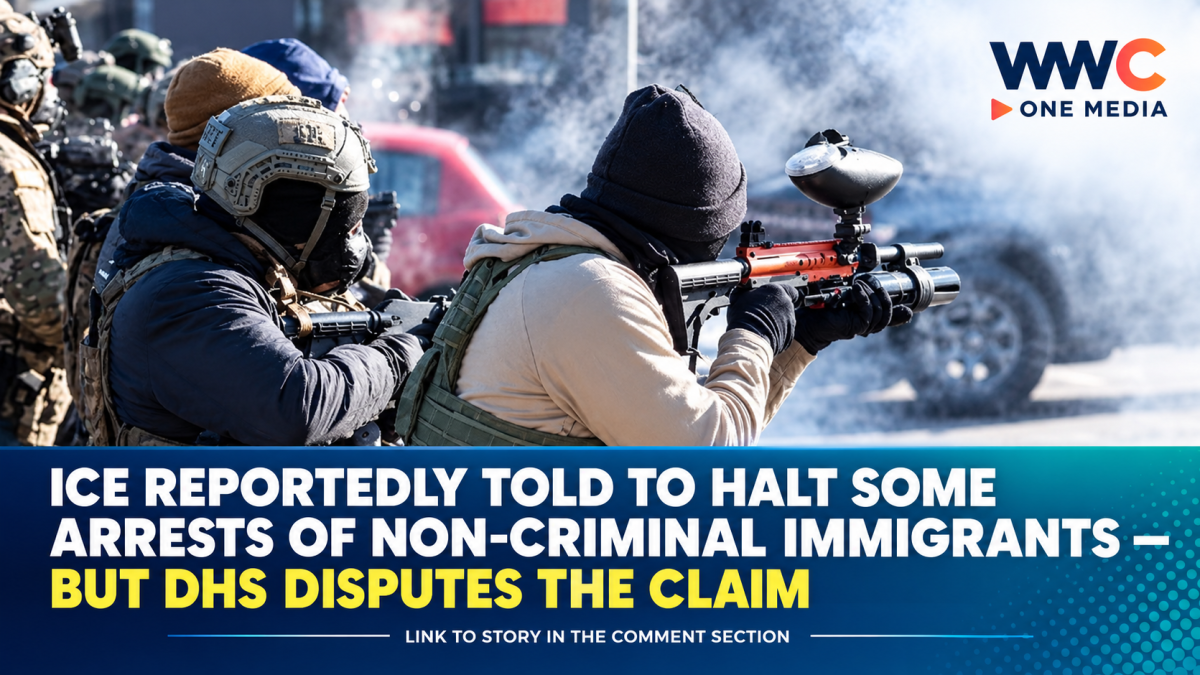
WASHINGTON — A reported change in U.S. immigration enforcement policy has sparked fresh attention after sources cited by The Daily Wire said Immigration and Customs Enforcement (ICE) officers were instructed to stop arresting immigrants who have no criminal convictions or pending criminal charges.
According to the report, the alleged guidance would allow agents to continue arresting immigrants with criminal convictions or pending charges while limiting certain arrests involving people without criminal records. It would also reportedly end so-called “collateral arrests,” in which other undocumented immigrants encountered during an operation could be detained while agents were pursuing a different target.
But the reported policy change has not been confirmed by the Department of Homeland Security (DHS).
DHS Rejects Report of a Broad Halt
DHS publicly disputed the account, saying that ICE’s enforcement operations remain broad.
The department said that “no one is off the table” and that people who are unlawfully present in the United States remain subject to immigration enforcement.
That creates an important distinction in the story: the reported instructions came from anonymous agency sources cited by The Daily Wire, while DHS has publicly rejected the characterization of a nationwide pause on arrests of immigrants without criminal convictions.
As of the latest reports, it remains unclear whether any temporary internal guidance was issued, how broadly it may have been implemented, or whether enforcement practices changed in particular locations.
What the Reported Directive Would Have Changed
According to the sources cited by The Daily Wire, ICE officers would focus arrests on immigrants with criminal convictions or pending criminal charges.
People with final deportation orders but without criminal convictions or pending charges would reportedly not be arrested under the alleged guidance.
The sources also described a change involving collateral arrests, meaning agents would reportedly focus on the specific person they were seeking rather than detaining other undocumented individuals encountered during the operation.
PNA reported that several ICE officers expressed frustration about the alleged change. One anonymous source speculated that the timing could be related to the approaching U.S. midterm elections, but that interpretation has not been independently established.
Report Comes After Texas ICE Shooting
The controversy emerged roughly a week after an ICE officer shot and wounded Wilber Rafael Garces Perez, a Venezuelan man, during an encounter in Austin, Texas.
The Texas Tribune reported that Garces Perez was working as a DoorDash delivery driver when the shooting occurred. His attorneys said he had entered the United States in 2024 through the CBP One application system and had applied for asylum.
The incident has since drawn additional scrutiny over the circumstances surrounding the encounter and Garces Perez’s subsequent detention.
The Texas Tribune also reported that Garces Perez was initially taken to a hospital before being transferred to an immigration detention facility.
Body-Camera Rules Also Under Scrutiny
PNA reported that the ICE officer involved in the Texas shooting had been issued a body camera but was not wearing it during the incident, according to U.S. media reports citing federal officials.
ICE subsequently reminded officers that body cameras must be activated during enforcement activities, according to an internal notice cited by The Washington Post.
A federal judge has also ordered Garces Perez to appear at a September 30 hearing, temporarily preventing his deportation.
What Happens Next
The conflicting accounts leave several questions unresolved.
The Daily Wire report describes an alleged internal change in enforcement instructions, while DHS says that there is no blanket policy removing non-criminal undocumented immigrants from enforcement actions.
Until additional documentation or official guidance becomes available, the scope and duration of the reported directive remain unclear.
For millions of immigrants and communities watching U.S. immigration policy, the distinction could be significant: is this an actual change in ICE enforcement practice, a temporary internal instruction, or a disputed report that DHS says does not reflect current policy?
Further clarification from federal authorities could determine how the situation develops in the coming days.
WWC ONE MEDIA G,A