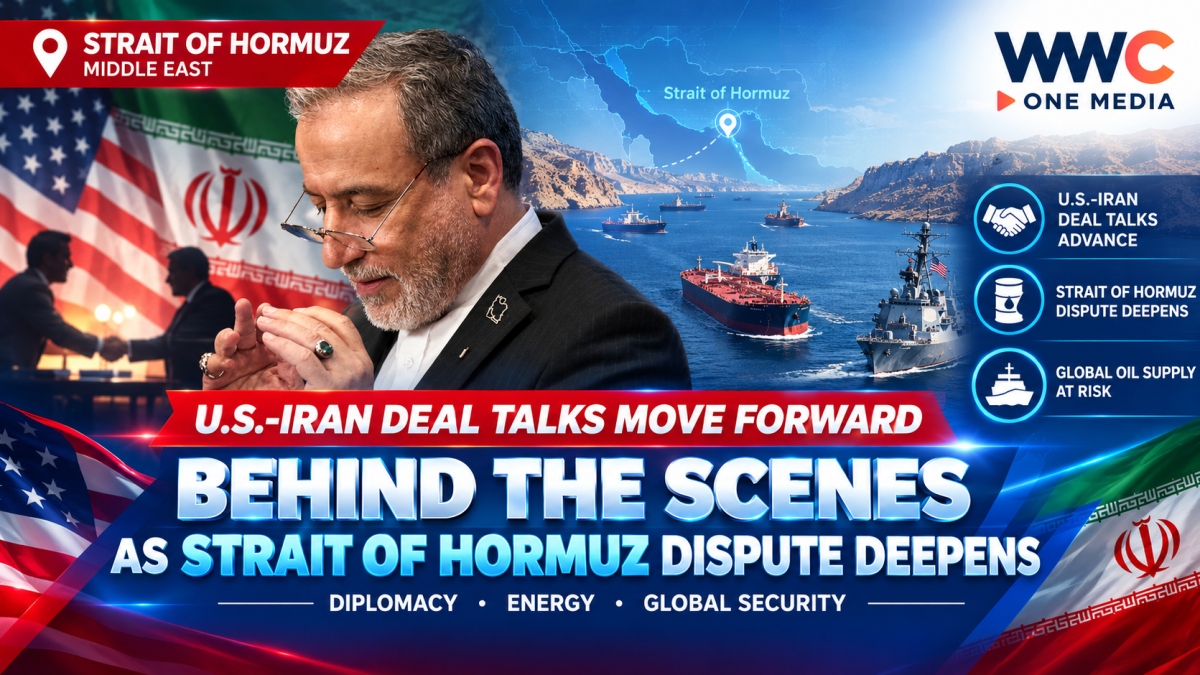
Behind the scenes, diplomatic efforts to bring the United States and Iran toward a deal are continuing — even as major differences threaten to derail the latest push.
Mediators are working with both sides on a possible agreement aimed at ending the fighting and reopening the strategically vital Strait of Hormuz, according to U.S. and regional officials cited by The Associated Press. The indirect negotiations come as the conflict enters its eighth month and continues to disrupt global trade and energy markets.
The latest diplomatic effort follows Iran’s proposal for a rapid sequence of steps that would eventually reopen the waterway, while Washington is seeking concrete commitments from Tehran on its nuclear program.
Strait of Hormuz Becomes the Key Bargaining Point
Under a draft framework reportedly being discussed by mediators, the Strait of Hormuz could reopen first, followed by the lifting of the U.S. blockade and subsequent sanctions relief.
The proposed arrangement would reportedly coordinate the reopening of the strait with a separate understanding involving Iran and Oman. The draft also envisions the waterway reopening without tolls.
The stakes are enormous.
The Strait of Hormuz is one of the world’s most important energy corridors, meaning prolonged disruption has consequences far beyond the Middle East. Brent crude was trading above $108 a barrel as economic pressure mounted on both Washington and Tehran.
Washington and Tehran Still Disagree on the Nuclear Issue
The biggest obstacle may be what happens after the waterway is reopened.
A U.S. official told AP that the Trump administration wants the nuclear issue addressed before reaching a broader agreement with Tehran. Washington is seeking concrete Iranian concessions, including potential access for international nuclear inspectors.
Iran, meanwhile, has indicated flexibility on the nuclear question but remains far apart from the United States over timing and which side should make the first move.
That sequencing problem could prove critical.
Iran’s latest proposal called for a much faster timetable than an earlier agreement that collapsed in June. Iranian Foreign Minister Abbas Araghchi said the proposed seven-day timeline would begin once Washington accepted Tehran’s plan.
Trump Rejects the Proposal — But Talks Continue
U.S. President Donald Trump has publicly rejected Iran’s latest proposal, but he has also indicated that American negotiators could continue discussions during the week.
Reuters reported that U.S. and Iranian officials separately engaged with mediators on Monday as part of another attempt to end the conflict. Iran is seeking an end to hostilities, the release of frozen assets, relief from oil sanctions and the removal of the U.S. blockade, while offering to reopen the Strait of Hormuz and resume nuclear negotiations.
That leaves the diplomatic channel open despite the public disagreement.
Iranian officials have said Tehran is awaiting Washington’s definitive position, while U.S. officials remain cautious about whether Iranian commitments could be sustained.
The Crisis Is Spreading Beyond Hormuz
The diplomatic pressure is also being compounded by developments elsewhere in the region.
Iran’s latest proposal seeks an end to fighting on multiple fronts, including Lebanon. At the same time, the emergence of another threat around the Bab el-Mandeb Strait has added further pressure to global shipping and energy markets.
With both Washington and Tehran facing economic costs from the conflict, mediators are attempting to narrow the gap before the situation produces even greater regional and global consequences.
For now, negotiations remain alive — but the central questions of nuclear concessions, sanctions relief, the Strait of Hormuz and who moves first remain unresolved.
The next round of diplomatic contacts could determine whether the latest proposal becomes the foundation for a broader agreement — or another attempt that collapses before the two sides can reach the finish line.
WWC ONE MEDIA G,A