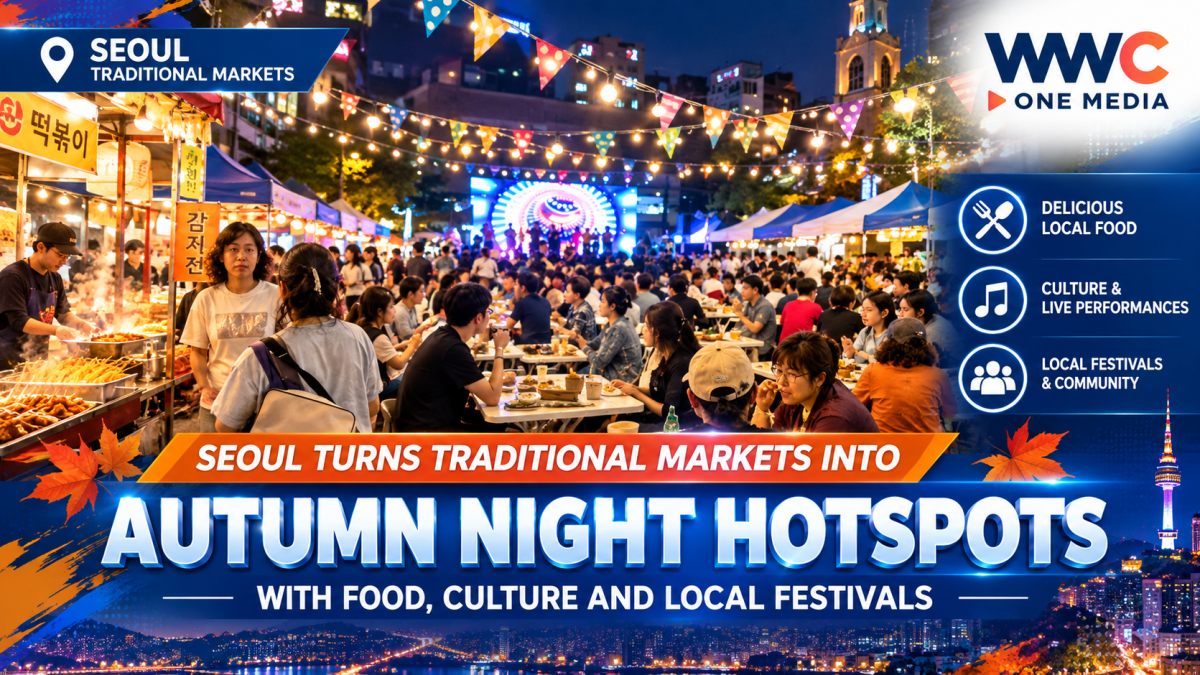
Seoul is taking its traditional markets into the night.
Starting in October, 23 traditional markets and shopping streets across 12 districts will host a series of autumn festivals featuring night markets, special food menus, cultural activities and neighborhood experiences, as the city looks to inject new energy into its local shopping districts.
The initiative by the Seoul Metropolitan Government is designed to encourage residents and tourists to visit traditional markets after dark — turning places traditionally associated with daytime shopping into livelier nighttime destinations. The city also expects the increased foot traffic to benefit nearby small businesses and local merchants.
From Global Food to Korean Tradition
Among the featured locations is Sinheung Market in Haebangchon, Yongsan District, which will host a global local festival running from Thursday through Saturday.
The event will bring together vendors from nine countries, alongside a flea market and a “yut nori World Cup,” adding an international twist to one of Korea’s traditional board games.
Meanwhile, Guro Market will take a different route on Oct. 24, combining traditional culture with fashion. Residents and college students will appear in hanbok during a fashion show featuring 10 of the market’s staple products.
Food lovers will also have plenty to look forward to.
At Byeolbit Nammun Market in Geumcheon District, seven new dishes developed with a local university will be introduced on Oct. 9. Visitors will be able to sample the creations and take part in evaluating them.
In Dongjak District, Namseongyeok Alley Market will build its Oct. 23 festival around its signature chilled boiled pork slices, while a shopping street in Jungnang District will combine food with literature on Oct. 31 by serving dishes featured in popular books and hosting author talks.
Seoul Wants Markets to Stay Busy After Dark
The push goes beyond food.
In Gangbuk District, Suyu Traditional Market will organize a food stamp tour, rewarding visitors who complete the market trail. At Sinwon Market in Gwanak District, shoppers who spend at least 50,000 won during the Nov. 13-14 night market will receive 10,000 won back in digital Onnuri gift certificates, which can be used at traditional markets.
The strategy reflects Seoul’s broader effort to strengthen its nighttime economy and connect tourism with neighborhood businesses.
The city has also expanded its autumn festival programming beyond traditional markets, with a 2026 festival map covering events from September through November and a dedicated nighttime-festival category designed to broaden evening cultural choices and help channel festival visitors toward local commercial areas.
For Seoul’s traditional markets, the goal is not simply to attract shoppers for one evening. The city says it wants these markets to become places where people stay longer, eat, explore and return.
And as autumn arrives, Seoul is betting that the combination of local food, Korean tradition and nighttime entertainment could give its old markets a very different role in the modern city.
The bigger question now is whether these autumn nights can turn temporary festival crowds into a lasting revival for Seoul’s traditional markets.
WWC ONE MEDIA G,A