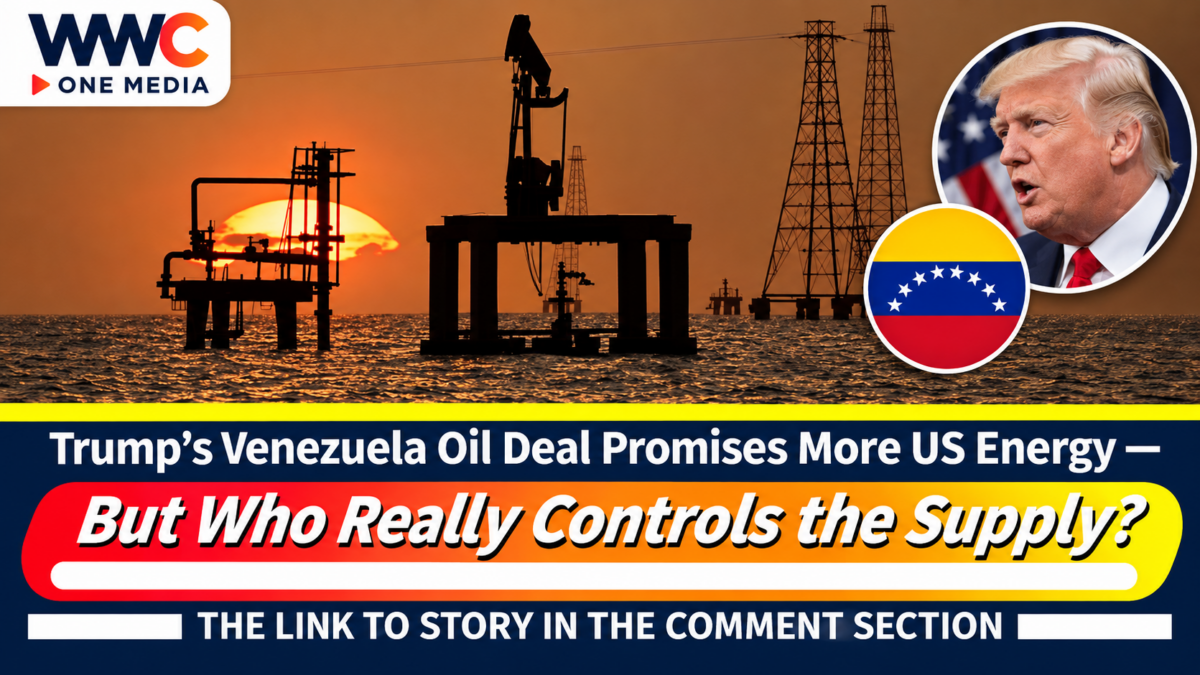
US President Donald Trump highlighted American energy supply during his November 2026 visit to Manila, as Washington continued implementing a far-reaching commercial arrangement involving Venezuela’s oil industry. Official US documents describe new governance and oil-purchasing rights connected to a private producer, while Philippine government reporting identifies energy cooperation among the issues raised during Trump’s regional visit.
The key distinction is between commercial interests in an oil business and ownership of an entire country. The records describe specified rights and targets, not US ownership of Venezuela or immediate access to every barrel.
Venezuela oil deal: what Washington says it secured
The White House announced in August that the US government had obtained a significant position connected to North American Blue Energy Partners (NABEP), a private operator in Venezuela. Its fact sheet describes economic ownership and governance provisions tied to a project whose concessions encompass more than 65 billion barrels of reserves.
Among the publicly described terms is a right for the US Department of State to buy 20% of output from fields NABEP operates at production cost. The government also holds a right of first refusal on the remaining 80% of production, according to the published terms.
The same record describes a veto over the appointment of company directors and a requirement that most directors be US citizens. Purchasing rights and corporate influence do not establish ownership of a sovereign state.
For background on the previously announced ownership structure, WWC’s earlier examination of the 35% US position in the Venezuela oil venture covers the original commercial announcement. The present question is what the arrangement has demonstrably delivered since then.
Oil reserves are not the same as oil deliveries
The White House said on Oct. 28 that the first one million barrels obtained under the arrangement had arrived in Texas for refining. That announcement represents a specific delivery claim by the administration, unlike the much larger volumes referenced in the concession agreement.
The difference in scale matters. An oil reserve is a quantity estimated to be underground; production requires wells, equipment, processing, transport and functioning infrastructure. A purchasing entitlement does not mean all covered reserves can immediately be shipped.
Nor does a large reserve figure independently prove that American petrol prices will fall. Retail prices are affected by more than crude availability, including refining, transport, taxation and conditions in global energy markets.
What this could mean: The first reported shipment is a more concrete implementation milestone than a reserve headline, but it is not sufficient on its own to establish sustained production growth or lower pump prices.
Energy companies outline expansion plans
On Sept. 2, the US Department of Energy announced energy agreements involving Chevron, Eni and GE Vernova. It said Chevron’s plans could unlock more than $7 billion in investment over five years and more than double its Venezuelan production to 600,000 barrels per day compared with 2026.
The department also described a 25-year agreement between Eni and Venezuela’s state oil company, PDVSA, to develop the Junín 5 field. These figures and targets are terms and expectations identified in an official announcement, not proof that the entire programme has already been completed.
Electricity supply is another constraint. The department said GE Vernova’s arrangement was intended to bring 1 gigawatt of additional reliable power online within the first 24 months, followed by 5 gigawatts over the succeeding four years.
Restoring a power network can be relevant to pumping, processing and distributing oil. But proposed capacity, planned investment and signed agreements are separate measures, and none should be substituted for verified operating results.
A related WWC report examines ExxonMobil’s preliminary exploration of a return to Venezuela, illustrating how agreements to assess opportunities can precede final commercial commitments.
Why the energy message matters in Manila
Trump’s November visit took place as the Philippines hosted ASEAN-related meetings. A Nov. 18 Philippine government account of the special ASEAN-US engagement identified trade, investment, energy security, critical minerals and advanced technology among the topics the US president raised.
Those subjects matter to Philippine readers because national energy security depends partly on external suppliers, infrastructure and the terms of international trade. Expanded US supply could create additional commercial possibilities, but an announcement made at a regional summit is not itself an oil-supply contract with Manila.
It would also be premature to calculate a Philippine consumer-price benefit without a published Philippine purchase agreement, delivery timetable and pricing formula. The primary records reviewed for this article do not establish those terms.
The broader relationship between oil and foreign policy has appeared in WWC’s coverage of Trump’s comparison between Venezuela and Iran. What is confirmed here is narrower: Washington has publicly described specified rights and energy-sector projects concerning Venezuela.
Who benefits — and what remains uncertain?
The US administration presents the arrangement as a way to improve energy access, encourage investment and support Venezuelan economic reconstruction. Its August fact sheet also describes projected taxes and royalties associated with expansion of the private operator’s output.
Those future receipts are projections, not audited amounts already received. The same applies to expectations about investment, construction, electricity output and sustained increases in oil production.
Analysis: Assessing the deal fairly requires separating three questions. What economic and governance rights were announced? What oil and infrastructure have actually been delivered? And how will additional supply affect consumers, companies and the Venezuelan public? Official announcements offer some answers to the first two, but they do not resolve every financial, legal or social implication.
A claim that the US has acquired Venezuela as a country would go beyond the specific commercial arrangements established by the reviewed records. The distinction is essential in reporting on an international agreement involving sovereign resources.
What happens next
The most useful next indicators are verified shipment volumes, company filings documenting capital spending, output figures, power-network milestones and any published energy agreement with Philippine buyers. These would show whether policy announcements are becoming measurable results.
As of Nov. 18, 2026, the documented development is a combination of US government purchasing and governance rights, a reported initial shipment, and additional investment commitments and targets. The case for a lasting supply benefit depends on how those measures develop, not on the rhetoric surrounding the deal.
FAQ
Did the United States acquire Venezuela?
The reviewed official records establish particular commercial and governance rights involving an oil venture. They do not establish that Venezuela became US territory.
How much Venezuelan oil does the US deal cover?
The White House describes concessions connected to more than 65 billion barrels of reserves. That is not an amount of crude that has already been produced or delivered.
Has any Venezuelan oil arrived in the United States?
The White House announced on Oct. 28 that a first shipment of one million barrels had arrived in Texas under the arrangement.