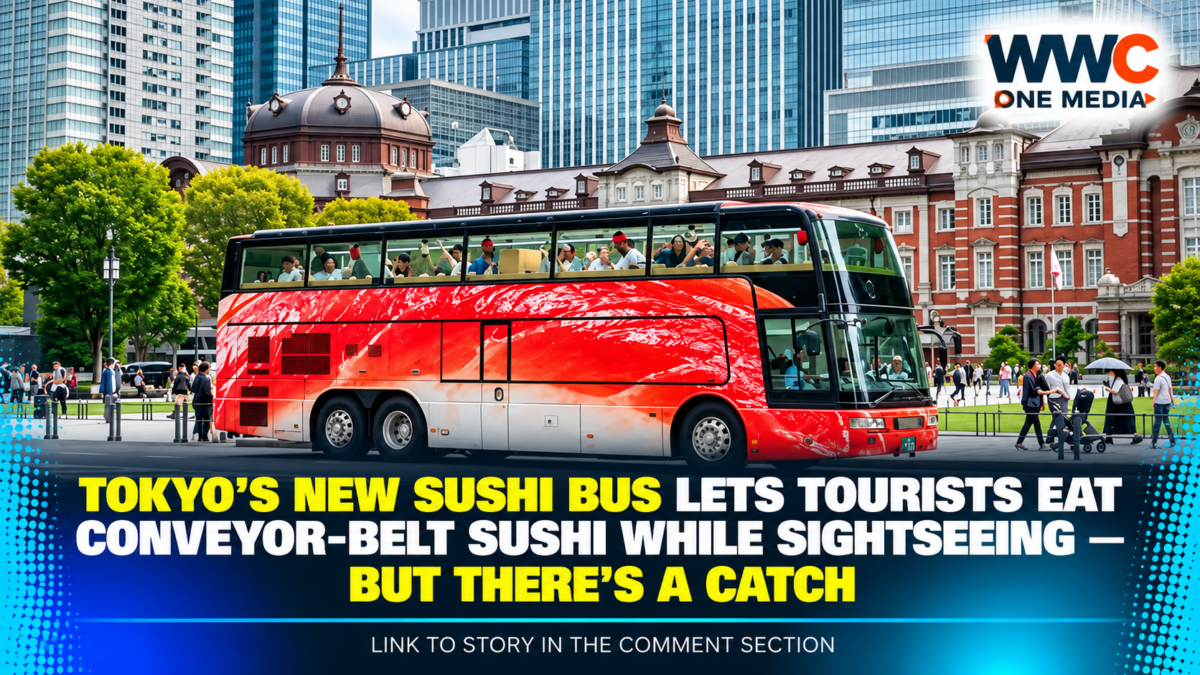
Tokyo is preparing to serve up a new kind of sightseeing experience, combining one of Japan’s most recognizable food traditions with a moving tour of its bustling capital.
Starting October 10, 2026, the new SUSHI BUS will take passengers around Tokyo aboard an open-top, double-decker bus equipped with a conveyor-belt sushi restaurant. Instead of choosing between sightseeing and sampling Japanese cuisine, passengers can do both during a roughly 70-minute ride.
The unusual attraction is designed to turn the journey itself into the main event, offering visitors a fresh way to experience Tokyo’s food culture and famous cityscapes.
According to Japanese tourism publication Travel Voice and the project’s official announcement, the service is being developed by SUSHI BUS in collaboration with WILLER ACROSS, a company specializing in innovative transportation experiences.
A Conveyor Belt on the Second Floor
The concept sounds simple, but putting a sushi restaurant inside a moving double-decker bus required specialized planning.
The bus features a kitchen on its first floor, where sushi is prepared before being transported by an onboard lift to the conveyor belt installed on the upper deck.
Passengers can enjoy sushi as the city passes by, with the sightseeing route taking in areas and landmarks around central Tokyo, including Ginza, Tokyo Tower and other popular destinations, depending on the route and traffic conditions.
The vehicle has 20 seats, creating a relatively small-group experience compared with conventional sightseeing buses.
The company describes the concept as a world-first combination of a double-decker sightseeing bus and conveyor-belt sushi.
How Much Will the Sushi Bus Cost?
The experience is priced at approximately ¥16,000 per person, including an all-you-can-eat sushi meal and drinks.
That puts the attraction in the premium sightseeing category rather than the budget travel market. Its appeal lies in combining dining, entertainment and city views into one booking.
The bus is scheduled to depart from the Kajibashi Parking Lot area near Tokyo Station and return after approximately 70 minutes.
The open-top design allows passengers to enjoy views of Tokyo, while a transparent roof can be closed in rainy weather.
The first vehicle, nicknamed the “Maguro-go,” features an exterior inspired by a giant piece of tuna sushi, making the bus itself part of the attraction.
Why Japan Is Experimenting With Unusual Tourism Experiences
The launch comes as Japan continues to develop distinctive experiences for international visitors. Food, pop culture and memorable activities have become important ways for destinations to stand out in a competitive tourism market.
SUSHI BUS combines two familiar elements of Japanese travel: conveyor-belt sushi and sightseeing by double-decker bus.
The result is a different approach to tourism in which transportation becomes entertainment rather than simply a way to get from one attraction to another.
Japanese broadcaster TV Asahi reported that developers conducted more than 100 rounds of testing and experimentation, including checks to ensure sushi plates would remain secure while the vehicle was moving.
That practical challenge highlights an important difference between an ordinary sushi restaurant and a dining experience on the road.
The attraction also reflects a broader effort to create experiences that visitors cannot easily replicate at home, giving travelers another reason to explore Tokyo beyond its traditional tourist stops.
Will the Sushi Bus Become Tokyo’s Next Big Tourist Attraction?
The concept has already attracted attention from travel media, with its unusual combination of food and sightseeing generating interest ahead of its scheduled launch.
However, its premium price may make it more appealing to travelers seeking a special experience than to visitors looking for an inexpensive meal.
For first-time tourists, the combination of Japanese cuisine and city views could be a memorable introduction to the capital. Travelers primarily interested in traditional sushi restaurants, meanwhile, may prefer to spend their dining budget elsewhere.
The company has also indicated ambitions to expand the fleet if demand supports additional vehicles.
Whether the idea becomes a lasting tourism attraction will depend on customer demand, operating costs and the ability to deliver a consistent experience on busy Tokyo streets.
WWC ONE MEDIA G,A