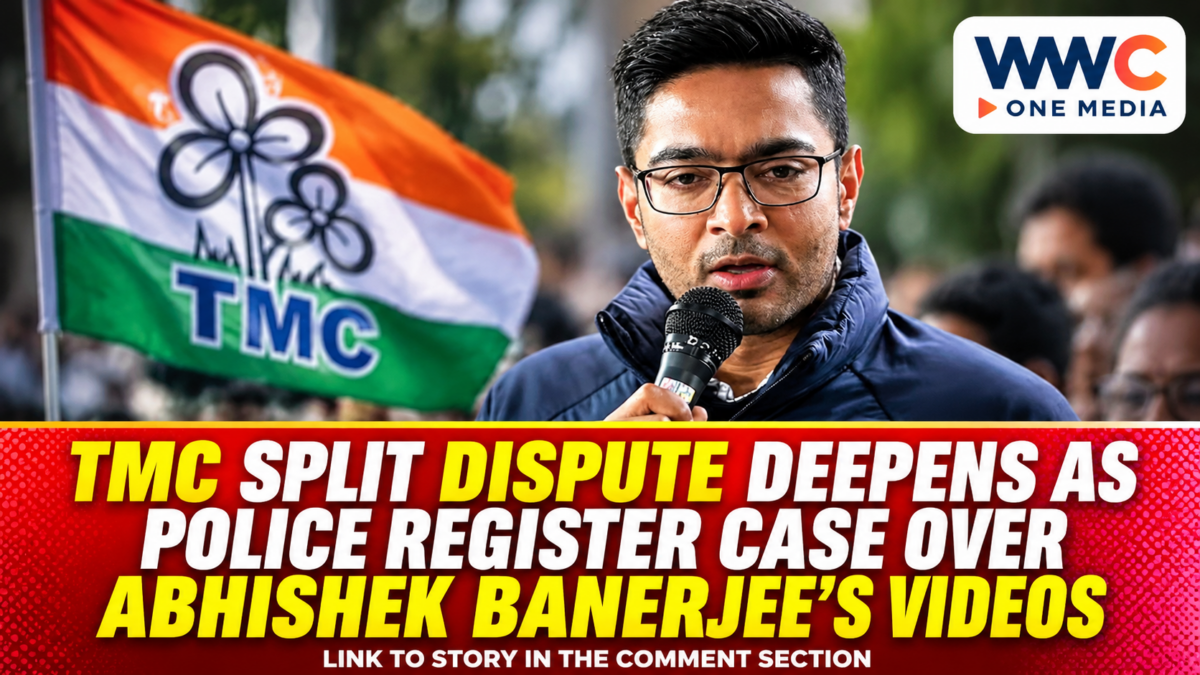
West Bengal Police said on Nov. 28, 2026, that a case had been registered after a complaint accused Trinamool Congress general secretary Abhishek Banerjee of showing fabricated video clips during a press conference in New Delhi. The police statement said the State Cyber Crime Wing would investigate the clips, which Banerjee had presented as evidence of alleged police involvement in preparing affidavits for a rival faction seeking recognition before the Election Commission of India.
The competing allegations have added another front to the dispute over who can claim the All India Trinamool Congress name, its reserved election symbol and its organisational identity. The controversy now involves political accusations, a police investigation and a separate legal battle over the recognition of legislative leaders.
The distinction is critical: a complaint is not proof that the videos were fabricated, just as the videos presented by Banerjee do not, by themselves, establish that the affidavits were forged or that the BJP organised a plan to divide the party.
TMC split dispute: Two competing allegations
At a press conference in Delhi on Nov. 28, Banerjee released video clips that he said showed documents being prepared and signed inside Kalna police station in Purba Bardhaman district.
He alleged that the documents were intended to support the rival faction associated with Ritabrata Banerjee and Arup Roy in its effort to establish its claim over the party before the Election Commission.
Banerjee also accused the BJP of attempting to weaken the Trinamool Congress by encouraging defections and supporting the rival group. Those statements remain political allegations; no judicial finding or official investigative conclusion reviewed for this report establishes that the BJP directed the alleged activity.
The police response introduced a separate issue. In a statement published through its official X account, West Bengal Police said a complaint had been received at Kalna police station alleging that the video clips were fabricated and falsely implicated police personnel. It said a case had been registered and that the State Cyber Crime Wing would investigate.
That means investigators face questions about both the authenticity and origin of the videos and the conduct shown in them. The police statement does not establish that the clips are fake, just as Banerjee’s presentation does not establish that the alleged affidavit preparation was unlawful.
Why the affidavits matter to the party’s identity
The dispute is not simply about which group has more political influence. It concerns the formal recognition of a political organisation and the evidence each side submits to support its claim.
The Election Commission’s September 17, 2026 interim order, as described in the Calcutta High Court judgment, prevented either rival group from using the All India Trinamool Congress name and the party’s reserved Flowers and Grass symbol in the circumstances addressed by that order. The Commission reserved the name and symbol for the relevant by-election process while the competing claims remained under consideration.
The High Court judgment records that the Commission’s broader dispute remained pending. It also notes that the Supreme Court had directed the parties to complete their pleadings before the Commission decided the controversy within the prescribed period.
The Election Commission’s candidate affidavit portal provides public access to candidate nomination affidavits. However, the current TMC organisational dispute is not simply a matter of checking candidate nomination forms. The rival groups’ submissions concern recognition of the party itself, making the authenticity, authority and provenance of organisational documents important.
For a broader explanation of how election administration and political claims can become contested, WWC has previously examined India’s voter-roll revision and the importance of electoral safeguards.
High Court ruling changes the legislative leadership question
The political dispute intensified after the Calcutta High Court delivered judgment on Nov. 27 in W.P.O. No. 276 of 2026, filed by Sobhandeb Chattopadhyay against the West Bengal Assembly Speaker and other respondents.
Justice Krishna Rao set aside and quashed the Speaker’s June 3 order recognising Ritabrata Banerjee as Leader of the Opposition and Akhruzzaman as Chief Whip in the 18th West Bengal Legislative Assembly.
The court directed the Speaker to reconsider the appointments afresh and in accordance with law within 10 days of receiving the order.
The judgment addressed the procedure used to recognise the legislative leaders, including whether the Speaker had provided the relevant party an opportunity to respond to the material considered. It found the June 3 decision legally unsustainable.
But the judgment did not decide which faction owns the TMC name or election symbol. It expressly treated that as a separate matter before the Election Commission.
That distinction prevents the ruling from being misrepresented as a final decision on the party’s organisational ownership. The court addressed legislative appointments, not the entire recognition dispute.
WWC’s earlier coverage of the BJP’s unresolved leadership question in Uttar Pradesh also illustrates why party identity, internal leadership and official electoral recognition should not be treated as interchangeable issues.
What investigators must establish
The police investigation now has a specific evidentiary task: determine whether the videos are authentic, whether they have been edited or presented out of context, where and when they were recorded, and whether the people or documents shown can be independently identified.
The allegations concerning affidavits require a separate examination. Investigators would need to establish whether the documents were actually submitted to the Election Commission, whether the people named in them authorised or signed them, and whether any signatures or notarisation details were falsified.
The political claims also require evidence beyond the existence of a factional dispute. Abhishek Banerjee’s allegation that the BJP plotted to split the TMC is not established by the police statement or the High Court judgment reviewed for this report.
The distinction matters because the dispute involves public institutions. A finding of forged documents, misuse of police facilities or deliberate fabrication of video evidence would carry consequences beyond party politics. But those conclusions must come from authenticated evidence and the appropriate investigative or judicial process.
The wider political environment is also important. With the Parliament session scheduled to begin on Nov. 30, the dispute is unfolding alongside national arguments over delimitation and legislative representation. WWC has examined the approaching parliamentary session and its unresolved legislative questions.
What happens next
The immediate next step is the State Cyber Crime Wing’s examination of the complaint and the video material. The outcome could clarify whether the clips were manipulated, whether they accurately depict the location and activity alleged, or whether further evidence is needed.
The Election Commission’s proceedings remain important to the separate question of party recognition. The rival groups’ documents and responses will need to be assessed under the applicable election-symbol framework.
The Speaker must also reconsider the Leader of the Opposition and Chief Whip appointments in line with the High Court’s direction and its 10-day timetable, calculated from receipt of the judgment.
For now, three questions remain separate: whether the affidavits were forged, whether the videos are authentic, and which faction can lawfully claim the party’s name and symbol. None should be treated as resolved merely because the political accusations have intensified.
Frequently asked questions
Why did West Bengal Police register a case involving Abhishek Banerjee’s videos?
Police said a complaint alleged that fabricated video clips were shown during Banerjee’s Nov. 28 press conference and falsely implicated police personnel. The State Cyber Crime Wing was assigned to investigate.
What did Abhishek Banerjee allege?
He alleged that police personnel helped prepare affidavits supporting a rival TMC faction’s claim before the Election Commission. He also accused the BJP of attempting to engineer a split in the party. These claims have not been established by a judicial finding.
Who are the rival figures in the TMC dispute?
The dispute involves the Mamata Banerjee-led faction and a rival group associated with Arup Roy and Ritabrata Banerjee.
What did the Calcutta High Court decide?
On Nov. 27, 2026, the court quashed the Speaker’s June 3 recognition of Ritabrata Banerjee as Leader of the Opposition and Akhruzzaman as Chief Whip. It directed the Speaker to reconsider the appointments within 10 days of receiving the order.
Has the Election Commission decided who owns the TMC name and symbol?
The court judgment reviewed for this report describes the Election Commission’s broader recognition dispute as pending. The High Court’s ruling on legislative appointments did not decide ownership of the party name or symbol.