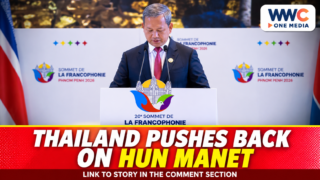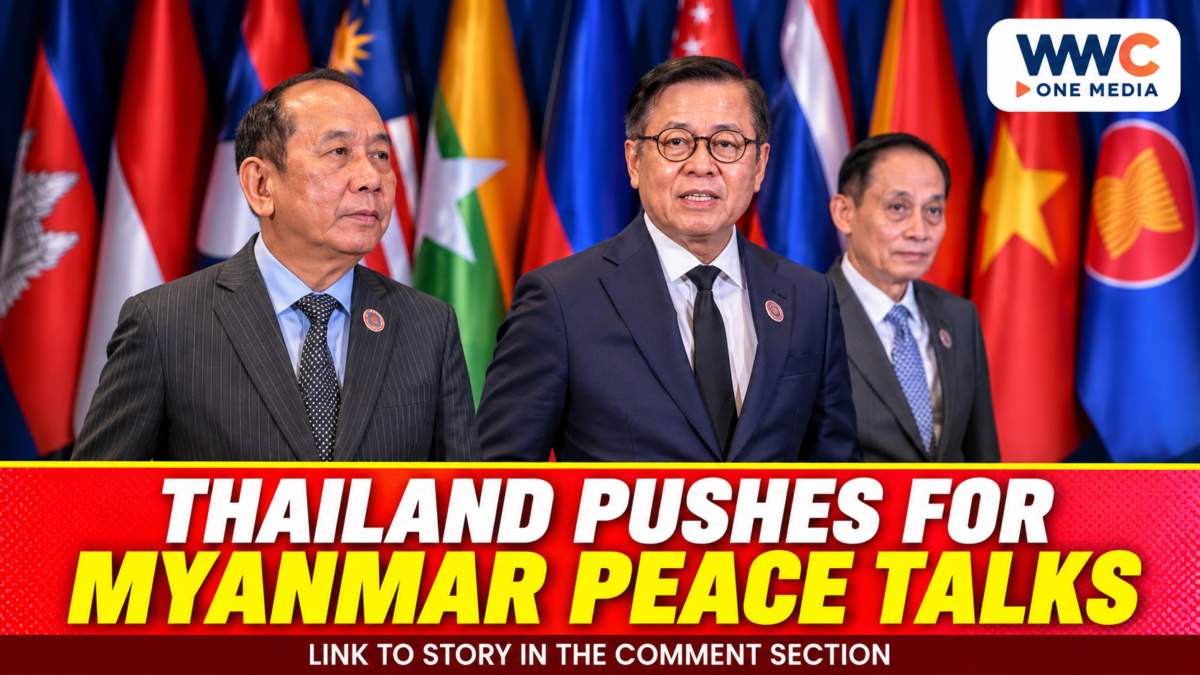
Thailand is pursuing closer diplomatic engagement with Myanmar as the conflict continues to affect regional security, humanitarian access and ASEAN’s credibility. A visit by Thai Deputy Prime Minister and Foreign Minister Sihasak Phuangketkeow to Nay Pyi Taw on Nov. 12, 2026, has renewed attention on Bangkok’s effort to support Myanmar’s peace process while encouraging the country’s return to fuller regional cooperation.
The diplomatic push comes at a difficult moment. ASEAN leaders, meeting in Manila three days later, reaffirmed that Myanmar must make substantive progress on the bloc’s Five-Point Consensus (5PC), including reducing violence and creating conditions for inclusive political dialogue.
The two developments highlight the challenge facing Thailand and its regional partners: keeping communication channels open without treating diplomatic contact as proof that the conflict is nearing a settlement.
Thailand Makes Direct Engagement a Priority
Sihasak’s Nov. 12 visit brought him into direct contact with Myanmar’s President Min Aung Hlaing, Union Minister for Foreign Affairs Tin Maung Swe and Lieutenant General Yar Pyae, who serves as Union Minister for Defence and chairman of the National Solidarity and Peacemaking Negotiation Committee.
The Thai Foreign Ministry’s official account said the discussions covered relations between the neighbouring countries, border security, environmental problems, economic cooperation and Myanmar’s peace process.
Thailand reiterated its support for Myanmar’s efforts to pursue peace and encouraged further steps to reduce violence, particularly its effects on civilians. It also called for wider humanitarian access to people in need.
The visit was not limited to political discussions. Both sides agreed to strengthen cooperation against illicit drugs and online scams, while also addressing pollution affecting rivers shared by the two countries.
These issues demonstrate why Thailand has a direct interest in developments inside Myanmar. Instability can affect border communities, trade, environmental conditions and the security of people living on both sides of the frontier.
Thailand’s Dialogue Proposal Has an Earlier Record
Bangkok’s interest in supporting peace discussions did not begin with the November visit.
A Myanmar government account of a bilateral meeting held on April 22, 2026, recorded that Sihasak had welcomed Myanmar’s efforts towards peace and national reconciliation and expressed Thailand’s readiness to support the process.
The same account said the Thai foreign minister had extended invitations to armed groups to join peace talks.
That earlier record provides important context for Thailand’s current diplomatic approach. It shows that Bangkok has previously raised the possibility of encouraging wider participation in negotiations rather than limiting discussions to government-to-government contacts.
However, the official Thai account of the Nov. 12 visit did not announce a new agreement to host or facilitate talks with specific ethnic armed organisations. It would therefore be premature to describe the latest visit as having secured a new negotiation process.
The distinction matters. An invitation to participate in peace talks is not the same as an accepted invitation, an agreed negotiating framework or a ceasefire.
Thailand’s ability to help bring different parties together will depend on whether the relevant groups are willing and able to participate.
ASEAN Keeps the Five-Point Consensus at the Centre
Thailand’s bilateral engagement is unfolding alongside ASEAN’s continuing effort to address Myanmar through a regional framework.
On Nov. 15, ASEAN leaders adopted a formal review and decision on the implementation of the Five-Point Consensus in Manila.
The document expressed deep concern over Myanmar’s conflicts and humanitarian situation. It urged all parties to halt indiscriminate violence, exercise restraint and protect civilians and civilian infrastructure.
It also called for conditions that would allow humanitarian assistance to reach people in need and support inclusive national political dialogue.
The Five-Point Consensus remains the central framework guiding ASEAN’s response. It was designed to encourage an end to violence, dialogue among concerned parties, mediation by the ASEAN chair’s special envoy, humanitarian assistance and engagement with relevant stakeholders.
The latest decision also recognised diplomatic work already undertaken by the Philippines, which holds the 2026 ASEAN chairmanship.
Foreign Affairs Secretary Ma. Theresa P. Lazaro, serving as the ASEAN chair’s special envoy on Myanmar, conducted visits and engagements with stakeholders as part of efforts to advance the regional framework.
The Manila decision specifically recognised her engagements with Myanmar stakeholders, including meetings in Tagaytay in January and Pattaya in July 2026.
For more background on the bloc’s approach, WWC previously examined ASEAN’s decision to maintain restrictions on Myanmar’s political representation while leaving a path towards greater participation.
The Diplomatic Opening Comes With Conditions
One of the most important features of ASEAN’s latest decision is its emphasis on progress rather than diplomatic appearances.
The leaders reaffirmed their commitment to helping Myanmar find a peaceful and durable solution through a Myanmar-owned and Myanmar-led approach.
They also acknowledged ongoing dialogue involving signatories to the Nationwide Ceasefire Agreement, some non-signatories, political parties, peace facilitators and other relevant stakeholders.
This indicates that discussions are taking place through several channels. However, the existence of dialogue does not establish that the parties have reached agreement on the central political and security questions.
ASEAN also maintained its policy of non-political representation from Myanmar at its summits and foreign ministers’ meetings until meaningful progress is achieved under the Five-Point Consensus.
That position preserves a distinction between continued engagement and full political participation.
Myanmar remains part of ASEAN, but the restoration of its full political representation at the bloc’s highest-level meetings remains conditional on sustained and concrete progress.
WWC has also examined Thailand’s expanding engagement with Myanmar’s military leadership, a development that illustrates Bangkok’s preference for maintaining direct channels even as ASEAN continues to apply its collective conditions.
Border Security and Humanitarian Needs Complicate the Peace Effort
Thailand’s approach is shaped by practical concerns as much as regional diplomacy.
During a Nov. 3 telephone conversation with Myanmar Foreign Minister Tin Maung Swe, Sihasak raised concerns about fighting inside Myanmar that had spillover effects on the Thai side of the border.
The Thai Foreign Ministry said Sihasak requested that Myanmar avoid operations close to the border that could affect Thailand. Tin Maung Swe acknowledged the concerns and said he would convey them to the relevant authorities.
The Nov. 12 visit continued that discussion. Thailand again stressed the safety of its border communities and called for caution to prevent conflict from affecting people on Thai territory.
Environmental concerns were also part of the discussions. Both governments agreed to convene the Joint Working Group on Water Quality Management for Boundary and Transboundary Rivers as soon as possible and arrange a joint field visit by high-level representatives.
These concerns connect the peace process to everyday regional problems. WWC previously reported on Thailand’s concerns over pollution affecting rivers along its border with Myanmar.
For Thailand, a reduction in violence could help create a more stable environment for border communities, trade and cross-border cooperation. For Myanmar, wider humanitarian access and meaningful political dialogue remain essential parts of the regional peace framework.
What Happens Next?
The next test is whether diplomatic engagement produces measurable progress.
Thailand can continue using its geographic proximity and established bilateral channels to encourage communication. ASEAN, meanwhile, will have to assess whether its collective framework is producing improvements in civilian protection, humanitarian access and inclusive political dialogue.
The Nov. 15 decision gives the regional bloc a continuing basis for engagement, but it does not announce a comprehensive peace agreement or establish a timetable for ending the conflict.
The practical indicators will be whether violence declines, humanitarian operations reach more communities and relevant political and armed stakeholders participate in meaningful discussions.
Thailand’s willingness to engage Myanmar may help keep diplomatic channels open. But the harder task remains persuading the parties involved that negotiations offer a workable path forward.
Frequently Asked Questions
1. Why did Thailand’s foreign minister visit Myanmar in November 2026?
Sihasak Phuangketkeow visited on Nov. 12 to discuss bilateral relations, border security, environmental issues, economic cooperation and Myanmar’s peace process with senior Myanmar officials.
2. Is Thailand offering to facilitate peace talks with Myanmar’s armed groups?
An official Myanmar government account of an April 22 meeting recorded that Sihasak had extended invitations to armed groups to join peace talks. The Thai Foreign Ministry’s account of the Nov. 12 visit did not announce a new agreement to facilitate negotiations with specific groups.
3. What is ASEAN’s Five-Point Consensus?
It is ASEAN’s main framework for addressing Myanmar’s crisis. It focuses on ending violence, dialogue among concerned parties, mediation by the ASEAN chair’s special envoy, humanitarian assistance and engagement with relevant stakeholders.
4. Did ASEAN restore Myanmar’s full political representation in November 2026?
No. The Nov. 15 decision maintained non-political representation from Myanmar at ASEAN summits and foreign ministers’ meetings until meaningful progress is achieved in implementing the Five-Point Consensus.
5. Can Thailand’s diplomatic engagement end the conflict?
Not by itself. Thailand can support communication and encourage negotiations, but a durable settlement requires meaningful participation and agreement among the parties involved in Myanmar’s conflict.