The latest diplomatic disagreement between Thailand and Cambodia has placed their unresolved border dispute before another international audience, even as Bangkok insists that the two governments should rely on direct negotiations.
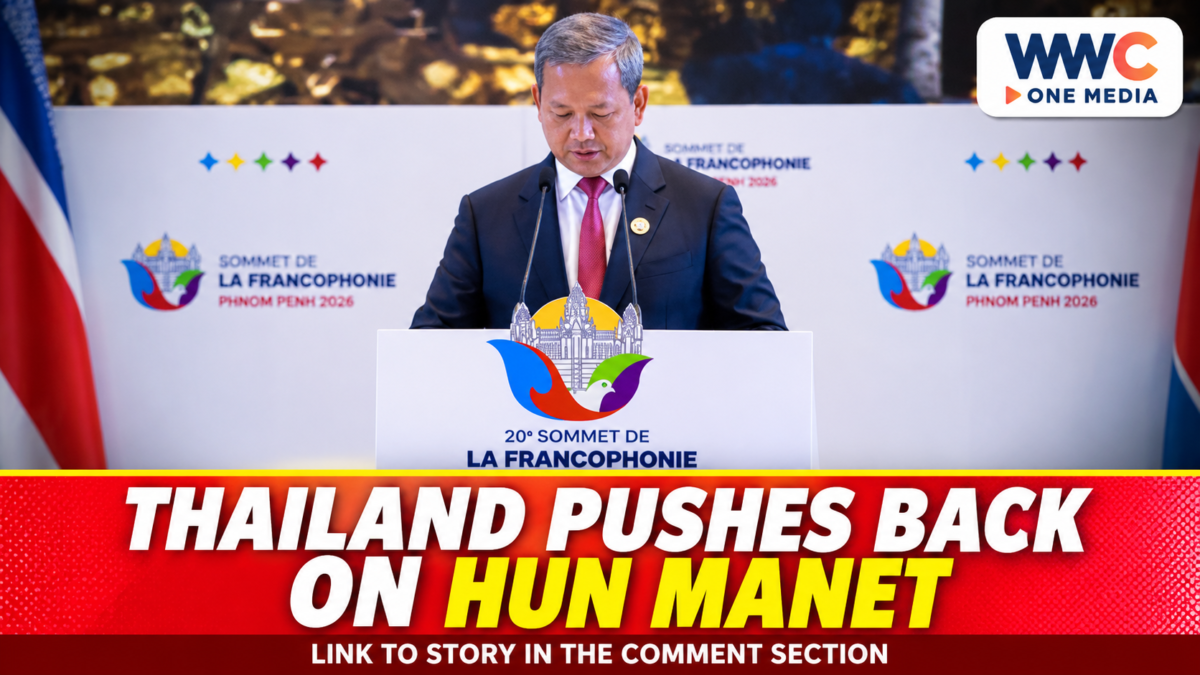
The dispute came into sharper focus during the 20th Francophonie Summit in Phnom Penh on Nov. 15–16, 2026. Its adopted resolution expressed concern over continuing tensions along the Cambodia-Thailand border and called for the full implementation of existing ceasefire and border-demarcation commitments. Francophonie+1
The disagreement is about more than competing public statements. It concerns how two neighbouring governments should address territorial claims, protect displaced civilians and restore confidence after armed confrontations.
Thailand had warned about the diplomatic stakes before the summit
Thailand’s position was already set out before the Francophonie gathering began.
In a Nov. 11 briefing, Thailand’s Ministry of Foreign Affairs said it was concerned that Cambodia might use its hosting of the summit to present accusations against Thailand and bring the bilateral dispute before an international audience.
Bangkok said it had sent a formal diplomatic démarche to the Organisation internationale de la Francophonie (OIF) Secretariat. Thai Vice Minister for Foreign Affairs Sarun Charoensawan also met ambassadors and representatives from 11 countries to communicate Thailand’s objections. กระทรวงการต่างประเทศ
The briefing is significant because it establishes that Thailand’s concern was not limited to a single speech or exchange. The government had already raised the issue with the summit’s organising institution before the leaders met.
Thailand’s stated preference was to avoid language in the summit’s final documents that it considered unfair or damaging to efforts to rebuild bilateral confidence.
The position also reflects a broader diplomatic approach: Bangkok wants the border dispute handled through established channels rather than becoming a recurring subject of international political declarations.
The Francophonie resolution put the border issue in writing
The summit nevertheless adopted a resolution that specifically addressed Cambodia and Thailand.
The document expressed concern over continuing tensions in border areas and reaffirmed support for Cambodia’s sovereignty and territorial integrity. It also highlighted the suffering of displaced people, particularly Cambodians, and called for civilian protection and safe access to humanitarian assistance. Francophonie
Its provisions went beyond general calls for peace.
The resolution stated that border disagreements should be settled exclusively through peaceful means and in accordance with international law. It also rejected territorial changes imposed through force or through the creation of facts on the ground.
The document called on both countries to implement commitments under their Dec. 27, 2025, Joint Declaration, including the resumption of work by the Joint Boundary Commission (JBC) on border surveying and demarcation.
It further urged both sides to respect the ceasefire fully and avoid actions that could reignite tensions or obstruct boundary work. Francophonie
These provisions give the dispute a wider diplomatic dimension. The summit did not determine the disputed boundary or issue a binding ruling on territorial ownership. Instead, it placed the conflict within a multilateral statement of concern and recommendations.
Why the land and maritime disputes must not be confused
One important complication is that Thailand and Cambodia are dealing with different territorial questions.
Their land-border disagreements involve contested areas along their shared frontier. Their maritime dispute concerns overlapping claims in the Gulf of Thailand and follows a separate legal and diplomatic process.
The distinction matters because progress in one negotiation does not automatically settle the other.
Thailand’s government has previously clarified that proceedings under the United Nations Convention on the Law of the Sea (UNCLOS) concern maritime boundary delimitation in the Gulf of Thailand, not the sovereignty of land territory or Koh Kut.
In a Sept. 16 statement, the Royal Thai Government said it remained prepared to engage in dialogue while defending what it described as its rights and sovereignty under international law. It also said the maritime conciliation process should not be confused with the land-boundary question. Thai Government
The two countries have already entered a compulsory conciliation process under UNCLOS. WWC previously examined that separate diplomatic channel in its report on Cambodia and Thailand’s UN-backed maritime negotiations.
Keeping the two processes distinct is essential. A maritime negotiation cannot, by itself, resolve disputes over land positions, displaced communities or the work of the JBC.
The ceasefire still needs practical implementation
The Francophonie resolution places particular emphasis on carrying out commitments already made.
That is an important distinction. A ceasefire can reduce the risk of renewed fighting, but it does not automatically settle the location of a boundary, restore access to affected communities or resolve disagreements over military positions.
The JBC’s work is therefore central to the longer-term process. Surveying and demarcation require cooperation between the two governments and agreement on how existing documents and arrangements will be applied.
The summit resolution called for that work to resume in accordance with existing agreements. It also urged both governments to avoid actions that could undermine the ceasefire or complicate the boundary process. Francophonie
For people living near the frontier, the consequences extend beyond diplomatic language. Displacement can disrupt homes, employment, education and access to essential services.
WWC has previously reported on the livelihood consequences of the conflict through the experience of Cambodian families in its account of a border community waiting to return home.
The wider regional implications are also significant. Thailand and Cambodia are both ASEAN members, and prolonged tension between them complicates efforts to maintain cooperation across Southeast Asia. WWC has examined the bloc’s diplomatic role in its explainer on ASEAN’s regional challenges and political divisions.
What the international response can—and cannot—do
The Francophonie resolution adds diplomatic pressure for restraint, but it does not replace bilateral negotiations.
The OIF is an international organisation whose summit brings together member states and governments to discuss shared political, economic and cultural priorities. Its adopted texts can express collective positions and encourage action, but the resolution does not itself redraw the Cambodia-Thailand border or impose a settlement.
The organisation’s closing statement confirmed that the summit adopted three documents: the Phnom Penh Declaration, a resolution on crisis situations and peace consolidation, and the Phnom Penh Appeal on cultural heritage. It specifically identified Cambodia-Thailand border tensions among the situations addressed in the resolution. Francophonie
That places the issue within a broader discussion about sovereignty, civilian protection and peaceful conflict resolution.
For Thailand, the challenge is to defend its stated preference for bilateral mechanisms while responding to international concern. For Cambodia, the challenge is to pursue its territorial and humanitarian positions while keeping diplomatic channels open.
Neither government can resolve the dispute through statements alone.
What happens next
The next important test will be whether Cambodia and Thailand translate their existing commitments into practical steps.
That includes respecting the ceasefire, restarting the JBC’s border-demarcation work and maintaining the maritime conciliation process separately from land-boundary negotiations.
The Nov. 15–16 summit resolution has made the international community’s concern clear. Whether that concern produces meaningful progress will depend on decisions made by the two governments.
The central question is no longer simply which leader responds more forcefully to the other. It is whether both sides can turn their stated commitment to peace into verifiable action on the ground.
Frequently asked questions
Why did Thailand object to Cambodia raising the border dispute internationally?
Thailand’s Nov. 11 Foreign Ministry briefing said Bangkok was concerned that the Francophonie Summit could be used to present accusations against Thailand and internationalise a bilateral dispute. Thailand said it had communicated its position to the OIF Secretariat and representatives of 11 countries. กระทรวงการต่างประเทศ
What did the Francophonie Summit say about Cambodia and Thailand?
Its resolution expressed concern over continuing border tensions, called for civilian protection and humanitarian access, and urged both countries to respect the ceasefire and settle border disputes peacefully. Francophonie
Did the summit decide who owns the disputed territory?
No. The resolution expressed diplomatic positions and called for peaceful settlement. It did not determine the border or issue a binding territorial ruling.
What is the Joint Boundary Commission?
The Joint Boundary Commission, or JBC, is the bilateral mechanism referred to in the summit resolution for work involving the surveying and demarcation of the Cambodia-Thailand border.
Are the land and maritime disputes the same?
No. The land-border disagreements concern the countries’ shared frontier, while the maritime dispute involves overlapping claims in the Gulf of Thailand. The latter is being addressed through a separate conciliation process under UNCLOS. Thai Government