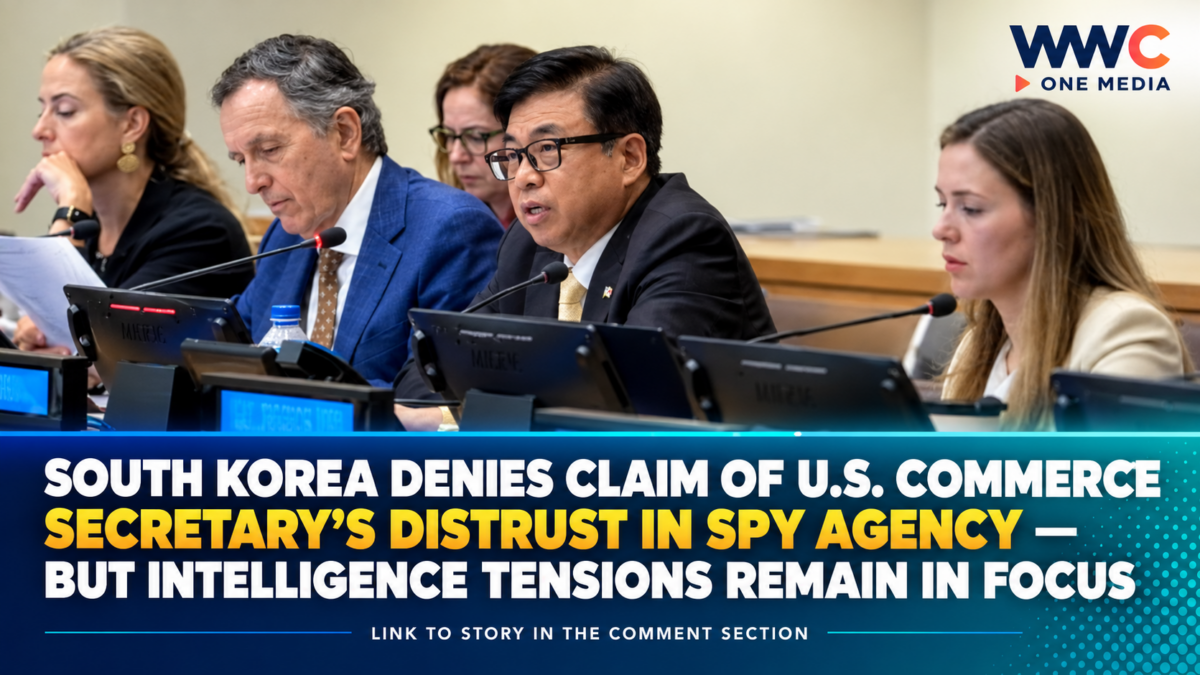
South Korea’s government has rejected a media report alleging that U.S. Commerce Secretary Howard Lutnick expressed distrust of the country’s National Intelligence Service (NIS) during negotiations over strategic investments in the United States, adding another development to growing scrutiny of Seoul–Washington relations.
On October 9, 2026, South Korea’s Ministry of Trade, Industry and Resources said the allegation that Lutnick conveyed concerns about the intelligence agency to Industry Minister Kim Jung-kwan was untrue. The NIS separately issued a statement saying it had received no information supporting the reported remarks.
The ministry urged the newspaper behind the report to ensure accurate coverage, warning that unsubstantiated claims could create unnecessary confusion.
The denial comes as intelligence cooperation between the two allies faces renewed attention, raising questions about how diplomatic disagreements and security concerns could affect their broader relationship.
Intelligence Cooperation Between Seoul and Washington Under Scrutiny
Although South Korean officials denied the specific allegation involving Lutnick, broader questions about intelligence-sharing arrangements between the two countries have continued to attract attention.
Washington partially restricted intelligence shared with Seoul concerning North Korea-related technology in April after South Korea’s unification minister disclosed information about a North Korean nuclear facility. The episode highlighted sensitivities surrounding the handling of classified information between the allies.
More recently, reports about South Korea’s intelligence agency being excluded from a June trilateral meeting involving the United States and Japan on North Korean cyber threats have added to the scrutiny.
The NIS acknowledged that a misunderstanding had occurred several months earlier but said the matter was now in the past and that it continued to cooperate with Washington on cybersecurity and North Korea-related security issues.
These developments provide important context for the latest controversy, but they do not establish that Lutnick made the remarks alleged in the disputed report.
Why the Dispute Matters for South Korea–U.S. Relations
The issue extends beyond a disagreement over media reporting. South Korea and the United States are managing a broad agenda that includes strategic investments, trade, technology and regional security.
The two governments have also been discussing major Korean investment commitments in the United States. Seoul has emphasized that individual projects must undergo further review, including assessments of commercial viability. Meanwhile, South Korean officials have sought progress on outstanding security discussions with Washington.
Against this backdrop, public confidence in the relationship matters. Unverified allegations about intelligence cooperation could complicate public understanding of sensitive negotiations, even as officials work to maintain communication.
For now, the South Korean government’s position is clear: the claim that Lutnick expressed distrust of the NIS during strategic investment negotiations is false. The ministry’s denial and the intelligence agency’s separate statement are the central facts of the latest development.
Whether further clarification emerges from either government remains to be seen.
WWC ONE MEDIA G,A