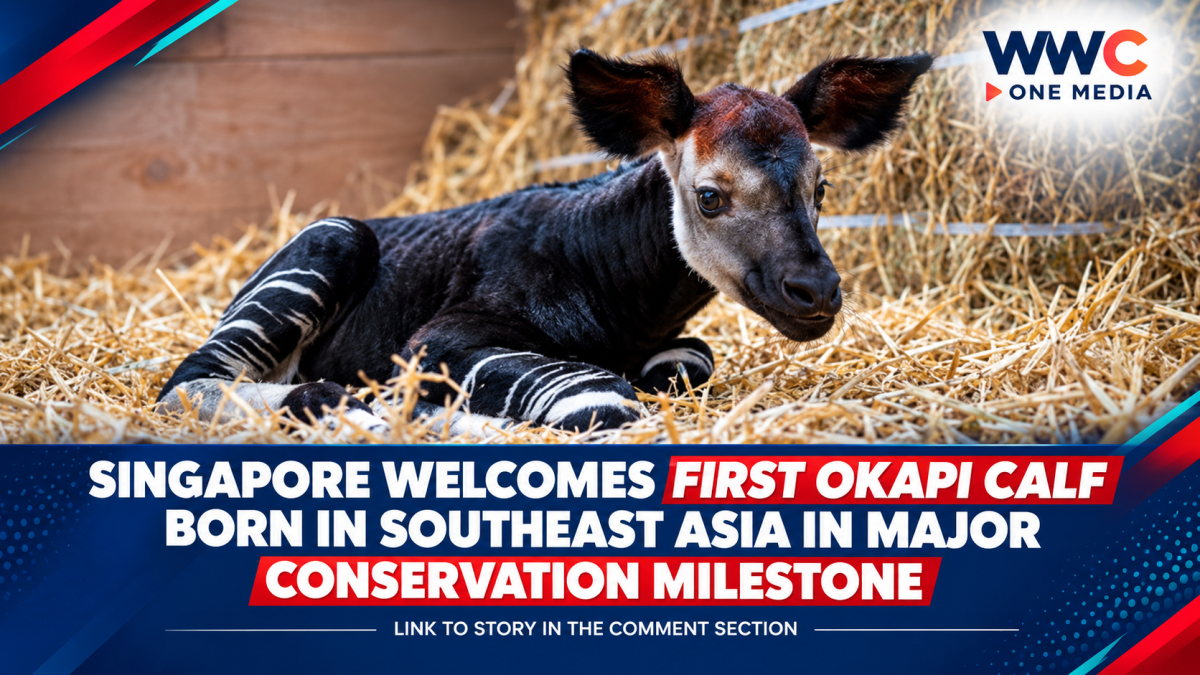
SINGAPORE — A rare new arrival is drawing attention at Singapore’s Rainforest Wild Adventure after the wildlife park welcomed the first okapi calf ever born in Southeast Asia, marking a significant milestone for regional wildlife conservation.
The male calf was born on July 27, 2026, to first-time parents Kisala, 7, and Xandor, 4, at Rainforest Wild Adventure East.
By Sept. 24, the calf weighed about 48 kilograms — more than twice his birth weight — and had begun gradually exploring his outdoor habitat alongside his mother.
A first for Southeast Asia
The birth is particularly significant because okapis are rarely bred successfully in captivity and are considered endangered.
Native to the dense rainforests of the Democratic Republic of the Congo, the elusive animals are the only living relatives of giraffes. Their dark brown bodies and distinctive zebra-like leg markings have earned them the nickname “forest giraffe.”
Rainforest Wild Adventure became the first zoological park in Southeast Asia to house okapis when four animals arrived from European zoos as part of an international breeding programme.
Mandai Wildlife Group says the parents were brought to Singapore under the EAZA Ex situ Programme, which coordinates breeding of threatened species among accredited European and international zoological institutions.
The calf is growing — but visitors may have to wait
Although the young okapi has started venturing outdoors, Mandai says visitors should not expect to see him every time they visit.
Okapi calves naturally spend much of their early life hidden away. Their behaviour is linked to their survival strategy in the wild, where mothers can leave their calves concealed while returning periodically to nurse them.
At Rainforest Wild Adventure, the calf can retreat to an off-exhibit den, giving him a quiet place to rest and adjust.
To give visitors an opportunity to see him without disturbing the animal, the park has installed a live “baby monitor” feed.
Daily Okapi Ranger Talks are also being held at 10:30 a.m. and 3 p.m.
An extraordinary pregnancy
The birth was the result of a lengthy breeding process.
Okapis have one of the longest gestation periods among hoofed mammals, at around 440 days — roughly 14 to 15 months.
Mandai said keepers noticed changes in Kisala’s appetite and body condition after she was paired with Xandor. An ultrasound later confirmed the pregnancy.
The successful birth represents an important step in the park’s longer-term breeding plans for the species.
Why the birth matters for conservation
Okapis face serious threats in their native habitat, including habitat loss and poaching.
Mandai says the species has experienced substantial population declines in the wild and is classified as Endangered on the International Union for Conservation of Nature Red List.
Because relatively few zoos around the world care for okapis, carefully managed breeding programmes can help maintain genetic diversity within the population under human care.
The four okapis originally brought to Singapore came from zoos in Belgium, Germany and Ireland. Their participation in coordinated breeding programmes means the animals are part of a wider international conservation effort rather than simply a visitor attraction.
More wildlife arrivals coming
The new okapi calf is not the only recent development at Rainforest Wild Adventure.
Mandai has also welcomed the sitatunga, a swamp-dwelling African antelope, while additional lemur species are expected to arrive at Lemur Land.
The crowned lemur and red-bellied lemur are expected to debut by November 2026, bringing the total number of lemur species in the Madagascan-themed area to four.
The developments follow the completion of Rainforest Wild Adventure East in May, when the second phase of the 20-hectare park officially opened.
A small calf with a big conservation story
Mandai is now inviting the public to help name the young okapi.
The three choices are Imara, meaning “strong” in Swahili; Mayaka, meaning “pearl” in Lingala; and Kiah, associated with dawn, new beginnings or the start of a season in Swahili.
Whatever name is ultimately chosen, the calf’s arrival already represents a notable chapter in Southeast Asia’s wildlife conservation efforts — and gives visitors a rare opportunity to watch one of the world’s most elusive mammals grow up in Singapore.
WWC ONE MEDIA G,A