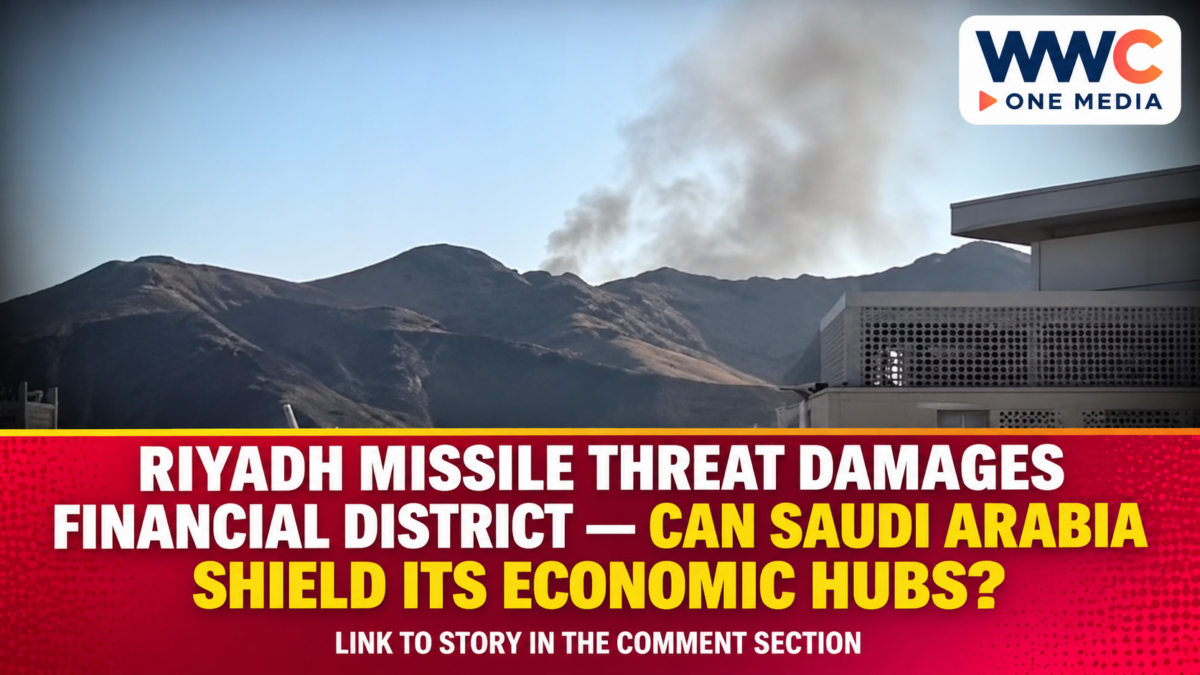
RIYADH, Saudi Arabia — The Riyadh missile threat on Nov. 19, 2026, renewed concerns over the security of Saudi Arabia’s civilian and economic infrastructure after authorities reported property damage in the capital’s financial district.
Saudi Civil Defense attributed the incident to the Houthi movement in Yemen and reported no injuries in its announcement concerning the affected tower.
The incident raises a broader question for Saudi Arabia: how can the kingdom maintain confidence in its economic centres while managing persistent security threats linked to the conflict in Yemen?
For businesses, international investors and overseas Filipino workers, the consequences of regional instability extend beyond military developments. Workplace safety, transport reliability and business continuity are also important considerations.
Riyadh Missile Threat Puts Civilian Infrastructure Under Scrutiny
Saudi Arabia’s Ministry of Foreign Affairs issued a condemnation on Nov. 19 following damage to the King Abdullah Financial District.
The government’s response placed particular emphasis on the protection of civilian and economic facilities.
While the reported absence of injuries in the tower incident was an encouraging development, physical damage to commercial infrastructure raises questions about preparedness for future emergencies.
For businesses, an emergency response does not end when an immediate threat has passed.
Building assessments, employee welfare and decisions about whether normal operations can safely resume are among the considerations that may follow a security incident.
However, the available information does not establish the financial cost of the damage or whether individual companies experienced operational disruptions.
Saudi Arabia Faces a Broader Business Continuity Challenge
The incident illustrates why businesses operating in areas affected by regional tensions need to consider security risks alongside their commercial priorities.
Companies may need to evaluate emergency communication procedures, alternative working arrangements and the availability of essential services.
Financial institutions face additional considerations involving the continuity of transactions, access to facilities and the protection of critical information systems.
These are potential business risks rather than confirmed consequences of the Nov. 19 incident.
There is insufficient verified information to conclude that financial markets, banking operations or investment projects were significantly disrupted.
Nevertheless, the ability to maintain essential economic functions during emergencies could become increasingly important to investor confidence.
Regional Instability Remains a Concern
The United Nations Security Council has previously expressed concern over the escalation of hostilities involving Yemen and Saudi Arabia.
Its concerns have also extended to maritime security and international commerce, demonstrating that the implications of regional conflict are not confined to national borders.
Companies that depend on international suppliers and transportation networks may need to consider how prolonged instability could affect their operations.
Earlier WWC coverage of Philippine efforts to strengthen overseas oil reserves provides additional context on the importance of energy supply resilience.
However, the damage reported in Riyadh should not automatically be interpreted as evidence of a disruption to Saudi oil production or international petroleum exports.
Such developments would require separate confirmation.
What the Security Situation Means for Filipino Workers
For Filipino households with relatives employed in Saudi Arabia, personal safety remains a more immediate concern than geopolitical developments.
Workers and their families should maintain reliable communication channels and monitor announcements from Philippine diplomatic and migrant worker authorities.
Previous WWC reporting on the Department of Migrant Workers’ monitoring of Filipinos in Saudi Arabia provides context on the importance of coordination during security emergencies.
Employers may also benefit from reviewing emergency contact arrangements and ensuring employees understand applicable workplace safety procedures.
The information available for the Nov. 19 financial district incident does not establish that Filipino workers were injured, displaced or evacuated.
It would therefore be inappropriate to draw conclusions about the condition of the wider Filipino community without a specific official assessment.
Travel arrangements remain another practical consideration. Passengers can refer to WWC’s separate coverage of Saudi airspace security concerns and airline warnings for background on regional aviation risks.
Flight changes and cancellations should be confirmed directly with the relevant airline.
Can Saudi Arabia Protect Economic Confidence?
The central economic issue is whether recurring security concerns could eventually influence business decisions.
A single incident does not necessarily determine the investment outlook of an entire country.
Businesses assess multiple factors when deciding where to establish or expand operations, including market opportunities, operating costs, infrastructure reliability and regulatory conditions.
Security considerations can nevertheless become more significant when companies face uncertainty over the continuity of normal operations.
The appropriate measure of economic resilience is not simply whether physical infrastructure survives an emergency. It is also whether institutions can continue delivering essential services while protecting employees and customers.
For Saudi Arabia, transparent assessments of incidents and effective emergency management could help businesses make informed decisions.
These observations represent potential implications, not evidence that investors have withdrawn capital or suspended projects following the incident.
What Happens Next
Further official assessments could clarify the extent of the property damage and whether restoration work or additional safety measures are necessary.
Companies operating in Riyadh may also review their business continuity arrangements in response to the wider security environment.
For the Philippines, monitoring the welfare of overseas workers and maintaining access to consular assistance remain important priorities.
The longer-term question is whether regional diplomatic efforts can reduce the frequency of security incidents and create a more predictable environment for civilians and businesses.
Until further verified information becomes available, the immediate conclusion remains limited: Saudi authorities reported material damage to civilian infrastructure in Riyadh’s financial district, underscoring the importance of preparedness and civilian protection.
Frequently Asked Questions
What happened in Riyadh on Nov. 19, 2026?
Saudi authorities reported a missile-related security incident that resulted in property damage in Riyadh’s financial district.
Who was responsible for the Riyadh missile threat?
Saudi authorities attributed the incident to the Houthi movement in Yemen.
Were there injuries in the financial district incident?
Saudi Civil Defense reported no injuries in its announcement concerning the affected tower.
Were Filipino workers affected?
The information available does not establish that Filipino workers were injured or evacuated following this specific incident.
Could the incident affect Saudi Arabia’s economy?
Persistent security threats could influence business preparedness and investment risk assessments. However, the available information does not establish a measurable economic loss resulting from this particular incident.