MANILA, PHILIPPINES | November 26, 2026 — The Philippines is putting emergency preparedness at the heart of basic education through mandatory, age-appropriate basic life support training, including cardiopulmonary resuscitation (CPR), under Republic Act No. 10871, commonly known as the Samboy Lim Law.
The policy seeks to develop practical emergency-response skills among students, expanding the purpose of education beyond academic achievement and preparation for employment.
Imagine a student witnessing a family member suddenly collapse, a classmate suffering an injury or a medical emergency unfolding during a sporting event.
Would that student recognise the danger, know how to seek assistance and understand what to do before professional responders arrive?
That is the practical challenge behind integrating life-saving education into Philippine schools.
But the success of the programme will depend on whether schools can translate classroom instruction into genuine emergency preparedness.
CPR Training in Schools: What the Philippine Law Requires
Republic Act No. 10871, officially dated July 17, 2016, established the Basic Life Support Training in Schools Act.
The legislation requires public and private basic education institutions nationwide to provide practical basic life support instruction suited to students’ developmental abilities.
Basic life support, or BLS, encompasses emergency interventions intended to sustain essential bodily functions while further medical assistance is being arranged.
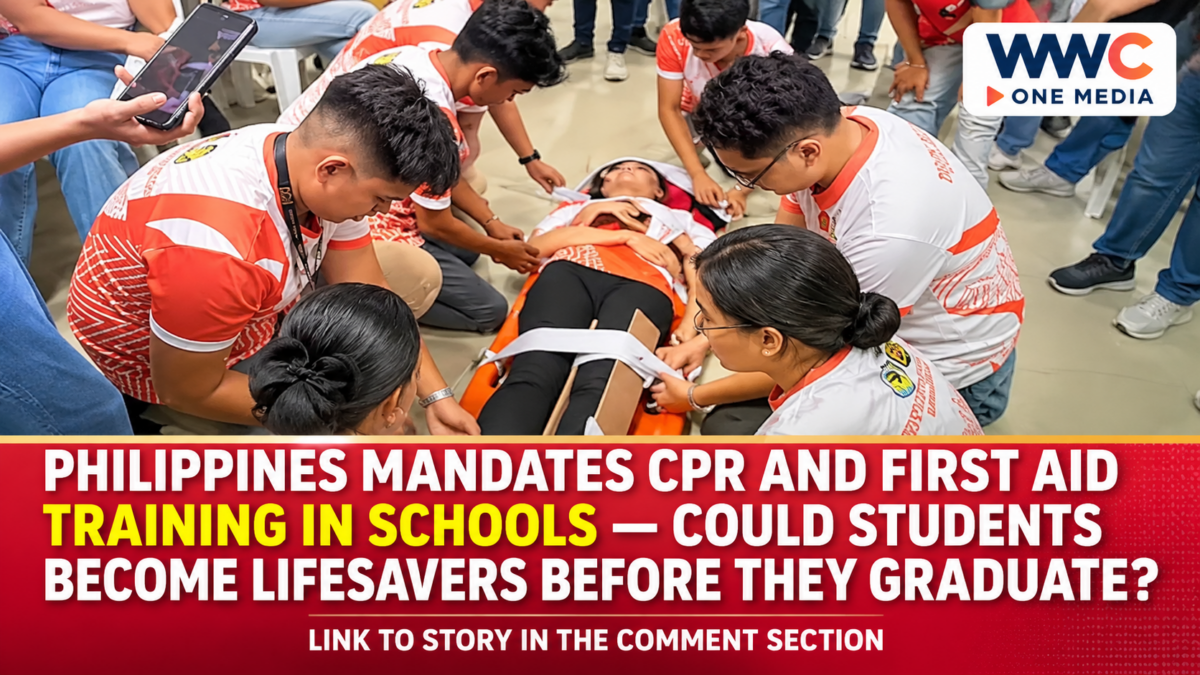
The education framework emphasises practical learning rather than relying exclusively on classroom discussions.
For students, the distinction is important. Understanding emergency-response concepts during a written examination is different from applying those concepts under pressure.
The initiative also complements broader efforts to improve student welfare, including DepEd’s emphasis on clean water, sanitation and school nutrition.
Together, these issues raise a broader question about the responsibilities of educational institutions in protecting children’s health and safety.
From Emergency Awareness to Practical Life-Saving Skills
The basic education framework recognises that emergency preparedness must be appropriate to a learner’s age and physical capabilities.
Educational materials cover competencies ranging from identifying dangerous situations and seeking assistance to understanding injury prevention and responding to emergencies.
More advanced instruction includes assessing injuries, understanding first aid responsibilities and demonstrating appropriate emergency-care procedures.
This approach allows learners to develop their understanding progressively.
For younger children, recognising danger and knowing when to seek adult assistance can be more appropriate than attempting complicated emergency procedures.
Older students may develop additional practical competencies through supervised instruction.
A Grade 12 academic elective curriculum guide for in-campus field exposure also identifies first aid and fundamental basic life support as prerequisite subjects.
Its learning activities include school clinic exposure, injury assessment and emergency evacuation exercises incorporating CPR and other emergency-response concepts.
The elective provides an example of how schools can connect health education with supervised practical experiences.
However, its inclusion in the curriculum does not establish that every senior high school offers the same elective or has identical training facilities.
Why CPR Education Matters Beyond the Classroom
Medical emergencies are not confined to hospitals.
A health emergency could occur at home, in a shopping centre, during a sporting event or while travelling.
Teaching emergency preparedness at school could help students recognise situations requiring immediate assistance.
The potential value extends beyond individual learners. Students who understand basic safety principles may also encourage emergency awareness among relatives, friends and other members of their communities.
However, school-based instruction should not be mistaken for professional medical training.
The objective is to develop appropriate foundational competencies, not to replace emergency medical personnel or place adult responsibilities on children.
The emphasis on practical learning also reflects a wider discussion about the relevance of education. Other initiatives, such as the Unilab Education and FutureProof practical digital career programme, similarly explore how education can extend beyond traditional classroom instruction.
Emergency preparedness represents another dimension of that broader educational objective.
Will Students Receive Basic Life Support Certificates?
The Philippine legal framework provides for certification after successful completion of the prescribed instruction.
The implementing regulations also establish a mechanism for recognising training delivered through relevant curriculum subjects before students finish senior high school.
Certification can provide a formal record of educational achievement.
Nevertheless, a school-issued training certificate should not automatically be interpreted as a professional medical qualification or an internationally recognised emergency-responder credential.
The scope of any additional certification will depend on the training programme and the organisation responsible for issuing it.
The regulations also recognise that some learners may have disabilities or health conditions that prevent them from safely performing particular basic life support procedures.
Qualifying students may receive exemptions while retaining opportunities to participate in appropriate theoretical instruction.
This distinction matters because emergency education should remain inclusive without requiring learners to undertake activities beyond their physical capabilities.
The Bigger Challenge: Teachers, Equipment and School Readiness
Establishing emergency-response instruction within the curriculum is one challenge. Delivering meaningful practical training is another.
Schools must consider the availability of competent instructors, suitable learning materials and equipment needed for supervised exercises.
The regulatory framework allows educational institutions to establish partnerships with local governments, public agencies, other schools and private organisations that can support implementation.
Such cooperation could become particularly important for institutions with limited resources.
The same issue of institutional capacity extends to other aspects of student protection, including the availability of guidance counsellors and mental health support in Philippine schools.
For emergency-response education, the central question is whether students across different communities will receive comparable opportunities to practise and develop their skills.
A curriculum requirement alone cannot establish that every classroom has sufficient equipment, every instructor has completed specialised preparation or every student has demonstrated practical competence.
These outcomes require separate evaluation.
What Happens Next?
The next meaningful measure of success will be implementation.
School administrators, education authorities and healthcare partners will need to focus on instructional quality, accessibility and the practical assessment of student competencies.
Several questions deserve continuing attention.
Are students receiving sufficient supervised practice? Are teachers adequately prepared to conduct emergency-response instruction? Can schools in geographically isolated communities access suitable training facilities?
How consistently are students’ competencies being evaluated before graduation?
Answering these questions would help determine whether emergency-response education is achieving its intended purpose.
The ambition behind the Samboy Lim Law is ultimately straightforward: education should prepare young people not only for examinations and employment but also for situations in which someone may urgently need assistance.
The real achievement will not simply be the inclusion of CPR in school lessons.
It will be the development of a generation that understands emergencies, respects the limits of its abilities and knows how to respond responsibly when help is needed.
Frequently Asked Questions
Is CPR training mandatory in Philippine schools?
Yes. Republic Act No. 10871 requires public and private basic education schools nationwide to provide age-appropriate basic life support training, subject to the exemptions established by law.
What is the Samboy Lim Law?
The Samboy Lim Law is Republic Act No. 10871, formally known as the Basic Life Support Training in Schools Act of 2016.
What does basic life support training include?
Basic life support education covers foundational emergency-response competencies, including CPR and other appropriate interventions. The instruction must consider students’ developmental abilities and the applicable training framework.
Does the requirement cover Alternative Learning System students?
Yes. The implementing regulations extend the programme’s coverage to Alternative Learning System learning centres.
Will students receive certificates after completing the training?
The legal framework provides for certification following successful completion of prescribed training. Additional professional or internationally recognised qualifications are separate matters.