Philippine household spending is showing signs of losing momentum, raising questions about how much support consumer demand can provide to the economy in 2027. The Philippine Statistics Authority (PSA) reported that household final consumption expenditure grew by just 2.4% in the third quarter of 2026, down from 4% in the same period a year earlier.
The slowdown comes as inflation accelerates, borrowing costs rise and millions of Filipinos face pressure on their household budgets. A forecast cited in the latest discussion of the consumer outlook puts spending growth at 2.8% in 2027, but that projection should be treated as an external estimate rather than an official government target.
The more important question is whether household income and purchasing power can improve enough to support stronger demand next year.
Household spending is growing more slowly
Household final consumption expenditure measures the spending of families on goods and services. It includes everyday purchases such as food, clothing, transport, housing-related expenses, education, healthcare and recreation.
The PSA’s latest national accounts show that household consumption increased by 2.4% year on year in the third quarter of 2026. That was considerably slower than the 4% expansion recorded in the same quarter of 2025. Philippine Statistics Authority+1
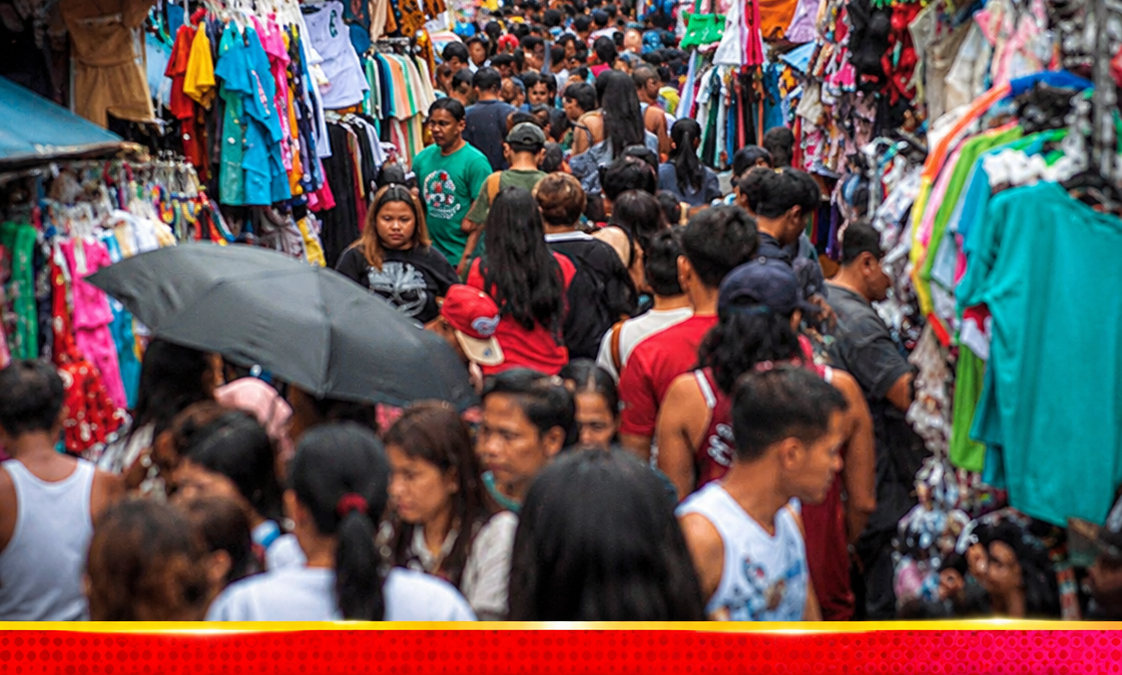
The slowdown is important because household consumption is a major component of Philippine economic activity. When families become more cautious, the effects can reach supermarkets, restaurants, transport operators, shopping centres, manufacturers and service providers.
The figures do not mean that Filipinos have stopped spending. They indicate that the pace of spending growth has weakened.
The seasonally adjusted figures offer another perspective. Household consumption increased by 0.4% quarter on quarter in the third quarter, suggesting that growth continued but remained modest. Philippine Statistics Authority+1
For businesses, slower growth can make sales projections more difficult. Retailers may need to rely more heavily on promotions, affordable product options and careful inventory management rather than expecting demand to expand at the same pace as before.
Inflation is taking a larger share of household budgets
The pressure on consumers becomes clearer when spending figures are considered alongside the latest inflation data.
The PSA reported that headline inflation accelerated to 7.8% in October 2026 from 7.2% in September. Average inflation from January to October reached 5.6%. Philippine Statistics Authority+1
Transport was among the biggest sources of pressure. The transport index recorded annual inflation of 20.1% in October, compared with 14.6% in September.
Housing, water, electricity, gas and other fuels also recorded faster annual price increases, reaching 9.3% from 8.4% in the previous month. Philippine Statistics Authority
These expenses affect how much money households can use for other purchases. Families that spend more on commuting, electricity and basic necessities may have less room in their budgets for dining out, new appliances, clothing, travel and entertainment.
Food remains particularly important in the household spending picture. The PSA’s third-quarter national accounts showed that food and non-alcoholic beverages accounted for 32.6% of household final consumption expenditure, the largest share among the listed spending categories. Philippine Statistics Authority
This helps explain why even moderate changes in food prices can affect consumer decisions across the economy.
WWC previously examined how Filipino shoppers are adjusting their Christmas budgets amid rising living costs. The same affordability concerns could remain relevant as households enter 2027.
Consumer confidence has improved, but caution remains
There is one encouraging sign: consumer sentiment improved in the third quarter.
The Bangko Sentral ng Pilipinas’ Consumer Expectations Survey showed that the overall consumer confidence index for the current quarter improved to -29.8% in the third quarter from -42% in the second quarter.
The index for the next quarter also improved, moving from -16.3% to -0.8%. The outlook for the next 12 months remained positive, rising from 0.2% to 9.1%. Philippine Information Agency
However, negative confidence readings for the current and next quarters mean pessimistic respondents still outnumbered optimistic ones for those periods.
The survey also revealed an important difference between expectations and actual spending intentions. More households indicated that they were likely to purchase big-ticket items such as real estate and motor vehicles over the next 12 months.
At the same time, households reported weaker spending plans for day-to-day expenses and lower borrowing intentions. The BSP said stronger saving prospects and expectations of additional income also contributed to the more favourable outlook. Philippine Information Agency
The results suggest that consumers may be more hopeful about their longer-term financial position while remaining careful about immediate expenses.
That distinction matters to retailers and lenders. Better confidence does not necessarily translate into stronger purchases if households continue prioritising savings, essential bills and existing financial obligations.
Higher interest rates add another consideration
The monetary policy environment has also become more challenging.
On Nov. 17, the BSP Monetary Board raised the target reverse repurchase rate by 50 basis points to 5.50%. The overnight deposit and lending facility rates were adjusted to 5% and 6%, respectively. Bangko Sentral ng Pilipinas
Interest-rate increases can influence the cost of borrowing across the financial system. Depending on how banks adjust their lending rates, consumers may face higher costs when financing purchases through loans or credit.
This could affect decisions involving vehicles, appliances, housing and other expensive items.
However, the BSP’s policy decision should not be treated as proof that higher rates alone caused the slowdown in household spending. Inflation, employment conditions, income growth, consumer confidence and other economic developments also influence household behaviour.
WWC has previously discussed the BSP’s tightening decision and the challenge of containing inflation without weakening economic activity.
For consumers, the practical concern is whether income can keep pace with the combined cost of daily necessities and financing.
Employment and income will influence the 2027 outlook
Consumer spending cannot recover sustainably without households having enough income to support it.
The PSA’s September 2026 Labour Force Survey recorded an unemployment rate of 5.4%, equivalent to approximately 2.86 million unemployed Filipinos. The employment rate stood at 94.6%, while the underemployment rate was 11%. Philippine Statistics Authority+1
These figures matter because employment alone does not guarantee strong purchasing power. Workers may have jobs but still face insufficient hours, unstable earnings or expenses that absorb much of their income.
A stronger labour market could support consumption by giving households more reliable income. But wage improvements must also be considered alongside inflation.
The experience of workers receiving wage adjustments illustrates this challenge. WWC previously examined whether Metro Manila’s ₱60 daily minimum wage increase could meaningfully lift consumer spending.
Additional earnings can help, but their impact depends on how much purchasing power remains after essential expenses.
What happens next
The next few quarters will help determine whether the slowdown in household consumption continues into 2027.
The PSA’s upcoming national accounts releases will show whether spending growth improves or weakens further. Inflation data will also be important, particularly movements in transport, housing-related costs and food prices.
The BSP’s consumer confidence surveys will provide another indication of whether households are becoming more comfortable with major purchases and everyday spending.
For businesses, the outlook calls for careful planning. Retailers and service providers may need to pay closer attention to affordability, product pricing and changes in customer demand.
For policymakers, the challenge is to improve household purchasing power without allowing inflationary pressures to become more persistent.
The 2.8% spending-growth projection cited in the current discussion is not a guaranteed outcome. It is a forecast that will depend on how prices, incomes, employment, credit conditions and consumer confidence develop.
The Philippines does not need households to spend recklessly to sustain economic growth. It needs families to have enough purchasing power to spend confidently without sacrificing savings or essential needs.