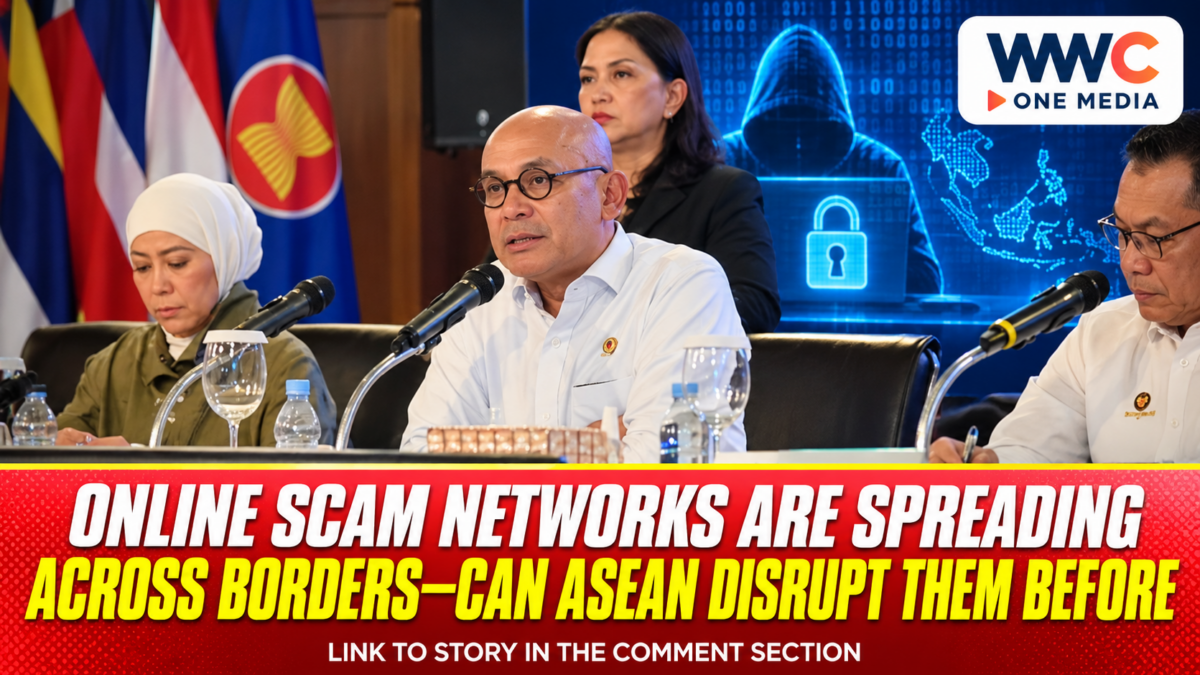
Indonesia’s National Police repatriated 139 Indonesian citizens from Manila on November 24, 2026, describing them as suspected of involvement in a transnational online-scam syndicate operating in the Philippines. The return came as Indonesia’s communications ministry disclosed that it had handled 67,578 pieces of fraudulent online content across social media platforms and websites between October 2024 and November 19, 2026.
The developments point to a challenge that extends beyond individual fraudulent messages. Online scam networks can involve recruitment, impersonation, digital infrastructure and financial transactions across several jurisdictions. That makes investigations more complicated—and raises questions about how governments can protect both people defrauded online and workers who may have been deceived or coerced into participating.
For the Philippines and its neighbours, the issue is no longer only about catching individual scammers. It is also about identifying the people who organise the operations, disrupting the systems they use and distinguishing suspected offenders from possible trafficking victims.
Online scam networks are becoming a cross-border enforcement challenge
The Indonesian National Police said the 139 citizens were suspected of involvement in a Manila-based transnational scam syndicate. They were returned to Indonesia after being picked up from Philippine National Police headquarters at Camp Crame.
The police statement said the group arrived at Soekarno-Hatta International Airport in Tangerang on November 24. Senior Indonesian police officials and government representatives were present when seized items were displayed, including counterfeit uniforms, caps and institutional plaques associated with law-enforcement and government agencies.
The police described the case as an operation involving a network targeting Indonesian citizens. The 139 people were described as suspected of involvement; their return to Indonesia is not a court finding of guilt.
The incident is relevant to the Philippines because it demonstrates how an operation based in one country can target people in another. It also follows a November 3 raid in Pasay that WWC previously covered in its report on the suspected scam hub where foreign nationals were found and authorities displayed fake police materials.
That earlier report and the Indonesian repatriation are connected to the wider Pasay investigation. They should not be mistaken for two unrelated scam-centre operations.
Digital fraud is measured in more than one way
Indonesia’s Ministry of Communication and Digital Affairs reported that it handled 67,578 pieces of fraudulent online content from October 20, 2024, to November 19, 2026. The figure covers content found on social media platforms and websites.
The ministry also reported 103,940 submissions through its AduanNomor reporting channel. Of these, 15,292 concerned suspected scamming, 17,631 involved identity impersonation, and 19,422 related to extortion or threats through digital platforms.
These figures describe different kinds of activity. Content handled by the ministry is not the same as a confirmed criminal case, while a public complaint is not automatically a verified offence or a unique victim. A single person may submit more than one report, and one fraudulent operation may generate multiple pieces of content.
That distinction matters when governments and the public assess the scale of the problem. Large numbers can indicate a substantial enforcement workload, but they should not be treated as a direct count of convicted offenders or people who lost money.
For Filipino readers, WWC has previously examined how the Philippine National Police approaches cybercrime enforcement and online fraud cases. The Indonesian figures add a regional perspective: online fraud requires both local reporting channels and cooperation when the people, infrastructure and victims are located in different countries.
Fake overseas jobs can become part of the scam-centre pipeline
Not everyone found inside a suspected scam operation necessarily entered it knowingly. Recruitment can begin with an apparently ordinary employment offer before the actual work is disclosed.
An Indonesian National Police report on a separate case involving 24 citizens repatriated from Papua New Guinea described jobseekers who had been promised telemarketing positions. Police said the investigation found they had instead been forced to work as online scammers. The report said recruitment communications had moved through Facebook Messenger, WhatsApp and Telegram.
That case illustrates why investigations must examine how people were recruited, what they were told before travelling and whether they could leave their workplaces freely.
The same distinction is important in the Philippines. WWC’s previous coverage of Filipinos allegedly deceived into working inside Myanmar scam compounds documented the risks associated with deceptive overseas employment offers.
A person suspected of participating in online fraud may still have been exploited or trafficked. Authorities need individual assessments rather than assuming that everyone found at a site had the same role or level of responsibility.
Indonesia is tightening digital controls and seeking ASEAN coordination
Indonesia’s communications ministry has identified mobile subscriber registration as one part of its response. It cited Ministerial Regulation No. 7 of 2026, which requires biometric verification for mobile subscriber registration.
The ministry said the regulation also requires mobile operators to block a phone number no later than 24 hours after receiving a blocking request from designated ministry officials.
Indonesia is also proposing an ASEAN Rapid Scam Disruption Protocol. The initiative remains under discussion with other ASEAN member states; it should not yet be described as an adopted regional agreement.
The proposal aims to accelerate coordinated action against digital infrastructure used in cross-border crimes. This is significant because removing a fraudulent website or phone number may interrupt one channel without necessarily dismantling the wider organisation behind it.
A separate international initiative is also taking shape. A November 19 statement by the Contact Group on Countering Criminal Online Scams and Scam Centers was issued by 13 governments, including the Philippines and Indonesia. Its principles cover cooperation on investigations, evidence sharing, operational coordination and measures against the financial and logistical structures supporting criminal networks.
The statement also recognises the need to identify and protect people who have been trafficked, coerced or compelled to participate in online scams.
Why the Philippines has a stake in the response
The Philippines is both a destination for international operations and a country whose citizens may be targeted by cross-border fraud. A response focused only on removing workers from a building or arresting people at a site may leave the recruitment channels, financial flows and digital systems untouched.
Effective enforcement requires coordination among police, immigration authorities, regulators, financial intelligence units and foreign diplomatic missions. It also requires procedures for identifying possible trafficking victims and preserving evidence that can be used in investigations and prosecutions.
For workers considering overseas employment, the cases offer a practical warning: verify the employer, the actual job description and the recruitment arrangements before travelling. A generous salary or professional-looking online advertisement is not proof that an offer is legitimate.
WWC has also reported on government efforts to train communities to recognise and prevent human trafficking. Prevention matters because a person who is deceived before departure may be much harder to protect once outside their home country.
What happens next
Indonesia’s proposed ASEAN protocol remains under discussion, while its police continue processing the 139 repatriated citizens under national procedures. The Indonesian government has also said that people established to be trafficking victims should receive protection and fair legal process.
The next test is whether regional commitments produce practical cooperation: faster information exchange, stronger investigations into network organisers, disruption of fraudulent digital infrastructure and proper screening of people who may have been exploited.
The number of online scams handled by authorities is one measure of the workload. The more important measure will be whether governments can reduce the networks’ ability to recruit workers, deceive victims and move operations across borders.
Frequently asked questions
What are online scam networks?
They are organised groups that use digital platforms, communications tools and sometimes physical facilities to conduct fraud. Their activities can involve impersonation, fake job offers, investment deception and other schemes.
Why were 139 Indonesians returned from the Philippines?
Indonesia’s National Police said the citizens were repatriated from Manila because they were suspected of involvement in a transnational online-scam syndicate. Their return does not establish individual guilt.
What is Indonesia’s ASEAN Rapid Scam Disruption Protocol?
It is a proposed regional initiative intended to speed up joint action against digital infrastructure used in cross-border online crimes. As of November 25, 2026, it was still under discussion with ASEAN member states.
Can people working inside scam centres also be trafficking victims?
Yes. Some people may be deceived into travelling for legitimate-looking jobs and then coerced into fraudulent work. Authorities need to assess each person’s circumstances rather than assuming everyone has the same role.
What should jobseekers check before accepting overseas employment?
They should verify the employer, recruitment agency, job description, visa and work arrangements through official government channels. Unusually high salaries for vague or poorly described work should prompt additional checks.