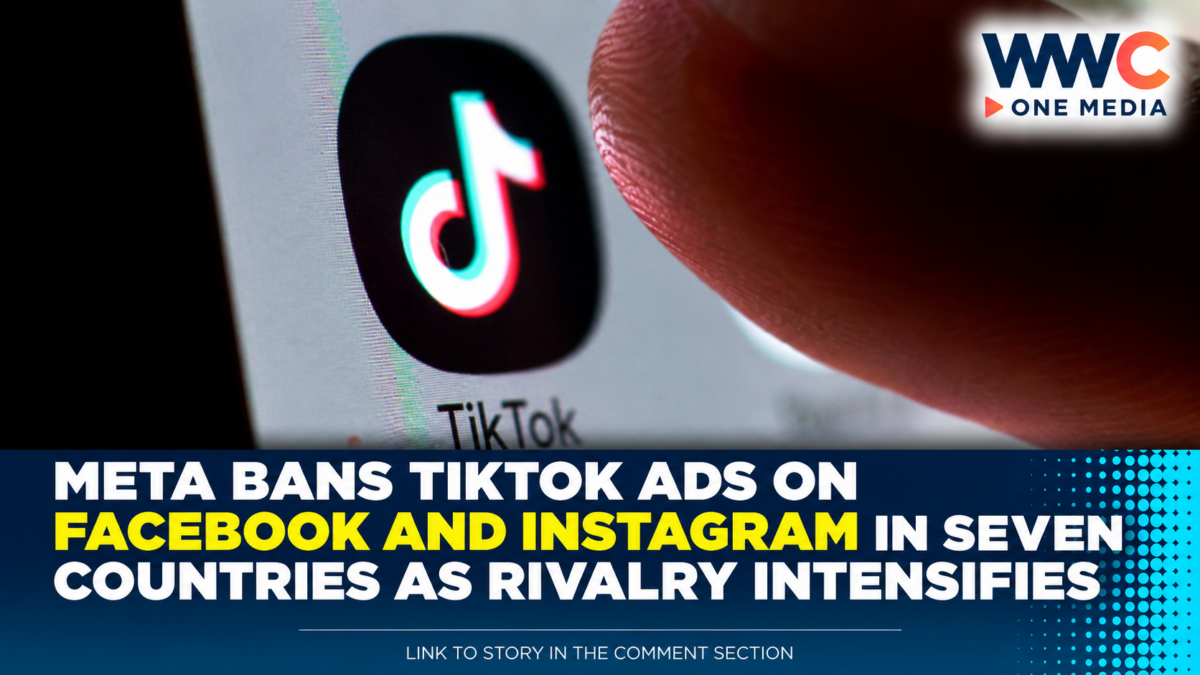
MENLO PARK, California — Meta has banned advertisements from TikTok parent company ByteDance across Facebook and Instagram in the United States and six other countries, escalating the competition between two of the world’s largest social media businesses.
The restriction took effect immediately on Oct. 8 and applies to the United States, Canada, Egypt, Indonesia, Japan, Thailand and Vietnam, according to Meta. It also covers third-party advertisers running campaigns that link to TikTok and other ByteDance-owned properties in those markets.
The decision highlights the growing rivalry between Meta and ByteDance as both companies compete for users’ attention, content creators and advertising revenue. It also comes as social media platforms face increased scrutiny over the effects of their services on young people.
Meta says it will not promote a direct competitor
Meta, the parent company of Facebook and Instagram, defended the decision as a normal business practice, arguing that it has no obligation to advertise a rival service that could draw users away from its own platforms.
“We don’t have to run ads from a competitor whose goal is to pull people off our apps,” the company said.
Meta added that declining to provide promotional services to a competitor was standard practice across industries and said it would continue competing through its products and user experience.
The policy extends beyond advertisements purchased directly by ByteDance. Third-party advertisers whose campaigns promote TikTok or other ByteDance properties through links are also affected in the specified countries.
The restriction therefore limits how those services can use Meta’s advertising network to reach potential users in the covered markets.
TikTok and ByteDance did not immediately respond to requests for comment following the announcement, according to Reuters.
Why the decision matters for TikTok
TikTok has become a major competitor to Meta by attracting users with short-form videos, personalised recommendations and a large creator community.
The platform competes with Instagram Reels and other video features for viewers, creators and advertisers. Its popularity has also made it an important channel for businesses seeking to reach audiences through sponsored content and digital campaigns.
Meta’s decision could complicate some advertising strategies for TikTok and ByteDance, particularly campaigns designed to direct people from Facebook and Instagram to their other services.
However, the restriction does not amount to a ban on TikTok itself in the seven countries. The announcement concerns advertising on Meta’s platforms, rather than access to TikTok or the ability of users to view and share its content.
TikTok’s website does not support links that automatically open or log users into other social media applications, although users can still place links in their profiles that direct visitors to other platforms’ websites.
Teen safety adds another dimension to the rivalry
The advertising dispute comes as Meta pushes other major platforms, including TikTok and YouTube, to adopt stronger measures to protect teenagers online.
In August, Meta agreed to a settlement worth up to US$18 billion with US states over claims that its platforms contributed to harm among children. As part of the agreement, the company committed to measures that include daily usage limits for young users, restrictions on nighttime use and stronger protections against age-restricted content.
The settlement followed wider legal and public scrutiny of social media companies’ responsibilities toward younger users.
Meta has urged TikTok and YouTube to follow comparable steps, although the advertising ban is a separate business decision. The timing places the move within a broader period of competition and heightened attention to the safety of social media services.
TikTok has also faced legal pressure over child safety. In September, it reached a settlement with the US state of Alabama that requires the platform to introduce additional usage limits and strengthen age-verification measures. The agreement resolved claims that TikTok endangered children and misled consumers about its safety.
The settlement does not establish that every allegation made against the company was proven in court, but it adds to the regulatory and legal challenges facing social media operators.
TikTok continues operating in the United States
Despite the advertising restrictions, TikTok continues to operate in the US under a majority American-owned joint venture structure established through a deal intended to safeguard US user data and avert a nationwide ban.
The app has more than 200 million users in the United States, making the market significant for both TikTok and its competitors.
The new advertising policy does not itself change TikTok’s ownership arrangement or determine its future regulatory status.
Instead, it establishes a boundary on how ByteDance-related businesses can advertise through Meta’s platforms in the seven affected countries.
The practical impact will depend partly on how advertisers adjust their campaigns and whether the restriction changes how the companies compete for users and marketing budgets.
A new front in the battle for digital advertising
Meta’s move adds another layer to the competition between major social media companies, which increasingly overlap in their features, creator programmes and advertising markets.
For advertisers, the policy may require changes to campaigns that rely on Facebook and Instagram to direct audiences to TikTok or other ByteDance services in the affected countries. Companies may need to review their promotional plans and determine which channels remain available for their intended audiences.
For users, the immediate change concerns advertising rather than ordinary access to the platforms. The announcement does not indicate that TikTok videos will disappear from Facebook or Instagram, nor does it establish a wider restriction on users sharing links to TikTok content.
The longer-term implications remain uncertain. Meta has framed the ban as a commercial decision, while the absence of an immediate public response from TikTok and ByteDance leaves their position unclear.
What is clear is that competition between the companies is extending beyond the products people use every day to the advertising systems that help those products grow.
As Meta and ByteDance continue competing for attention, creators and advertising dollars, the latest restriction underscores how decisions by one major platform can affect the digital marketing options available to businesses across multiple markets.
:::