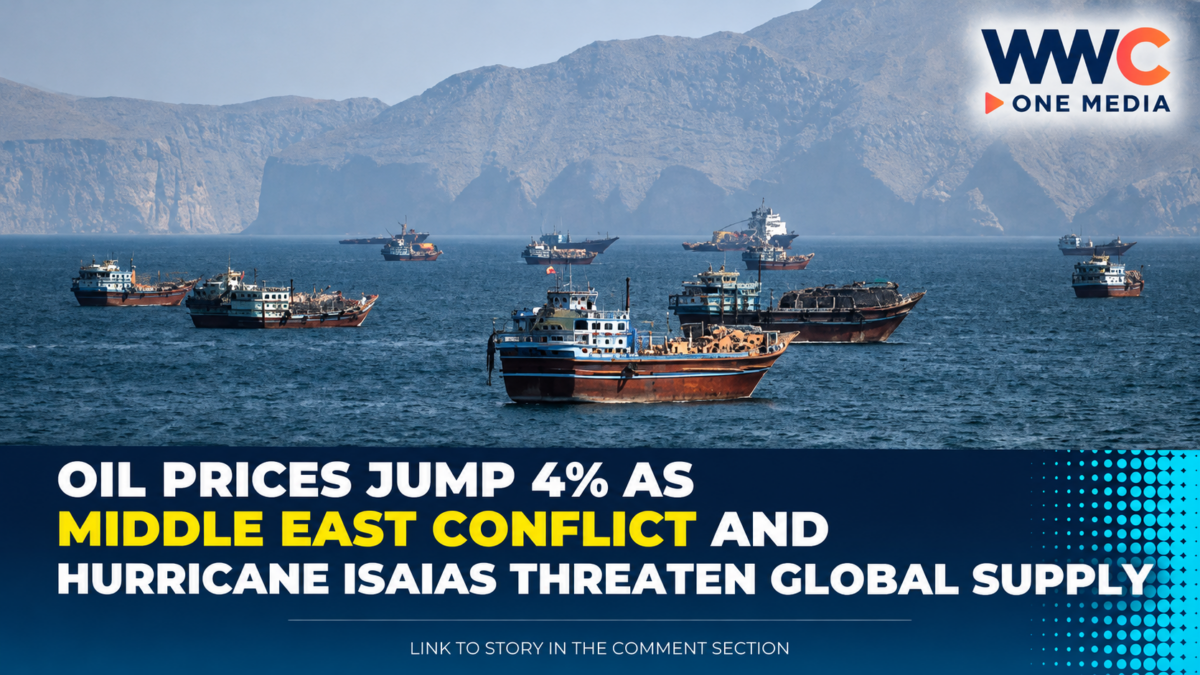
HOUSTON — Global oil prices climbed about 4% on Thursday (Oct. 8) as renewed concerns over the ongoing Middle East conflict and supply disruptions caused by Hurricane Isaias raised fears of tighter energy supplies.
Brent crude futures settled US$4.08 higher, or 4.1%, at US$104.28 a barrel, while US West Texas Intermediate (WTI) crude rose US$3.21, or 3.6%, to US$91.49. Both benchmarks had gained more than US$5 at one point during the session, with Brent reaching its highest level since Sept. 29.
The rally reflected two major risks confronting energy markets: the possibility of further escalation involving Iran and the threat posed by Hurricane Isaias to offshore oil and gas production in the Gulf of Mexico.
Prices retreated from their session highs after US President Donald Trump said Washington was having productive discussions with Iran and would not attack the country before the Nov. 3 US midterm elections. Nevertheless, uncertainty over the conflict and the storm’s potential impact continued to support prices.
Middle East tensions keep oil traders on edge
The conflict involving Iran has placed renewed attention on the security of oil shipments passing through the Strait of Hormuz, one of the world’s most important energy shipping routes.
Before the war, shipments through the strait accounted for roughly 20% of global oil and fuel flows. Threats to shipping in the Gulf have intensified in October, raising concerns that further attacks or disruptions could restrict supplies reaching international markets.
Attacks on tankers travelling through the strait reportedly reached their highest frequency since the conflict began last week, even as Gulf producers increased exports.
Saul Kavonic, head of energy research at MST Marquee, said the frequency of Iranian attacks on ships had reached its highest point since the war began and could intensify further.
The prospect of further US military action against Iran also contributed to market uncertainty. Although Trump’s comments about discussions with Tehran helped ease prices from their peaks, they did not eliminate concerns about the security of energy infrastructure and shipping routes.
For oil traders, the central question is whether diplomatic efforts can reduce the threat to supplies or whether the conflict will continue disrupting the movement of crude and refined petroleum products.
Iran reviews proposal to reopen Strait of Hormuz
Iran was reviewing a US response to a proposal concerning the reopening of the Strait of Hormuz within seven days, according to the Iranian news agency Tasnim, which cited Foreign Minister Abbas Araqchi.
Tehran said it would respond within days. The proposal was being watched closely because restoring more reliable passage through the strait could ease pressure on global oil supplies.
However, diplomatic discussions were accompanied by fresh economic pressure from Washington.
The US Treasury Department announced new sanctions on Thursday targeting individuals, networks and 17 vessels involved in transporting Iranian crude oil, petroleum products and petrochemicals. The measures were intended to increase economic pressure on Tehran.
France and Saudi Arabia were also studying options involving French military assets to help protect the Yanbu oil terminal, according to France’s Armed Forces Chief of Staff, General Fabien Mandon.
Separately, Syria was considering possible military assistance to Saudi Arabia in its conflict with Iran-backed Houthi forces in Yemen, according to US and Syrian military officials cited in the report. The options under consideration reportedly included defensive assistance or the deployment of forces to support Saudi-backed Yemeni troops.
These developments added to uncertainty over the regional security situation and the potential consequences for energy infrastructure and shipping.
Hurricane Isaias disrupts US offshore production
The Middle East was not the only source of concern for oil markets. Hurricane Isaias was moving towards US offshore production areas, forcing energy companies to suspend operations and evacuate personnel from some facilities.
As of Thursday, producers had shut in approximately 1.3 million barrels per day of oil production in the US Gulf of Mexico, equivalent to about 62.9% of current output, according to the US Marine Minerals Administration.
Several major energy companies took precautionary measures as the storm approached.
Shell and Chevron said they were curtailing offshore operations, while BP removed all personnel and shut production at its Na Kika and Thunder Horse platforms.
The shutdowns threatened to remove a substantial amount of crude oil production from the market, adding another supply risk at a time when geopolitical tensions were already unsettling prices.
The extent and duration of the disruption would depend on the storm’s path, its strength and how quickly companies could safely resume operations.
Oil markets remain vulnerable to supply shocks
The latest increase followed a decline in oil prices on Wednesday, after the International Energy Agency agreed to accelerate the release of oil stocks and prioritise diesel supplies as governments grappled with high fuel prices and war-related supply disruptions.
Emergency stock releases can help cushion temporary shortages, but they do not necessarily resolve the underlying problems if shipping routes remain threatened or production facilities remain offline.
The simultaneous risks in the Middle East and the Gulf of Mexico have made the oil market particularly sensitive to new developments. Any deterioration in shipping security or prolonged shutdown of offshore production could further tighten available supplies, while progress in diplomatic negotiations or a quicker-than-expected recovery in production could ease some of the pressure.
For now, traders are weighing the possibility of further disruptions against signs that diplomatic engagement could prevent additional escalation.
What higher oil prices could mean for consumers
A sustained rise in international crude prices can eventually put upward pressure on the cost of petrol, diesel, aviation fuel and other petroleum products. The timing and size of any impact on consumers vary by country, depending on local fuel inventories, taxes, exchange rates, government policies and the pricing practices of fuel retailers.
Higher energy costs can also feed into transportation and production expenses, potentially adding to inflationary pressure for businesses and households.
However, a single day’s increase in crude prices does not automatically translate into an immediate or equivalent rise at petrol stations. Retail prices depend on several factors beyond the international benchmark.
With Brent crude settling above US$104 a barrel, developments in the Middle East and the recovery of US offshore production will remain important indicators for the direction of energy markets in the coming days.
The latest rally demonstrates how quickly oil prices can respond when geopolitical risks and weather-related disruptions threaten supplies at the same time. Until there is greater clarity over the Iran conflict and Hurricane Isaias, the market is likely to remain sensitive to fresh developments.