Saudia aircraft catches fire as missile threats disrupt flights
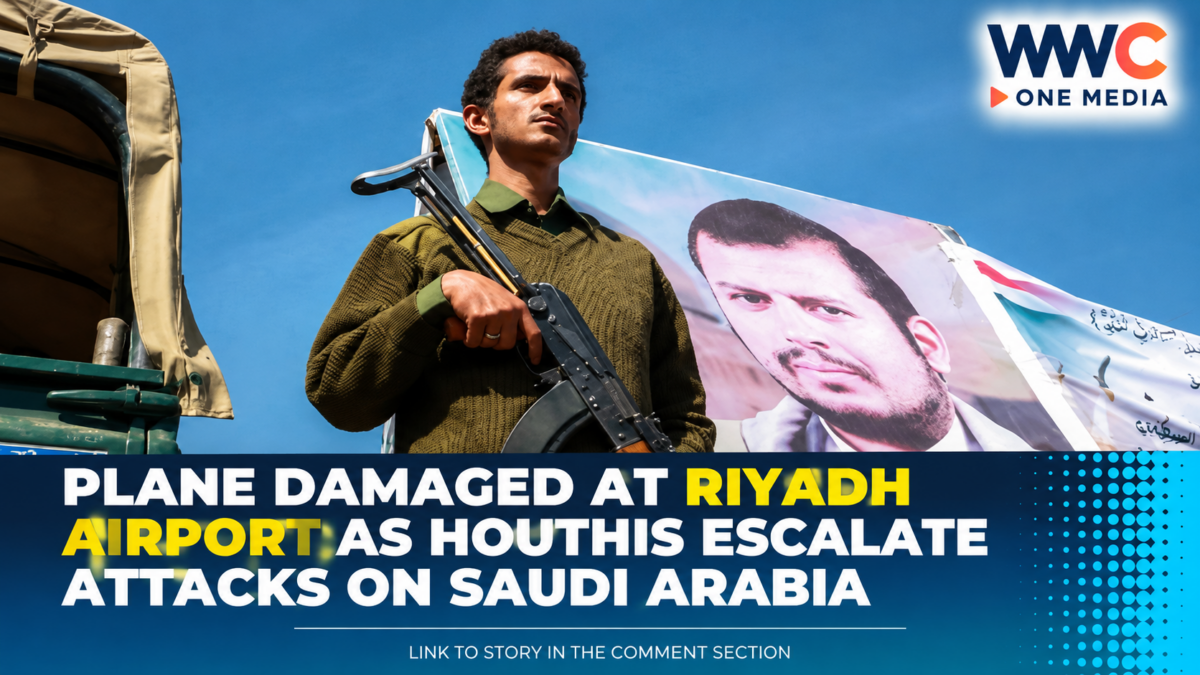
Three people familiar with the incident told Reuters that shrapnel from an intercepted missile, or another projectile, left the commercial aircraft badly damaged after it caught fire while parked at the airport on Thursday, Oct. 8.
The aircraft belonged to Saudia, Saudi Arabia’s national airline. The sources said no passengers were believed to have been aboard at the time, although they could not rule out injuries resulting from the incident.
Video verified by Reuters showed thick black smoke and flames rising from the airport. The fire was later extinguished, according to reporting by Reuters.
Saudi government officials, the country’s civil aviation authority and Saudia did not immediately respond to requests for comment. The precise cause of the aircraft damage remained unclear, and Saudi authorities did not immediately confirm the Houthis’ claim that a missile had struck the airport directly.
Houthis claim responsibility and issue further warnings
The Houthis, an Iran-aligned armed movement based in Yemen, said they had targeted King Khalid International Airport with a ballistic missile.
The group also warned workers to stay away from energy facilities, which it said could face further attacks.
The threats came as the Houthis intensified their campaign against Saudi Arabia over Riyadh’s support for Yemen’s internationally recognised government. Saudi-backed forces have been conducting operations to regain territory held by the group.
The Saudi-led coalition said it had intercepted and destroyed two ballistic missiles heading towards Riyadh and another travelling towards Khamis Mushait, a city near the Yemeni border that hosts a major airbase.
Saudi civil defence officials separately reported that debris from an intercepted missile damaged a kindergarten and a medical clinic complex in Riyadh. Officials did not immediately provide a complete account of the damage or confirm whether anyone was injured in those incidents.
The competing accounts underline the uncertainty surrounding the latest attacks. While the Houthis claimed to have hit the airport, the available reporting did not conclusively establish whether a missile struck the aircraft directly or whether falling debris or another projectile caused the fire.
Airlines suspend flights as cancellations mount
The security situation prompted several international airlines to suspend or cancel services to Riyadh.
Lufthansa Group said its airlines would suspend flights to the Saudi capital through Oct. 16, citing developments in the Middle East.
Indian carriers also announced temporary suspensions. IndiGo cancelled flights to and from Riyadh through Oct. 9, while Air India and Akasa Air announced cancellations through Oct. 10.
Air India said a flight travelling from Delhi to Riyadh had returned to the Indian capital and was subsequently cancelled. Akasa Air also cancelled two scheduled services.
The disruptions extended beyond individual airline decisions. Data compiled by aviation analytics company Cirium indicated that nearly half of departures from Riyadh had been cancelled by 3pm GMT on Thursday, with additional cancellations expected across Saudi airports on Friday.
Flight-tracking services also showed substantial delays affecting arrivals and departures at King Khalid International Airport.
Airport authorities urged travellers to contact their airlines and confirm their flight status before heading to the airport.
For passengers, the suspensions mean that travel plans may change at short notice while airlines assess whether operating flights to the Saudi capital can be done safely.
Three people killed in airport attacks this week
The latest incident followed attacks on Saudi airports that authorities said had killed three people earlier in the week.
Saudi officials reported fatalities from strikes involving Riyadh’s airport and Abha airport in the kingdom’s southwest. The Houthis claimed responsibility for attacks on the transport hubs.
The escalation has raised concerns about the safety of civilian aviation and the possibility of further disruption to regional travel.
Saudi Arabia has also faced threats against energy infrastructure, with the Houthis warning that oil facilities could be targeted. Such threats are significant because the kingdom is a major global oil producer and an important supplier to international energy markets.
The attacks have also added pressure to a region already experiencing wider conflict involving Iran and the United States. The expanding security risks have raised concerns about the potential for further countries to become involved.
Yemen’s conflict threatens wider regional stability
Yemen’s civil war, which began in 2014, has entered a more intense phase in recent weeks after a period of relative calm following a 2022 ceasefire.
The Houthis have made territorial gains along parts of the Red Sea coast, including areas near the strategically important Bab el-Mandeb Strait. The waterway connects the Red Sea to the Gulf of Aden and is a key route for international maritime trade.
Saudi-backed forces have launched counterattacks in an effort to regain territory, while the Houthis have continued fighting on several fronts. The renewed conflict has displaced an estimated 200,000 people, according to reporting cited by Reuters, adding to Yemen’s long-running humanitarian crisis.
Saudi Arabia has sought support from allies as it responds to the attacks. Turkey has said it is providing mainly defensive and technical assistance, including military equipment and intelligence sharing.
Syria is also considering possible support for Saudi Arabia, according to officials cited by Reuters. Options reportedly include defensive assistance to protect the kingdom from attacks or a more direct deployment to support operations against the Houthis. No final decision on a Syrian deployment was confirmed in the report.
The involvement of additional countries could broaden the conflict and increase the risks to regional security, commercial aviation and shipping.
Travellers urged to check flight status
With attacks continuing and airlines adjusting their schedules, passengers travelling to or through Riyadh should verify their bookings directly with their carriers before leaving for the airport.
The latest reports do not establish when normal flight operations will resume across all affected routes. Airlines are expected to assess the situation as more information becomes available.
The aircraft fire at Riyadh airport illustrates the risks facing civilian transport infrastructure as the conflict intensifies. Although the precise circumstances of the damage remain unresolved, the combination of missile threats, reported fatalities and widespread flight disruption has placed aviation safety at the centre of the unfolding crisis.
For Saudi Arabia and its neighbours, the immediate challenge is to protect civilians and essential infrastructure while preventing the fighting in Yemen from spreading further across the region.