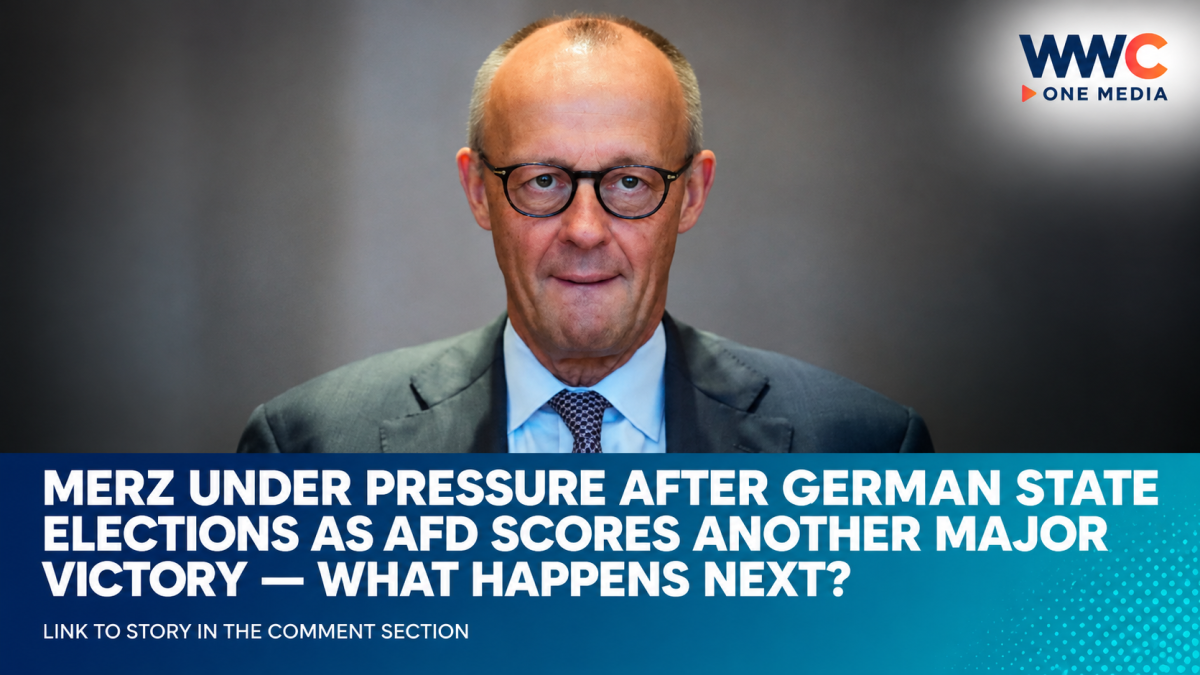
German Chancellor Friedrich Merz is facing renewed pressure after state elections in Berlin and Mecklenburg-Western Pomerania produced major setbacks for his conservative CDU and another strong performance by the Alternative for Germany (AfD).
The Sept. 20 elections came just two weeks after the AfD won a major victory in Saxony-Anhalt, where it secured almost 44 per cent of the vote. The latest results have intensified debate over the direction of German politics and the strength of Merz’s government.
In Mecklenburg-Western Pomerania, the AfD finished first with about 38 per cent of the vote, ahead of the centre-left Social Democratic Party (SPD), which has governed the state under popular premier Manuela Schwesig. Merz’s CDU suffered its worst result there since the postwar era, receiving only about 4.9 per cent and falling just below the 5 per cent threshold required to enter the state parliament.
Berlin produced a different outcome. The left-wing Die Linke emerged as the largest party with 25.7 per cent, while the CDU finished second at 18.8 per cent. The AfD came third with 16.3 per cent, ahead of the Greens, while the SPD recorded its worst result in a Berlin state election.
For Merz, the results are significant because the CDU was defeated in two very different political environments. The party lost ground in the capital while effectively being shut out of the legislature in Mecklenburg-Western Pomerania.
Merz himself described the Mecklenburg-Western Pomerania result as a “disaster” but said he intended to remain chancellor and CDU leader. He has argued that Germany needs to continue with economic and social reforms aimed at addressing weak growth and other structural problems.
The elections have also exposed tensions inside Merz’s governing coalition with the SPD. Social Democratic leaders have questioned parts of the government’s reform programme, including proposed changes affecting pensions, while the coalition holds only a narrow majority in the Bundestag.
The AfD’s continued gains have become one of the central issues in German politics. The party has built support around tougher immigration policies, opposition to some government measures toward Russia and criticism of Germany’s economic direction. Its growing electoral strength has also renewed discussion about Germany’s longstanding political “firewall”, under which the established parties have refused to form governing coalitions with the AfD.
The latest victories do not automatically give the AfD control of either state. In Mecklenburg-Western Pomerania, it won the largest share of the vote but remained short of a majority, meaning coalition-building will determine how the state is governed. Berlin also requires negotiations among parties before a governing coalition can be formed.
The results nevertheless represent another major shift in Germany’s political landscape. The AfD has now topped two state elections within a month, following its breakthrough in Saxony-Anhalt, while Merz’s CDU is facing questions about how it can respond to the party’s growing support without abandoning its own political boundaries.
For Merz, the immediate challenge is therefore both political and economic: maintaining support within his own CDU, keeping his coalition functioning and delivering the reforms he has promised while the AfD continues to gain electoral ground.
The bigger question now is whether these state election setbacks will remain a warning for Merz — or become the beginning of a much larger political reckoning inside Germany’s governing coalition.