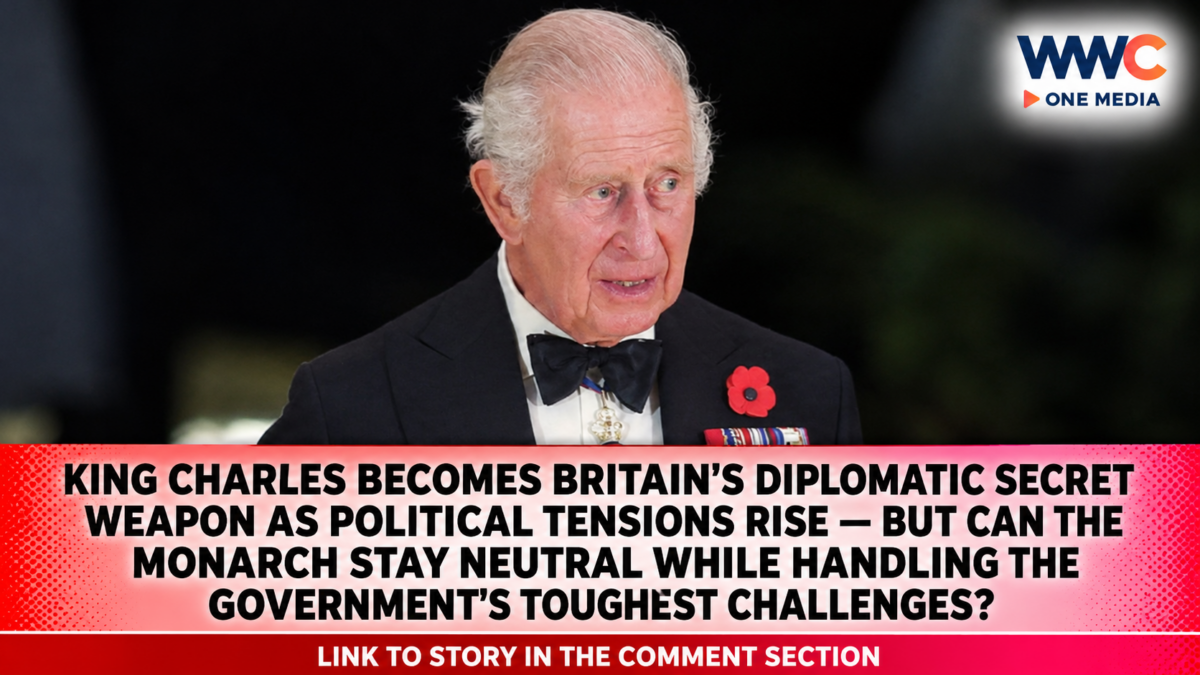
Britain is increasingly relying on King Charles III to handle some of its most politically sensitive international relationships, with a senior royal aide describing the monarch as a diplomatic “secret weapon” capable of reaching audiences that elected politicians may struggle to influence.
The remarks followed the King’s nine-day Caribbean tour, which included visits to The Bahamas, Guyana and Antigua and Barbuda, as well as the Commonwealth Heads of Government Meeting. The trip unfolded against a difficult diplomatic backdrop: renewed demands for Britain to apologise for its role in the transatlantic slave trade and provide reparations to affected countries.
Although Charles expressed personal sorrow over the suffering caused by slavery, he did not issue a formal apology or promise compensation. That position remained consistent with the British government’s policy.
The aide’s comments point to a growing feature of Charles’s reign: the government is using the monarchy’s ceremonial standing, international relationships and public appeal to help manage diplomatic challenges that could be more difficult for politicians to address directly. Reuters+2
Royal Aide Says King Charles Can Reach Places Politicians Cannot
Speaking to reporters after the Caribbean tour, a senior royal aide said the King had demonstrated his ability to handle complicated diplomatic situations through both his words and actions.
The aide described sending Charles into politically charged situations as a major diplomatic advantage, saying the monarch could connect with people and leaders whom politicians might not be able to reach as effectively.
The aide also said a clear pattern was emerging during the fifth year of Charles’s reign: the government was increasingly asking him to take on challenging international engagements.
The role is not simply about attending ceremonies, delivering speeches or representing Britain at official functions. It also involves helping rebuild relationships with countries where historical disputes, political disagreements or strained diplomatic ties have complicated relations.
The Palace’s assessment suggests that Charles’s value lies partly in his ability to maintain personal relationships with foreign leaders while representing the British state without appearing to campaign for a political party. Reuters+1
Caribbean Tour Put Slavery and Reparations at the Centre of Diplomacy
The King’s Caribbean tour was far from a routine royal engagement.
Charles visited The Bahamas, Guyana and Antigua and Barbuda between October 27 and November 4, 2026. The programme included official engagements and the Commonwealth Heads of Government Meeting, where leaders from 56 member countries gathered to discuss shared political and economic challenges.
But one issue dominated much of the diplomatic conversation: Britain’s historical responsibility for the transatlantic slave trade.
Caribbean leaders and campaigners have repeatedly called for Britain to issue a formal apology and provide reparations for the lasting consequences of slavery and colonial rule.
Charles did not make either commitment. Instead, he expressed personal sorrow over the horrors of slavery, a position that was broadly welcomed by Commonwealth leaders as a meaningful acknowledgement, even though it stopped short of meeting their demands.
The distinction was significant. The King could recognise historical suffering and encourage dialogue, but he could not independently announce a change in British government policy. Reuters+2
Jamaica’s Reparations Campaign Shows How Sensitive the Issue Has Become
The diplomatic pressure surrounding the Caribbean tour is part of a wider movement across the region.
Jamaica, in particular, has pursued a more formal route by petitioning King Charles to seek a legal determination concerning Britain’s responsibility for the transatlantic slave trade.
The campaign raises questions about the legality of historical enslavement, the consequences of colonial exploitation and whether Britain has continuing obligations to provide redress.
The British government has rejected financial reparations, leaving a major disagreement between London and Caribbean governments.
WWC ONE MEDIA previously examined the dispute in its report, Jamaica Takes Slavery Reparations Fight to King Charles as Britain Rejects Compensation.
The controversy illustrates why the King’s diplomatic role can be particularly valuable — and politically delicate. His words can acknowledge historical grievances and maintain relationships, but they cannot automatically resolve disputes involving government policy, legal responsibility or financial compensation. WWC One Media+1
King Charles Has Already Been Used to Help Repair Relations With Donald Trump
The Caribbean tour was not the first time the British government has relied on Charles to navigate a politically sensitive international relationship.
Earlier in 2026, the King and Queen Camilla undertook a state visit to the United States amid disagreements between Washington and London over issues including Iran, trade and wider transatlantic relations.
Charles addressed a joint session of the US Congress, using the occasion to emphasise the longstanding relationship between the two countries and the importance of international cooperation.
His speech touched on NATO, Ukraine, democracy, climate responsibility and the need for continued cooperation between allies. It was widely viewed as a carefully balanced diplomatic performance, particularly given the political differences between the British government and US President Donald Trump.
The King also met Trump during the visit and hosted the US president during his earlier state visit to Britain.
Reuters reported that the British government had turned to Charles as part of efforts to ease tensions and strengthen the relationship with Washington.
The royal approach offers a different kind of diplomatic influence: the King can build personal connections, deliver carefully worded messages and reinforce historic ties without publicly conducting party-political negotiations. Reuters+2
Why the Monarchy Can Be a Diplomatic Advantage
Unlike an elected prime minister, the British monarch does not have to campaign for votes or defend a party’s political programme.
That can give the King a distinctive position when representing Britain abroad.
A royal visit can include meetings with heads of state, official banquets, cultural events and engagements with local communities. These occasions create opportunities for personal relationships and diplomatic contact that extend beyond formal government negotiations.
The Royal Family’s official explanation of the King’s diplomatic responsibilities confirms that he supports the work of the Foreign, Commonwealth and Development Office at home and overseas.
He welcomes foreign leaders, ambassadors and members of the diplomatic community, and undertakes international visits at the request of the British government.
The monarch’s role is therefore not separate from diplomacy. It is an established part of how Britain represents itself internationally. The Royal Family+1
The government’s growing reliance on Charles, however, raises an important question: how can a monarch become more active in politically sensitive diplomacy while maintaining the constitutional neutrality expected of the Crown?
The King Must Remain Politically Neutral
Despite the description of Charles as a government “secret weapon”, he is not a political decision-maker.
Under Britain’s constitutional system, the monarch reigns but does not govern. Elected ministers are responsible for government policy, and the King generally acts on ministerial advice.
He has formal constitutional responsibilities, including appointing the prime minister, opening Parliament and granting royal assent to legislation. But these functions are exercised within established constitutional conventions.
The University College London’s Constitution Unit explains that the monarch is expected to follow government advice in carrying out the main functions of the head of state.
This distinction matters when Charles is sent into sensitive diplomatic situations.
He may deliver speeches, host foreign leaders and help strengthen relationships, but he cannot independently promise reparations, change Britain’s foreign policy or negotiate binding agreements on behalf of the government.
The elected government remains responsible for those decisions. University College London+1
Commonwealth Relationships Are Becoming More Complicated
Charles also faces a broader challenge in his role as head of the Commonwealth.
The organisation brings together 56 independent countries, many of which have historical connections to the British Empire.
However, membership does not mean that every country recognises the British monarch as its head of state.
Charles is head of state in the United Kingdom and 14 other Commonwealth realms. Other Commonwealth members are republics or have different constitutional arrangements.
Barbados became a republic in 2021, removing the British monarch as its head of state while remaining a member of the Commonwealth.
That distinction is important because the organisation is a voluntary association of independent countries, not an extension of the British monarchy.
A senior royal aide acknowledged that the future constitutional arrangements of individual countries are matters for those nations to decide.
The aide also indicated that the Royal Family serves where it is wanted, leaving room for countries to choose a different arrangement if they no longer wish to retain the monarchy. Reuters+2
For Britain, maintaining influence across the Commonwealth increasingly depends on partnership and mutual interests rather than historical ties alone.
Diplomacy Extends Beyond Slavery and the United States
The King has also used royal engagements to support Britain’s relationships with countries facing regional and international tensions.
In October 2026, Charles praised Oman’s diplomatic efforts to promote peace in the Middle East during a state banquet at Windsor Castle for Sultan Haitham bin Tarik.
His remarks highlighted Oman’s role as a mediator and its efforts to maintain dialogue amid regional instability.
WWC ONE MEDIA covered the visit in King Charles Praises Oman’s Peace Push as Strait of Hormuz Crisis Raises Global Stakes.
The engagement demonstrates how royal diplomacy can reinforce Britain’s relationships with strategically important countries while giving international attention to diplomatic initiatives.
The British government is also pursuing wider economic cooperation with Commonwealth nations. Its push for improved debt arrangements for financially vulnerable countries was another major issue at the November summit.
WWC ONE MEDIA explored that initiative in UK Prime Minister Pushes Debt Rescue for Poor Commonwealth Nations as $12.3-Trillion Developing-World Debt Crisis Deepens.
These engagements show that the monarchy’s diplomatic role is not limited to ceremonial appearances. It can help provide visibility and political momentum for Britain’s wider international priorities. WWC One Media+2
A Difficult Year for the Royal Family
The growing diplomatic responsibilities come as the monarchy faces continuing challenges at home.
Charles’s younger brother, Andrew Mountbatten-Windsor, has remained under police investigation, although he denies wrongdoing. The controversy has continued to attract negative attention toward the Royal Family.
The King has also faced renewed scrutiny following the release of a biography of his first wife, Princess Diana, written by her brother, which included criticism of Charles’s response to her death.
Meanwhile, Prince Harry’s return to Britain has brought further attention to the family’s complicated relationships and security arrangements.
These issues have created additional pressure on an institution that is expected to maintain public confidence while representing the country overseas.
The senior aide described the Caribbean tour as a demanding but successful assignment, noting that Charles remained energetic despite the heat and the packed schedule.
The King is approaching his 78th birthday in November and continues to recover from cancer. The aide said his enthusiasm for meeting people and carrying out diplomatic engagements remained strong. Reuters+2
Can King Charles Strengthen Britain’s Influence Without Crossing Political Lines?
The description of Charles as Britain’s “secret weapon” captures an important change in how the government is using the monarchy.
Rather than relying solely on ministers and diplomats, Britain is increasingly drawing on the King’s international profile, personal relationships and constitutional position to help navigate difficult diplomatic situations.
The strategy has potential advantages. A monarch can sometimes open doors, maintain relationships across political changes and deliver messages in a way that elected leaders cannot easily replicate.
But there are limits.
Charles cannot independently resolve the Caribbean reparations dispute, dictate the future of the Commonwealth or guarantee that Britain’s diplomatic relationships will improve.
His effectiveness also depends on maintaining public trust and avoiding the appearance that the Crown is being used as a political instrument.
The coming months will test whether this approach can deliver lasting results, particularly as Britain faces difficult conversations about its colonial history, its relationship with the United States and its place in an increasingly complex international environment.
For now, the government’s message is clear: King Charles is expected to do more than represent Britain at formal ceremonies. He is increasingly being asked to help handle some of the country’s most complicated diplomatic relationships.