MANILA, Philippines — McDonald’s Philippines is intensifying its battle for Filipino consumers with its biggest Korean-inspired menu campaign yet, introducing new burgers, seasoned fries and specialty drinks as the global Korean cultural wave continues to influence the country’s food industry.
The fast-food giant launched its expanded Taste of Korea lineup on October 9, 2026, seeking to capitalize on Filipinos’ enthusiasm for Korean cuisine, K-pop and television dramas.
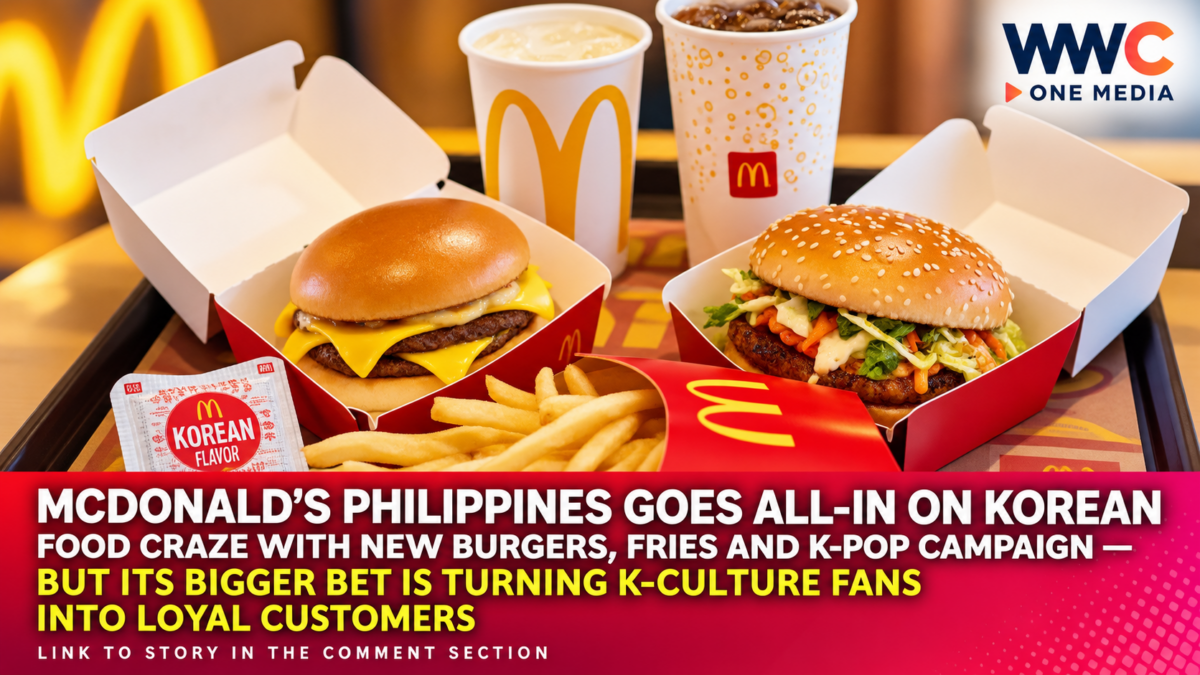
The latest offerings include Yangnyeom McSpicy, Yangnyeom Double Cheeseburger, Galbi McShaker Fries and K-Melon Float, combining familiar McDonald’s products with flavors inspired by Korean cuisine.
But the strategy goes beyond launching another limited-time menu.
By combining Korean-inspired meals, entertainment content and exclusive mobile app promotions, McDonald’s is testing whether cultural trends can generate stronger customer engagement, additional transactions and repeat visits in the competitive Philippine fast-food market.
McDonald’s Introduces Its Biggest Taste of Korea Lineup
The October launch represents McDonald’s Philippines’ largest Korean-inspired flavor rollout, building on previous campaigns that introduced Korean and other Asian-inspired products.
The four new offerings are designed to appeal to Filipino consumers familiar with Korean barbecue, spicy sauces and sweet desserts.
The Yangnyeom McSpicy features the chain’s signature spicy chicken burger with a creamy, sweet and spicy yangnyeom-inspired sauce.
The Yangnyeom Double Cheeseburger offers a similar Korean-inspired flavor twist on the company’s double beef burger.
For customers looking for a side dish, the Galbi McShaker Fries combine McDonald’s fries with seasoning inspired by the smoky, savory and slightly sweet flavors associated with Korean galbi.
Completing the lineup is the K-Melon Float, a Sprite-based McFloat with a sweet melon flavor inspired by the popular South Korean ice cream brand Melona.
The products are offered for a limited time through participating McDonald’s dine-in, takeout, drive-thru and delivery channels.
The company has not announced that the menu items will become permanent additions.
Filipino K-Pop Craze Becomes a Business Opportunity
McDonald’s latest campaign illustrates how Korean entertainment and food culture are increasingly influencing consumer marketing in the Philippines.
From K-pop music and Korean dramas to Korean barbecue restaurants and convenience-store products, Korean cultural influences have become highly visible in Filipino consumer life.
McDonald’s Philippines Brand Manager Karl Christian Chua said Korean culture continues to connect Filipino consumers across age groups, particularly through entertainment and dining experiences.
The company previously introduced its Taste of Korea and Flavors of Asia menus in 2021 and 2022, respectively.
Those earlier campaigns helped establish Korean-inspired flavors as a recurring part of the company’s limited-time menu strategy.
By reintroducing the concept in 2026, McDonald’s is seeking to build on an existing consumer interest rather than introduce an entirely unfamiliar food category.
For restaurant operators, culturally themed products can create excitement around existing menu items while encouraging customers to try new flavors.
However, the popularity of Korean culture does not automatically guarantee long-term sales growth.
The commercial test is whether customers will continue purchasing the products after the initial excitement surrounding the campaign fades.
G-DRAGON Collaboration Strengthens McDonald’s Korean Strategy
The latest launch follows McDonald’s collaboration with South Korean music star G-DRAGON in September 2026.
On September 17, the company introduced its Asia Chicken Campaign in the Philippines, part of a wider regional initiative involving 13 Asian markets.
The campaign was led by McDonald’s Korea and featured the globally recognized K-pop performer.
In the Philippines, the promotion included the McSpicy and Chicken McNuggets with Cajun Sauce, supported by entertainment content and branded merchandise associated with G-DRAGON’s PEACEMINUSONE label.
The initiative demonstrated how McDonald’s is increasingly combining celebrity partnerships, popular culture and food products to strengthen customer engagement.
Its October Taste of Korea rollout extends that strategy by shifting the focus toward a broader selection of Korean-inspired flavors.
The two promotions form part of a larger effort to connect the McDonald’s brand with cultural experiences that already resonate with Filipino consumers.
McDonald’s Launches Korean-Inspired Microdrama ‘The Plus One’
In an unusual move for a major fast-food chain, McDonald’s is also expanding its Korean-themed marketing into short-form entertainment.
The company has introduced The Plus One, a Korean-inspired microdrama centered on three friends — Kim, Marco and Dom — who share a dream of visiting South Korea.
When Kim wins a trip to Korea but can bring only one companion, Marco and Dom compete to become her chosen travel partner.
The storyline uses romance, friendship and comedic tension associated with Korean entertainment to engage audiences outside the restaurant environment.
The campaign reflects a marketing trend in which brands use short-form videos and storytelling to reach younger, digitally active consumers.
Instead of relying entirely on conventional product advertisements, McDonald’s is creating content intended to entertain viewers while keeping its Korean-themed food offerings visible.
The approach could help connect promotional campaigns with social media engagement, although the company has not publicly disclosed viewing figures or direct sales generated by the microdrama.
McDo App Offers ₱169 and ₱199 Korean Burger Deals
Alongside the new products and entertainment campaign, McDonald’s is using its mobile application to encourage customer purchases.
Under the advertised McDo App promotions, customers can access:
- ₱199: Yangnyeom McSpicy with a free large Sprite.
- ₱169: Yangnyeom Double Cheeseburger with a free large Sprite.
The offers are intended to make the Korean-inspired products more accessible while encouraging consumers to use the company’s digital ordering and promotional platform.
Mobile app promotions can help restaurant operators communicate directly with customers and encourage repeat transactions.
They also provide opportunities to promote new products without relying entirely on in-store marketing.
However, customers should check the McDo App for participating branches, redemption requirements, availability and the latest promotional terms.
The company has not publicly disclosed how many additional app users or transactions it expects from the campaign.
McDonald’s Expands Marketing Across Its Philippine Restaurant Network
McDonald’s has an extensive nationwide presence, giving it the distribution capacity to introduce limited-time products to consumers across different regions.
That scale allows the company to test new flavors while using existing restaurant operations, delivery channels and digital promotions.
The latest Taste of Korea campaign also follows other customer engagement initiatives.
In September 2026, InsiderPH reported that McDonald’s had attracted at least 350,000 participants every Friday through its unlimited-fries promotion, demonstrating the potential reach of large-scale promotional events.
The fast-food company has also organized nationwide community activities involving fries-themed celebrations and in-store customer experiences.
These efforts illustrate the company’s broader strategy of building customer interest through a combination of food, entertainment and promotional activities.
However, participation in one campaign cannot be treated as evidence that the new Korean-inspired menu will achieve similar results.
Why Korean Food Matters to the Philippine Fast-Food Market
The popularity of Korean cuisine is creating opportunities for restaurant operators seeking to differentiate their menus.
Filipino consumers are increasingly familiar with Korean-style fried chicken, barbecue dishes, spicy sauces and specialty beverages.
For global fast-food companies, adapting these flavors into familiar products offers a way to introduce variety without completely changing their core menus.
A Korean-inspired cheeseburger, for example, allows customers to explore a different flavor profile while still purchasing an established McDonald’s product.
The same approach applies to seasoned fries and dessert beverages.
Limited-time promotions can also create a sense of urgency, encouraging customers to try products before they disappear.
But the strategy presents challenges.
Restaurants must balance novelty with affordability, maintain consistent product quality and determine whether demand is strong enough to justify future campaigns.
The financial success of such promotions ultimately depends on sales volumes, profitability, repeat purchases and the cost of marketing.
The Bigger Question: Can K-Culture Drive Lasting Fast-Food Growth?
McDonald’s latest campaign highlights how the Korean cultural wave has evolved into a commercial opportunity for the Philippine food industry.
The company is not simply offering Korean-inspired sauces and drinks.
It is combining cultural relevance, digital marketing, entertainment content and limited-time promotions to create multiple reasons for customers to interact with its brand.
For McDonald’s, the opportunity is to turn short-term enthusiasm into sustained demand.
The success of the strategy will depend on whether Filipino consumers continue buying Korean-inspired products beyond their launch period, whether app promotions encourage additional visits and whether future campaigns can maintain customer interest.
Importantly, McDonald’s has not disclosed sales projections, revenue targets or financial results specifically attributable to the October Taste of Korea campaign.
Any claim that the new products have already produced a significant revenue increase would therefore be premature.
The real significance of McDonald’s Korean-inspired expansion is not just the introduction of four new menu items. It is the company’s effort to convert Filipinos’ enthusiasm for Korean food and entertainment into stronger customer relationships and potentially higher repeat spending.
With Korean culture continuing to influence dining preferences, entertainment and consumer brands across the Philippines, McDonald’s is positioning itself to benefit from a trend that extends far beyond the restaurant industry.
But as the initial excitement surrounding the new menu settles, one question will determine whether the strategy delivers lasting results:
Will Filipino customers return for the food itself — or will McDonald’s need another K-pop-driven campaign to keep them coming back?