MANILA, Philippines — Southeast Asia is facing a critical energy investment test as industry experts urge the Association of Southeast Asian Nations (ASEAN) to fast-track renewable energy development and regional power grid projects amid mounting concerns over fuel security, rising electricity demand and dependence on imported fossil fuels.
The warning comes as geopolitical tensions and disruptions in global energy markets expose vulnerabilities in the region’s energy supply chains, increasing pressure on governments to develop alternatives to costly coal, oil and natural gas imports.
At an October 9 media forum organized by the Global Renewables Alliance (GRA) and Global Wind Energy Council (GWEC), former Philippine Energy Regulatory Commission Chair Monalisa Dimalanta called for concrete implementation of the long-planned ASEAN Power Grid.
Her central message was that regional electricity interconnection plans must become financially viable infrastructure projects rather than remain policy commitments without clear construction schedules.
A $300-Billion Electricity Infrastructure Challenge
The scale of Southeast Asia’s energy challenge is enormous.
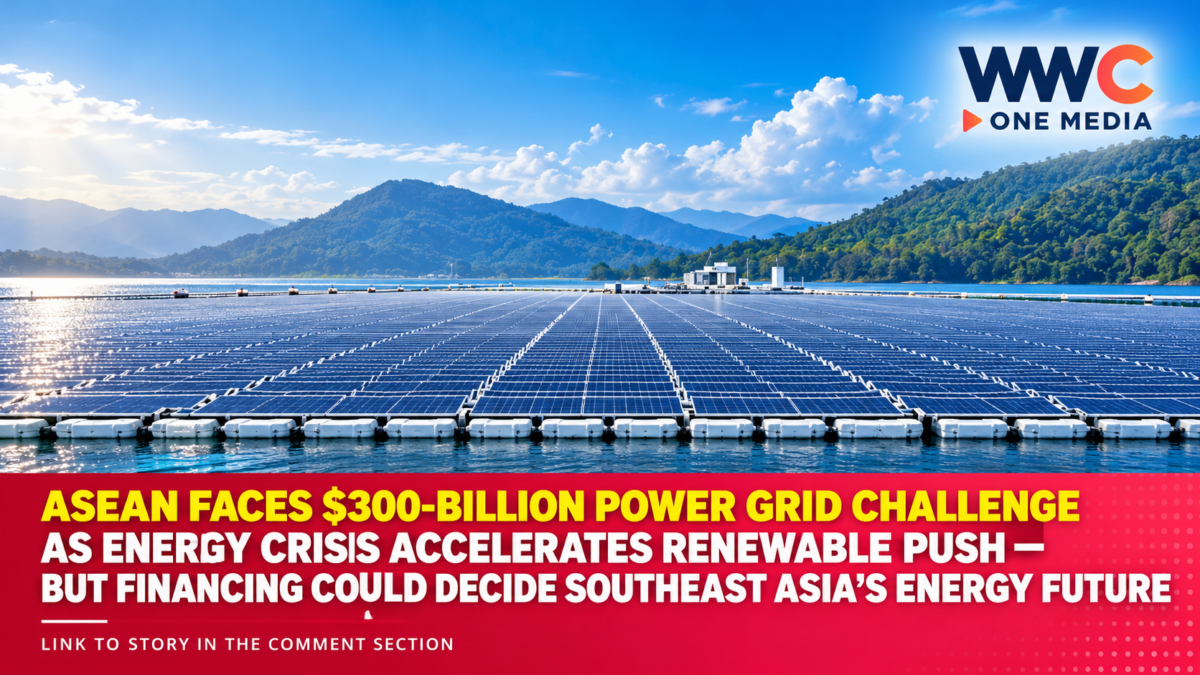
According to the International Energy Agency’s March 2026 report, Financing the ASEAN Power Grid, the region requires more than $300 billion in electricity grid expansion and modernization investments between 2025 and 2040.
This is not solely the cost of cross-border interconnections. It covers the broader modernization and expansion of electricity networks needed to support growing regional demand.
The IEA separately estimates approximately $27 billion will be required through 2040 for planned cross-border interconnections under the ASEAN Power Grid.
The proposed regional power grid would allow participating ASEAN countries to trade electricity, share renewable energy resources and strengthen power system reliability.
For example, countries with substantial hydropower or solar resources could supply electricity to neighboring economies facing stronger demand or more limited domestic renewable energy options.
However, achieving this vision requires far more than transmission lines. Governments must resolve complex questions involving project ownership, electricity tariffs, regulatory approvals, risk sharing and long-term financing.
Energy Security Crisis Adds Urgency to Renewable Investments
The push for renewable energy has become increasingly urgent as disruptions linked to the Middle East conflict raise concerns over Southeast Asia’s exposure to imported energy.
Reuters reported on October 5 that ASEAN energy ministers were prioritizing fuel security as the conflict threatened oil supply routes and increased costs for energy-importing countries.
The International Energy Agency also warned that, without structural reforms, Southeast Asia’s energy import bill could rise from approximately $80 billion in 2024 to $245 billion by 2035.
For the Philippines, this vulnerability is particularly significant because imported fuels remain important to power generation, transportation and industrial activity.
Higher international fuel prices can increase operating costs for businesses and add pressure to household budgets, although the effects on electricity bills depend on generation contracts, energy mixes and regulatory mechanisms.
Renewable energy investments could help reduce long-term exposure to imported fuels, but only if adequate transmission networks, storage and system flexibility are developed alongside new generating capacity.
Experts Warn: Renewable Energy Targets Mean Little Without Delivery
Global Wind Energy Council Asia-Pacific Director Ann Francisco stressed the importance of establishing a dependable pipeline of renewable energy projects and clear investment frameworks.
She also highlighted the need for infrastructure capable of supporting offshore wind development, including suitable port facilities.
Meanwhile, GRA grids and electrification advocacy lead Robert Cooke argued that modern, interconnected power networks are essential to energy security and greater renewable energy integration.
Russell Marsh, Southeast Asia regional lead for energy transition and climate finance at E3G, warned that regional energy policies must balance immediate fuel security needs with the long-term shift away from fossil fuels.
The experts’ shared concern is that ASEAN’s renewable energy ambitions could lose momentum if governments fail to turn policy agreements into projects that can attract investors and begin construction.
ASEAN Sets Ambitious Renewable Energy Targets for 2030
ASEAN’s updated energy cooperation plan outlines three major regional targets to be achieved by 2030:
- Achieve a 30% renewable energy share in total primary energy supply.
- Increase renewable energy to 45% of installed power generation capacity.
- Reduce energy intensity by 40% from the 2005 baseline.
These ambitious targets reflect Southeast Asia’s efforts to expand clean energy while maintaining economic growth and addressing rising electricity demand.
Reuters reported on October 8 that ASEAN countries were intensifying efforts to diversify energy supplies, develop regional electricity connections and expand renewable energy as the Middle East crisis disrupted traditional fuel trade.
The bloc’s renewable energy push is therefore emerging not only as a climate policy but also as an economic security strategy.
Philippines Pushes Regional Electricity Connections
For the Philippines, one of the most important developments is the proposed Brunei Darussalam–Indonesia–Malaysia–Philippines Power Interconnection Project.
According to the Philippine Information Agency, Energy Secretary Sharon Garin identified the project during the October 7 ASEAN energy ministers’ meeting as the country’s principal connection to the broader ASEAN Power Grid.
The initiative could eventually facilitate cross-border electricity trade and allow participating countries to draw on a wider mix of energy resources.
However, significant technical, financial and regulatory work is still required before the proposed connections can deliver commercial electricity.
International Financing Could Unlock the Next Wave of Projects
International financial institutions are also stepping up support.
In April 2026, the Asian Development Bank launched the Regional Connectivity Fund for Energy in Southeast Asia, designed to support the early preparation of cross-border energy and transmission projects.
ADB subsequently renewed its partnership with Singapore’s Energy Market Authority in May to help address investment and implementation barriers, including project financing, risk allocation and submarine cable development.
These initiatives could provide valuable support for regional integration, but they do not mean the required infrastructure investment has already been secured.
The Bigger Question: Can ASEAN Deliver Before the Next Energy Shock?
The economic stakes extend beyond the electricity sector.
Affordable and reliable power is increasingly important to Southeast Asia’s manufacturing hubs, digital infrastructure, technology investments and rapidly urbanizing economies.
A stronger ASEAN Power Grid could improve electricity trading flexibility, help integrate more solar and wind capacity, and reduce some of the region’s long-term exposure to international fossil fuel markets.
But grid interconnections alone cannot eliminate energy price volatility or guarantee lower household electricity bills. Actual outcomes will depend on financing costs, transmission charges, supply contracts, regulatory decisions and the pace of renewable energy deployment.
The central challenge is no longer simply whether ASEAN supports renewable energy. It is whether governments can mobilize capital, coordinate national regulations and construct the infrastructure necessary to turn regional energy ambitions into affordable and reliable electricity.
With investment requirements running into hundreds of billions of dollars, Southeast Asia’s future energy security may depend as much on financial execution and political coordination as on its solar, wind and hydropower resources.