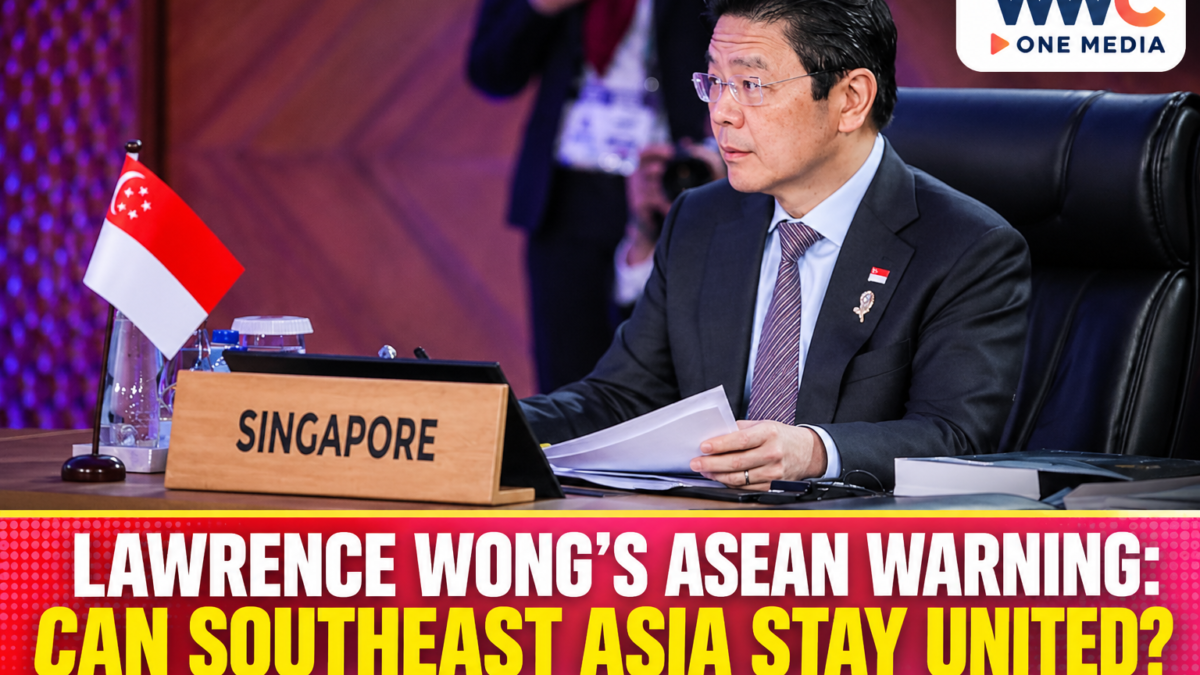
Singapore Prime Minister Lawrence Wong is taking a stronger push for regional cooperation to the 49th ASEAN Summit in Manila, where leaders are confronting economic uncertainty, geopolitical tensions and the challenge of keeping Southeast Asia connected.
Wong is attending the November 15–17, 2026, meetings alongside Singapore Foreign Affairs Minister Vivian Balakrishnan. Singapore’s official announcement identifies regional integration, economic cooperation, energy security and engagement with major international partners as key issues on the summit agenda.
The discussions carry particular significance for the Philippines, which holds ASEAN’s 2026 chairmanship under the theme “Navigating Our Future, Together.” The challenge is not simply to maintain diplomatic relationships but to translate regional commitments into practical cooperation that benefits businesses, workers and communities across Southeast Asia.
EDITOR’S NOTE: WWC ONE MEDIA already published an article on Nov. 15 titled Singapore ASEAN Chairmanship: What Lawrence Wong’s Manila Visit Signals for 2027. This is therefore an update/replacement angle for that existing article, not a recommended duplicate publication.
ASEAN Unity Faces a Test as Lawrence Wong Sets Out Singapore’s 2027 Priorities
Singapore’s position is becoming increasingly important as it prepares to assume the rotating ASEAN chairmanship in 2027. The transition comes as the region faces pressure from geopolitical uncertainty, energy disruptions and growing competition over trade, technology and investment.
Wong’s participation in Manila is particularly significant because Singapore will inherit the responsibility of guiding the regional organisation after the Philippines completes its chairmanship.
The Singapore Prime Minister’s Office confirmed that Wong would attend the 49th ASEAN Summit and Related Summits from Nov. 15 to 17, 2026. His delegation includes Foreign Affairs Minister Dr Vivian Balakrishnan. Prime Minister’s Office Singapore
The discussions also provide an opportunity to establish continuity between the Philippines’ current regional priorities and Singapore’s incoming leadership.
For Southeast Asian economies, the bigger question is whether ASEAN can maintain a common direction while its members navigate different economic interests and relationships with major international powers.
Lawrence Wong’s ASEAN Agenda Goes Beyond Diplomacy
Wong has already outlined the economic thinking behind Singapore’s approach to regional cooperation.
During the 24th Forbes Global CEO Conference on Oct. 8, 2026, he discussed the challenges facing international trade and the growing fragmentation of the global economy.
He explained that Singapore intends to deepen its regional connections and accelerate ASEAN integration when it assumes the chairmanship.
Wong also emphasised the importance of maintaining an open economy and strengthening relationships with existing and emerging international partners.
His remarks provide a useful indication of the priorities Singapore intends to advance in 2027.
Rather than treating regional cooperation as a diplomatic exercise alone, his stated approach places considerable importance on trade connectivity, investment and the ability of businesses to operate across borders. Prime Minister’s Office Singapore
This direction matters because ASEAN economies have different levels of development, industrial capabilities and exposure to international trade.
A regional strategy must therefore accommodate those differences while identifying areas where countries can cooperate.
The Philippines Is Leaving Singapore With an Important Regional Agenda
The Philippines’ 2026 chairmanship operates under the theme “Navigating Our Future, Together.”
Its three priorities are Peace and Security Anchors, Prosperity Corridors and People Empowerment.
The Philippine government has identified regional security, economic integration, innovation, sustainability and improved opportunities for communities as important elements of its chairmanship.
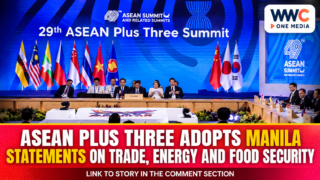
The 49th ASEAN Summit programme includes meetings with external partners, followed by the 29th ASEAN Plus Three Summit and the 21st East Asia Summit on Nov. 17.
The Philippines is scheduled to hand over the ASEAN chairship to Singapore during the closing ceremonies. Presidential Communications Office
This transition creates an opportunity for Singapore to continue initiatives that require cooperation across several years.
One example is the ASEAN Community Vision 2045, which sets out a long-term direction for building a resilient, innovative, dynamic and people-centred regional community.
The vision recognises that ASEAN’s future depends on cooperation across its political-security, economic and socio-cultural communities. ASEAN Main Portal
For Singapore, maintaining continuity will be important because regional integration cannot be achieved through a single summit or one-year chairmanship.
Digital Trade Could Become a Major Test of ASEAN Integration
Economic cooperation is one area where regional commitments can produce practical benefits.
The ASEAN Digital Economy Framework Agreement is an important development because it seeks to strengthen digital trade and cooperation across member economies.
The agreement provides a framework for addressing issues involving cross-border digital transactions and the development of a more connected regional marketplace.
WWC ONE MEDIA previously examined the ASEAN Digital Economy Framework Agreement signed in Manila, including its potential implications for Filipino businesses and micro, small and medium enterprises.
For Singapore, a stronger regional digital economy could support its ambition to remain an important commercial and technology hub.
For the Philippines and other developing ASEAN economies, better digital connectivity could create opportunities for entrepreneurs, service providers and exporters.
However, agreements alone cannot guarantee these benefits.
Governments still need to establish workable regulations, improve infrastructure and ensure that smaller companies have the resources to participate.
The challenge for Singapore’s incoming chairmanship will be helping member states move from regional commitments to practical implementation.
Energy Security and Regional Cooperation Remain Critical
Energy security is another major issue connecting Singapore’s economic priorities with the wider ASEAN agenda.
Disruptions to international energy supplies can affect transportation, manufacturing, electricity generation and the cost of doing business.
Wong addressed these concerns during his September 2026 meeting with Thai Prime Minister Anutin Charnvirakul.
Their joint statement identified energy resilience, renewable energy, digital cooperation, food security and regional connectivity as areas for stronger collaboration.
The two leaders also reaffirmed their support for developing the ASEAN Power Grid, which is intended to strengthen electricity connectivity and energy resilience across the region. Prime Minister’s Office Singapore
This is particularly important because energy cooperation requires coordination among governments, regulators, infrastructure operators and private investors.
The same principle applies to food security and supply-chain resilience.
A regional framework can help countries coordinate their responses to disruptions, but its effectiveness ultimately depends on implementation and the willingness of members to cooperate.
South China Sea Diplomacy Will Also Test ASEAN’s Unity
Economic integration is only one part of the regional challenge.
ASEAN must also maintain diplomatic engagement while dealing with disagreements involving maritime rights, security and relations with major powers.
The South China Sea remains an important issue because different member countries have different interests and positions concerning the disputed waters.
Singapore has consistently emphasised international law, freedom of navigation and the importance of maintaining open international waterways.
During his October conference appearance, Wong discussed the importance of keeping critical maritime routes open and respecting international law.
He also addressed the ongoing negotiations between ASEAN and China over a proposed Code of Conduct.
For the Philippines, these discussions carry particular importance because maritime rights and security remain central national concerns.
WWC ONE MEDIA has examined the ASEAN negotiations over the South China Sea Code of Conduct, including the importance of reaching an effective agreement consistent with international law.
Singapore’s incoming chairmanship could therefore inherit a complicated diplomatic agenda requiring continued engagement among member states.
What Happens Next?
Singapore’s chairmanship begins in 2027, when ASEAN will also mark its 60th anniversary.
Wong’s government will have an opportunity to advance regional cooperation in digital and green economies while strengthening ASEAN’s relationships with external partners.
The September joint statement between Singapore and Thailand also establishes an important foundation for coordination between the two countries as they prepare to hold consecutive chairmanships in 2027 and 2028.
Their leaders have committed to working together to advance regional integration and maintain continuity towards ASEAN Community Vision 2045.
For businesses, the important developments to watch will include digital trade implementation, energy connectivity, investment opportunities and stronger regional supply chains.
For governments, the challenge will be balancing national interests with the collective objectives of the organisation.
ASEAN’s ability to remain relevant will depend not only on the agreements its leaders sign but also on whether member countries can deliver results after the meetings conclude.
Frequently Asked Questions
1. When will Singapore assume the ASEAN chairmanship?
Singapore is scheduled to assume the rotating ASEAN chairmanship in 2027, following the Philippines’ 2026 term.
2. What are Lawrence Wong’s priorities for ASEAN?
His publicly stated priorities include deeper regional integration, stronger economic cooperation, digital and green economy development, and maintaining ASEAN’s connections with international partners.
3. Why is ASEAN unity important to Singapore?
Regional cooperation supports trade, investment, energy security and diplomatic engagement. Singapore’s economic interests are closely connected to an open and connected Southeast Asian region.
4. What is the ASEAN Digital Economy Framework Agreement?
It is a regional agreement designed to strengthen digital economic cooperation, including cross-border digital trade and related systems.
5. What major challenge will Singapore inherit from the Philippines?
Singapore will inherit a broad regional agenda involving economic integration, energy security, maritime issues, relations with international partners and implementation of the ASEAN Community Vision 2045.