The key distinction in this story is between a confirmed hosting decision and a confirmed event schedule. NATO Secretary General Mark Rutte publicly confirmed on July 8, 2026, that Albania would host the Alliance’s next summit after the Ankara meeting. However, he also said the exact timing had yet to be decided. That official statement does not establish that the summit has been cancelled, postponed or reduced in scope.
NATO Summit Albania: 2027 Hosting Plan Put on Hold as 2028 Becomes the New Possibility
Albania’s planned NATO summit will not take place in 2027, Prime Minister Edi Rama has confirmed, raising fresh questions about when the alliance’s next gathering of national leaders will happen and whether Tirana will ultimately host it in 2028.
Speaking to journalists on Nov. 12, 2026, Rama said Albania remained designated as the host country but that NATO members had not reached a common position on the meeting’s timing. He identified 2028 as a possible alternative, while making clear that the event itself was not yet guaranteed for that year. Qeveria Shqiptare Keshilli i Ministrave
The clarification changes the timetable surrounding one of Albania’s most significant international diplomatic commitments. It also highlights an important distinction: securing the right to host a NATO summit does not automatically determine when the alliance will convene its leaders.
For Tirana, the issue now extends beyond preparations for an international gathering. It concerns diplomatic coordination, national planning and the responsibilities associated with hosting an event involving the leadership of 32 NATO member countries.
Why the NATO Summit Albania Plan Changed
The latest development follows months of preparations that had been built around a 2027 gathering.
On Dec. 12, 2025, Albania’s Council of Ministers approved a decision establishing a Host Nation Task Force and a National Organization Team specifically for the NATO Summit in Tirana in 2027.
The decision placed the task force under the leadership of the prime minister and included senior representatives from several government institutions.
Its responsibilities covered political and technical planning, operational requirements, infrastructure, logistics, financial arrangements and coordination with allied military structures.
The document also assigned the task force responsibility for evaluating organisational costs and proposing the corresponding budget arrangements.
These provisions demonstrate that Albania had moved beyond simply expressing interest in hosting the event. Its government had established an institutional framework for preparing it. Qeveria Shqiptare Keshilli i Ministrave
However, the original administrative preparations do not establish that the 2027 timetable remained binding after the prime minister’s latest announcement.
Rama’s Nov. 12 statement provides the more recent indication of the government’s position.
What Mark Rutte Previously Said About Albania
The timetable question had already emerged following NATO’s 2026 summit in Ankara, Türkiye.
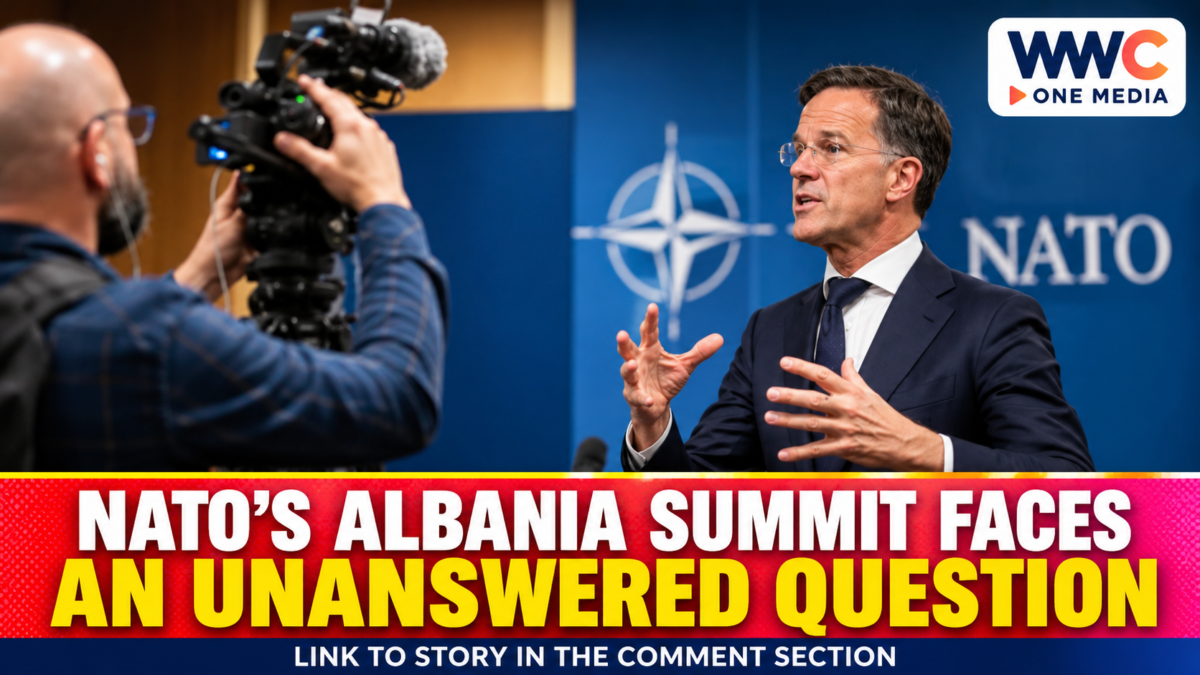
On July 8, NATO Secretary General Mark Rutte addressed the issue during his post-summit press conference.
He confirmed that Albania would host the alliance’s next summit, explaining that the decision had been made in The Hague.
However, Rutte also acknowledged that the exact timing had yet to be determined.
His statement established Albania as the designated destination without providing a confirmed calendar date.
The distinction became particularly important after Rama’s November announcement.
While the NATO chief had publicly confirmed Albania’s hosting role, the Albanian prime minister subsequently clarified that 2027 was no longer the expected year.
The two statements are not necessarily contradictory. They reflect different stages of the scheduling process: confirmation of the host country and the subsequent need to agree on when the gathering should take place. NATO Transcript+1
Why a NATO Summit Is More Than a Diplomatic Gathering
NATO summits are among the alliance’s most important political meetings because they bring together heads of state and government to establish strategic direction.
Unlike routine ministerial consultations, these gatherings allow national leaders to discuss major security priorities, collective defence commitments and the alliance’s long-term objectives.
NATO’s official explanation of its summit process makes clear that these meetings are not held according to a fixed annual calendar.
They are convened when approved by the North Atlantic Council, which can meet through national ambassadors or foreign and defence ministers before a leaders-level gathering is arranged.
The alliance also explains that summits are organised when major developments require decisions at the highest political level.
Recent meetings have addressed collective defence, military capabilities, support for Ukraine, defence investment and cooperation among member countries.
The 2026 Ankara summit, held on July 7–8, followed earlier gatherings in The Hague in 2025, Washington in 2024 and Vilnius in 2023.
This history helps explain why the absence of a confirmed 2027 date should not automatically be interpreted as a cancellation of Albania’s hosting role. NATO Topic
The alliance’s wider security agenda also remains relevant. WWC ONE MEDIA has examined the continuing debate surrounding Ukraine’s NATO membership and the security guarantees being discussed in peace negotiations.
These questions illustrate the importance of coordination among NATO members, particularly when decisions involve the alliance’s collective security arrangements.
What the Delay Could Mean for Albania
For Albania, moving away from the original 2027 target could affect the timing of preparations already established by its government.
Major international gatherings require coordination across multiple areas, including accommodation, transport, security, diplomatic protocol, communications and infrastructure.
A change in schedule may therefore require government agencies to review operational timetables and adjust their planning.
The existing Host Nation Task Force provides an administrative structure for coordinating those responsibilities.
However, the public documents available do not establish the financial consequences of moving the event to a later year.
It would therefore be premature to describe the change as a financial setback or claim that Albania has incurred specific losses.
There is also a wider diplomatic consideration.
Hosting a NATO summit offers a country an opportunity to place itself at the centre of international discussions involving security and cooperation.
Albania’s designation as host remains significant even without a confirmed date.
The broader alliance environment is another reason the scheduling decision matters. NATO members continue to face questions involving military readiness, defence production and support for Ukraine.
WWC’s previous coverage of NATO’s weapons procurement efforts for Ukraine examines another part of the alliance’s evolving security responsibilities.
Similarly, NATO’s response to an unidentified drone entering Lithuanian airspace illustrates the practical security challenges confronting member countries.
These developments provide context for the importance of leaders-level consultations, although they do not establish the reason for the Albania scheduling change.
Does the Change Mean NATO Is Cancelling Its Albania Summit?
There is an important difference between postponing a proposed date and abandoning the decision to host an event.
Rama explicitly maintained that Albania remained designated as the next host.
His statement also identified Tirana as the location if the summit takes place in 2028.
However, his wording was conditional. He did not announce a formally confirmed 2028 summit date.
Likewise, Rutte’s July confirmation established Albania’s hosting role but did not settle the calendar.
As a result, neither a cancellation nor a final 2028 schedule should be presented as an established fact.
The available public records also do not establish that NATO has formally reduced the summit’s programme or replaced a full leaders-level gathering with smaller meetings.
That distinction matters because the size, format and timing of a NATO meeting are separate organisational decisions.
Without an official announcement, claims about reduced participation or a scaled-back programme should be treated cautiously.
What Happens Next?
The next important development will be a common decision among NATO members on the timing of the gathering.
Albania’s government will also need to clarify how its existing preparations will be adjusted following the change in expectations.
A formal NATO announcement confirming the next summit’s date and programme would provide the clearest indication of the alliance’s plans.
Until then, 2028 remains a possibility rather than a confirmed commitment.
For Albania, the immediate challenge is maintaining its readiness to host while waiting for the alliance’s final decision.
For NATO, the scheduling question is part of a wider responsibility: ensuring that meetings of national leaders take place when the alliance’s political and security priorities require them.
The central question is no longer simply whether Albania will host NATO’s next summit. It is whether the alliance will settle on 2028 and formally turn that possibility into a confirmed international gathering.
Frequently Asked Questions
1. Will Albania host the NATO summit in 2027?
No. Prime Minister Edi Rama said on Nov. 12, 2026, that the summit would not take place in 2027.
2. When could the NATO summit take place in Albania?
Rama identified 2028 as a possibility, but a confirmed date has not been announced.
3. Has NATO cancelled Albania’s hosting role?
No cancellation has been established in the official statements examined. Rama maintained that Albania remained designated as the host country.
4. Who decides when a NATO summit takes place?
The North Atlantic Council approves summit meetings. NATO explains that these gatherings are arranged according to the alliance’s political and security requirements rather than a fixed annual schedule.
5. Where will the next NATO summit in Albania be held?
Prime Minister Edi Rama identified Tirana as the location if the summit takes place in 2028.