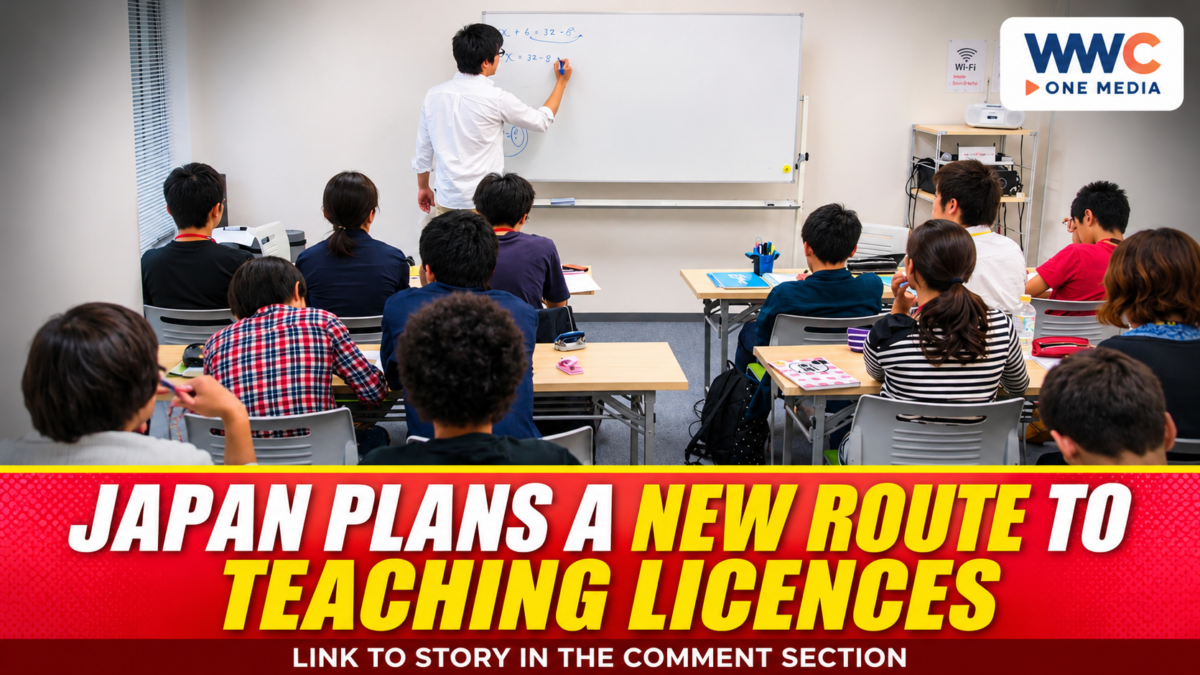
Japan is considering a major change to how people qualify as teachers, including a new postgraduate route that could allow university graduates with professional experience to obtain a teaching licence through a programme designed to take about one year.
A draft proposal submitted to the Central Council for Education on Nov. 17 also recommends restructuring university teacher-training requirements, recognising professional expertise and creating additional pathways for people who did not originally study education. The proposals aim to widen the pool of potential teachers while maintaining the basic skills needed to teach children.
The reform comes as Japan faces mounting pressure to recruit educators. But the central challenge is not simply getting more people into classrooms. It is ensuring that new entrants have the training, practical experience and support required to become effective teachers.
Teacher shortages are driving Japan’s proposed reform
Japan’s Ministry of Education, Culture, Sports, Science and Technology (MEXT) has identified declining teacher recruitment and shortages as major reasons for reviewing the country’s teacher-training system.
The draft points to two figures that illustrate the pressure. The competition ratio for elementary-school teacher recruitment examinations fell from 12.5 applicants per opening in fiscal 2000 to 2.0 in fiscal 2025. A separate ministry survey recorded 3,827 unfilled teaching positions in fiscal 2025, equivalent to a shortage rate of 0.45%. 文部科学省ホームページ+1
These figures suggest that Japan’s difficulty is not limited to the number of people who hold teaching qualifications. Schools also need enough qualified applicants willing and able to take up available positions.
The proposed changes therefore seek to attract people with backgrounds outside conventional teacher education, including professionals whose experience could strengthen subjects and areas where schools need additional expertise.
This is a broader workforce strategy, rather than simply a reduction in academic requirements.
How the proposed one-year teaching route would work
One of the most notable recommendations is a new postgraduate teacher-training programme for people who already hold at least a bachelor’s degree and have relevant professional or social experience.
The draft proposes a programme requiring at least 36 credits for the example of a junior high school teaching licence. It would combine essential classroom-related study with supervised practical learning in schools.
The programme’s proposed structure places around 10 credits in the initial academic phase, covering teaching methods and the foundations of education. A further 26 credits would focus mainly on practical learning, including work in school settings.
Participants could work as learning-support personnel or, where arrangements allow, serve in assistant-teaching roles under a temporary licence. The proposal also envisages paying participants for their work, helping reduce the financial burden of changing careers. 文部科学省ホームページ+1
Universities would not simply count time spent inside a classroom as completed academic work. The draft says universities should design and supervise the practical learning, assess participants and provide opportunities to review their experiences and receive feedback.
The programme is intended to lead to a standard, nationally recognised teaching licence for eligible participants. The draft covers kindergarten, elementary, junior high and senior high school licences, subject to the programme’s requirements.
Importantly, the one-year period is a proposed model, not a guarantee that every participant will qualify within exactly 12 months. The draft allows for longer completion where necessary.
University students could face a different licence structure
The proposed changes also affect people who intend to become teachers through conventional university programmes.
The draft seeks to reorganise the common requirements for teacher education while giving students more room to develop a particular area of expertise.
For elementary-school teacher training, the proposal sets out a standard licence structure requiring 57 credits, including 20 credits for specialised expertise. A separate foundational licence structure would require 37 credits.
The current framework in the draft lists 59 credits for the standard elementary-school licence and 37 for the second-tier licence, before additional general requirements. The proposed arrangement therefore changes the structure and classification of study rather than simply removing all specialist training. 文部科学省ホームページ
The idea is to recognise that students may develop useful expertise through their university degree programmes, rather than requiring every future teacher to follow an identical academic route.
The draft identifies areas such as subject knowledge, teaching methods, Japanese-language instruction, psychology, welfare and social education as possible strengths that could contribute to a school’s overall capabilities.
It also proposes strengthening learning related to classroom management, student diversity, special-needs education, digital learning and the use of artificial intelligence in education. 文部科学省ホームページ+1
The reform could open teaching to more working professionals
The postgraduate programme is only one part of the proposed expansion.
The draft recommends creating more ways to obtain an ordinary teaching licence, including changes involving special teacher-training programmes, qualification examinations and distance education.
It also proposes making it easier for people with relevant professional knowledge and experience to demonstrate their suitability for teaching.
Another recommendation concerns graduates of Japan’s colleges of technology, known as kōsen. The draft proposes recognising their qualifications as a basis for obtaining teaching licences, potentially widening the pool of people with technical and specialist knowledge who could enter schools. 文部科学省ホームページ+1
For elementary schools, the proposal also considers introducing subject-specific ordinary licences. This would allow specialist teachers to work alongside generalist teachers, who would continue to play an important role in delivering a broad elementary curriculum.
The proposed arrangement could be particularly relevant to subjects that require specialised knowledge, although the details of staffing, teacher placement and qualification standards still need to be worked out.
For schools, the potential benefit is a more varied teaching workforce. For professionals considering a career change, it could create a more accessible route into education without requiring them to restart their academic lives from the beginning.
Easier entry must not mean weaker classroom preparation
The proposal raises a legitimate question: can a shorter route produce teachers who are adequately prepared for the responsibilities of the job?
Japan’s education ministry has acknowledged the importance of maintaining standards. In an Oct. 30 press conference, Education Minister Yoshihiro Seki said the new programme should provide the abilities needed to respond to children and students, even though its duration and structure would differ from the conventional route. 文部科学省ホームページ
The Nov. 17 draft also makes clear that practical experience must be accompanied by university supervision, reflection and assessment. It proposes a system in which universities and education authorities coordinate the selection of participants and consider their subsequent employment.
That approach matters because classroom teaching involves much more than subject knowledge. Teachers must understand child development, manage classrooms, recognise different learning needs and respond appropriately to safeguarding and welfare concerns.
The draft also proposes stronger checks on the quality of teacher-training programmes, including the use of computer-based assessments and closer links between teacher preparation, recruitment and professional development. 文部科学省ホームページ
For Japan, the test will be whether these safeguards work consistently across participating universities and schools.
WWC has previously examined how shortages of qualified guidance professionals affect Philippine schools. The issue illustrates why expanding the number of education personnel must go hand in hand with ensuring that students receive support from people with the right training.
What happens next
The Nov. 17 document is a draft proposal from the Central Council for Education’s teacher-training subcommittee. It is not yet a completed change to Japan’s teacher-licensing law.
The recommendations still require further consideration and detailed policy design. Any new licensing route will need clear rules on university participation, admission standards, practical placements, supervision, assessment and employment arrangements.
The government will also need to consider whether schools have the capacity to supervise trainees while managing their existing workloads.
The proposal recognises that teacher shortages cannot be solved by licensing changes alone. It also points to the need for better working conditions, support staff, improved professional recognition and continuing training.
That broader challenge is reflected in other education systems. In the Philippines, questions surrounding teacher access to essential work equipment show how recruitment and retention depend on the conditions educators face after entering the profession. Meanwhile, persistent classroom shortages demonstrate that staffing is only one part of a much wider education challenge.
Japan’s proposed reform could give more people a route into teaching, particularly those with professional expertise that schools can use. But its success will depend on whether the country can make teaching a profession that qualified people want to enter—and have good reason to stay in.
Frequently asked questions
1. Is Japan making teaching licences easier to obtain?
Japan’s education advisory council has proposed changes to teacher-training requirements and additional routes into the profession. These are draft recommendations, not yet a fully implemented licensing reform.
2. Can someone become a teacher in Japan through a one-year programme?
The draft proposes a postgraduate programme designed to take about one year for eligible people who already hold a bachelor’s degree and have relevant experience. Completion requirements and practical training would still apply, and some participants may need longer.
3. How many credits would the proposed postgraduate programme require?
The draft’s example for a junior high school teaching licence specifies at least 36 credits. The proposed credit requirements vary according to the school level and licence route.
4. Will people without education degrees be eligible?
The proposed postgraduate route is intended to attract people with bachelor’s degrees and professional or social experience, including those who did not complete a conventional teacher-training programme.
5. Does the proposal mean Japan will have fewer requirements for teachers?
Not necessarily. It would reorganise some academic requirements and recognise relevant expertise, while retaining essential learning, practical school experience, university supervision and assessment.