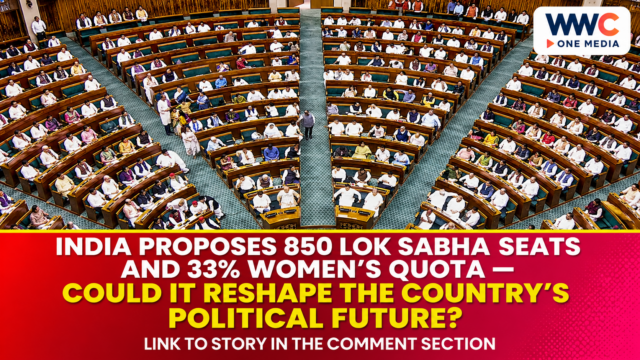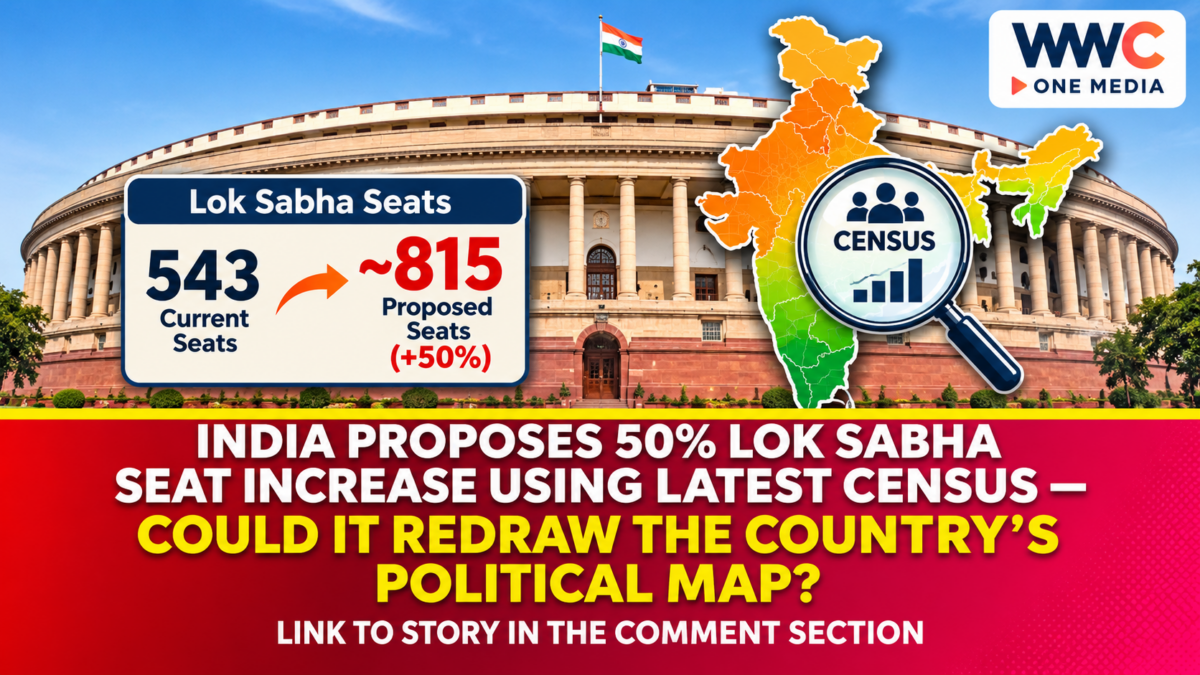
NEW DELHI, INDIA — India is moving towards a potentially historic expansion of its legislative representation, with the government proposing a uniform 50% increase in parliamentary and assembly seats under a revised delimitation framework intended to accelerate women’s political representation.
The Delimitation (Second) Bill, 2026, outlined on Nov. 27, would restructure electoral constituencies while preserving the relative distribution of parliamentary representation among states.
The accompanying constitutional amendment proposes raising the maximum strength of the Lok Sabha to 850 members and using the latest available published census figures to determine new constituency boundaries.
The reforms represent a renewed attempt to advance India’s electoral restructuring agenda after an earlier constitutional amendment failed to secure the required parliamentary majority in April.
India delimitation bill proposes a uniform 50% seat increase
At the centre of the revised legislative package is a formula that would increase the number of parliamentary seats allocated to every state and Union territory by 50%.
The same principle would apply to the total membership of applicable state and Union territory legislative assemblies.
Unlike an immediate redistribution based entirely on updated population figures, the uniform increase is intended to preserve the relative representation of states while expanding the overall number of elected representatives.
This distinction is important because states have experienced different rates of population growth.
An expansion based solely on population could alter their respective shares of parliamentary representation. The revised formula seeks to avoid such an immediate redistribution.
The proposal follows months of uncertainty surrounding India’s parliamentary delimitation debate and the government’s efforts to secure legislative support.
However, the proposed 850-member Lok Sabha represents a maximum constitutional limit rather than a confirmed final number of parliamentary seats.
How would the 50% seat increase work?
A uniform increase means that existing legislative allocations would serve as the starting point for calculating additional seats.
The following hypothetical examples illustrate the proposed formula:
| Existing seats | Additional seats | Revised allocation |
|---|---|---|
| 10 | 5 | 15 |
| 20 | 10 | 30 |
| 40 | 20 | 60 |
| 60 | 30 | 90 |
| 80 | 40 | 120 |
These figures are illustrative calculations rather than official allocations for individual Indian states.
The approach would allow jurisdictions to gain additional representatives without immediately changing their relative shares of legislative representation.
However, the final distribution would still require an authorised delimitation exercise and decisions concerning implementation.
The revised constitutional framework also proposes maintaining the new electoral arrangements until 2051.
Why the 2011 Census could determine India’s new constituencies
Another important change concerns the population information used during delimitation.
The revised legislation would require constituency boundaries to be determined using the most recent census figures published when the proposed law comes into force.
India’s last completed population census was conducted in 2011.
Consequently, the 2011 Census would remain the applicable reference if updated population figures are not published before the legislation takes effect.
The revised bill does not permanently designate 2011 as the mandatory census year.
India’s next national population census is scheduled for 2027, with preparatory housing and household enumeration activities beginning in 2026.
The nationwide reference date for Census 2027 is generally March 1, 2027, with separate arrangements for certain snow-bound areas.
The timing of the proposed legislation’s commencement will therefore determine whether the delimitation exercise relies on existing census figures or more recently published population data.
This distinction could have significant implications for how electoral boundaries reflect changes in population distribution.
A new Delimitation Commission would oversee electoral restructuring
The government also proposes changing the legal framework governing the establishment of the Delimitation Commission.
Under the revised legislation, the commission would be constituted shortly after the law takes effect.
Its responsibilities would include implementing the revised seat-allocation framework, determining territorial constituency boundaries and administering the distribution of constituencies reserved for women.
The process would establish where individual electoral constituencies begin and end, as well as the legislative representation assigned under the new framework.
Delimitation is legally distinct from maintaining electoral registers.
While constituency restructuring determines the boundaries of electoral districts, voter registration establishes which eligible citizens are enrolled to participate in elections.
Separate concerns involving electoral registration have been examined in WWC ONE MEDIA’s coverage of India’s voter-roll revision and the questions surrounding voting rights.
Both processes affect the operation of India’s electoral system but serve different administrative purposes.
Women’s reservation remains central to the proposed reforms
The expanded legislative framework is closely connected to India’s constitutional commitment to improving women’s political representation.
The Constitution (One Hundred and Sixth Amendment) Act, 2023, established provisions for reserving approximately one-third of applicable directly elected legislative seats for women.
However, implementation was linked to a future delimitation exercise following the publication of relevant census figures.
The revised 2026 constitutional proposal seeks to bring forward implementation through the first delimitation undertaken after the new amendment comes into force.
It also provides for the rotation of constituencies reserved for women.
Under the proposed wording, the reservation period would expire 15 years after the commencement of the 2023 constitutional amendment unless Parliament extends it through legislation.
The proposed framework covers the Lok Sabha, state legislative assemblies and applicable Union territory assemblies, including Delhi, Puducherry and Jammu and Kashmir.
Although the reforms seek to accelerate women’s representation, an exact implementation date has not been established.
Why the government is replacing its earlier delimitation proposal
The revised legislative package follows an unsuccessful parliamentary attempt earlier in 2026.
On April 16, the government introduced three connected bills covering constitutional amendments, delimitation and Union territory legislation.
The Constitution (One Hundred and Thirty-first Amendment) Bill, 2026, failed to secure the special majority required under Article 368 on April 17.
The accompanying legislation was subsequently not advanced.
The government’s new approach incorporates an explicit 50% expansion formula intended to address concerns about the relative representation of states.
The revised proposals also modify the census reference, the responsibilities of the Delimitation Commission and the arrangements for women’s reservations.
The developments come amid preparations for India’s Parliament to reconvene on Nov. 30, bringing unresolved legislative matters back into national focus.
What happens next for India’s electoral reforms?
The proposed constitutional amendment must receive the required parliamentary approval before the new framework can take effect.
Subsequent implementation would involve the supporting legislation, establishment of the Delimitation Commission and preparation of revised electoral constituencies.
Existing representation would remain unaffected until the dissolution of the relevant Parliament or legislative assembly under the proposed transitional arrangements.
The reforms seek to expand representation while protecting states’ relative legislative influence and improving women’s political participation.
Nevertheless, questions remain about whether the uniform expansion will adequately reflect demographic changes and how new constituencies will be distributed.
India could be approaching one of its most consequential electoral restructuring exercises in decades. But the proposed 50% seat increase remains dependent on parliamentary approval and the legal process that follows.
Frequently asked questions
What is India’s new Delimitation Bill 2026?
The revised proposal would expand legislative representation by 50%, restructure electoral constituencies and facilitate women’s legislative reservations.
Will the Lok Sabha have 850 seats?
The accompanying constitutional amendment proposes a maximum Lok Sabha membership of 850. The final number has not yet been established.
Will India’s delimitation exercise use the 2011 Census?
The 2011 Census would apply if it remains the most recently published census when the legislation takes effect.
Will every Indian state receive 50% more parliamentary seats?
The proposed framework provides for a uniform 50% increase in existing parliamentary seat allocations across states and Union territories.
Has India’s revised delimitation bill become law?
No. As of Nov. 28, 2026, the revised electoral reforms remain proposed legislation requiring parliamentary approval.