HONG KONG — October 31, 2026. Korean comfort food is getting an upscale transformation in the heart of Hong Kong, where a new restaurant is combining slow-cooked beef ribs, creative fried chicken, fermented specialties and traditional Korean drinks with the polish of a contemporary dining destination.
YuSang, located inside LANDMARK PRINCE’S in Central, is attracting attention for an approach that moves beyond the familiar Korean barbecue and casual fried-chicken restaurant.
Opened in August 2026, the restaurant draws inspiration from the Korean traditions of anju, dishes enjoyed alongside drinks, and sool, the broad world of Korean alcoholic beverages.
The concept has attracted coverage from Bloomberg, the South China Morning Post and several Hong Kong dining publications.
But the experience comes at a considerable price.
Foodie magazine’s August restaurant review estimated that two diners could spend approximately HK$1,200 to HK$1,400, while individual signature dishes included HK$520 grilled beef ribs and HK$450 premium fried chicken.
The prices reflect an upscale dining proposition rather than a conventional neighborhood Korean restaurant.
The question is whether YuSang’s inventive approach delivers enough flavor, atmosphere and craftsmanship to justify the premium—or whether Korean comfort food is becoming another expensive luxury experience.
YuSang puts a luxury spin on Korean social dining
YuSang occupies space on the first floor of Prince’s Building at 10 Chater Road in Hong Kong’s Central business district.
The restaurant officially opened on August 7.
Its concept centers on the relationship between Korean food and drinking culture.
In many Korean dining traditions, meals are social occasions built around shared plates, conversation and beverages.
Anju describes foods commonly enjoyed alongside drinks.
Sool is the Korean term for alcoholic beverages, covering traditional drinks such as soju and makgeolli.
YuSang takes these traditions and develops a contemporary restaurant experience around them.
Instead of emphasizing one specific cooking style, the menu combines chilled dishes, fermented vegetables, soups, seafood and charcoal-grilled meats.
The result is a dining format designed for both after-work gatherings and longer evening meals.
Slow-cooked beef ribs are among the restaurant’s biggest attractions
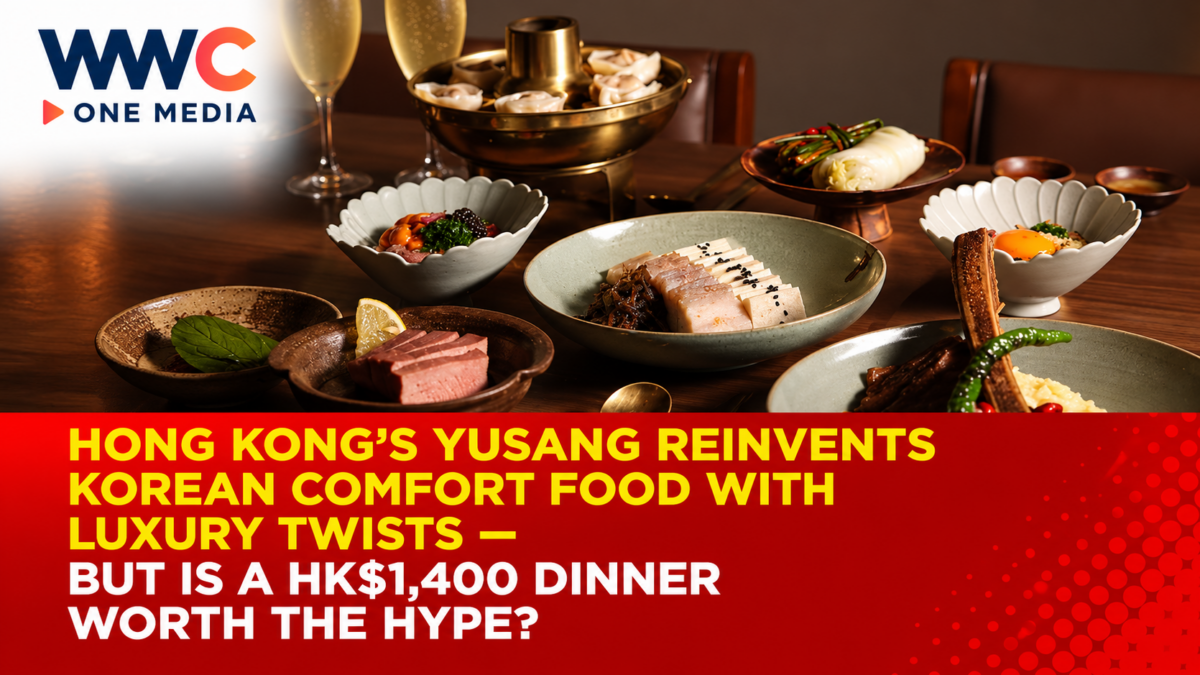
YuSang’s grilled beef ribs are a prominent feature of its menu.
Foodie reported an August menu price of HK$520 for the dish.
The preparation involves slow cooking before the meat is finished over charcoal.
This technique allows the restaurant to develop tenderness while adding a distinctive grilled flavor.
The dish is served with accompaniments that balance the richness of the beef, including potato purée and citrus elements.
Foodie’s reviewer praised the meat’s texture and flavor, while offering a more mixed assessment of some accompanying elements.
That distinction matters.
A restaurant can receive enthusiastic reviews for particular dishes without every component being universally praised.
Other diners may value the combination of familiar Korean flavors and contemporary presentation differently.
The beef ribs remain one of the restaurant’s most frequently highlighted specialties.
Korean fried chicken gets an extravagant makeover
Korean fried chicken is internationally popular for its crisp texture and bold seasoning.
YuSang offers a more elaborate interpretation.
Its boneless fried chicken has been served with perilla-infused cream cheese, caviar and salmon roe.
Foodie’s August review listed the dish at HK$450.
The combination adds luxury ingredients to a food more commonly associated with casual dining.
The appeal is the contrast between the familiar comfort of fried chicken and the richness of the toppings.
But it also raises a question about value.
Diners who simply want traditional Korean fried chicken may prefer a less expensive restaurant.
Those seeking an unusual interpretation may be more willing to pay for the additional ingredients and presentation.
YuSang is effectively competing on originality and experience, rather than low price.
The menu goes beyond fried chicken and barbecue
YuSang also serves dishes intended to showcase a broader range of Korean flavors.
Its poached pork belly is accompanied by house-made tofu and kimchi.
Foodie listed the dish at HK$365 in its August review.
The restaurant also offers clear white kimchi cucumber, which provides a less spicy alternative to the more familiar red kimchi.
Another dish, perilla burrata, combines Italian cheese with an herb commonly used in Korean cuisine.
Foodie’s published prices included HK$122 for the white kimchi cucumber and HK$168 for perilla burrata.
These dishes illustrate how YuSang blends Korean traditions with ingredients and techniques associated with other culinary cultures.
The menu also includes seafood and rice preparations.
A sea urchin kimbap preparation, for example, combines rice, seafood and premium ingredients in a contemporary interpretation of a familiar Korean format.
Menu items and prices can change, so these figures should be treated as documented August 2026 examples rather than guaranteed current quotations.
Fermentation adds depth to the restaurant’s identity
Fermented foods and seasonings are central to Korean cuisine.
Kimchi, soybean pastes and chili-based seasonings contribute distinctive flavors to many traditional dishes.
YuSang emphasizes house-made fermented preparations and jang, the family of Korean fermented pastes.
These elements help connect the restaurant’s contemporary cooking with established culinary practices.
The same idea is visible in broader Korean food trends.
WWC ONE MEDIA previously examined how chefs and food companies are developing new versions of familiar dishes in Mala Takes Over Korea’s Food Scene as Chinese Spice Reinvents Korean Favorites.
That report described how Chinese Sichuan-style flavors are being adapted to Korean fried chicken, noodles and other popular foods.
YuSang takes a different approach, but the broader theme is similar.
Korean cuisine is continuing to evolve as chefs experiment with new flavor combinations while drawing on recognizable traditions.
Korean drinks are essential to the YuSang experience
YuSang treats drinks as an important part of the meal.
Its beverage program includes soju, makgeolli, fruit wines and selected aged spirits.
Makgeolli is a traditional Korean rice-based alcoholic beverage that is often cloudy and lightly effervescent.
YuSang offers house-infused variations.
Foodie’s August review highlighted a honey makgeolli served with local honeycomb, listed at HK$480 for a 750-milliliter serving.
The drink was presented as part of the restaurant’s emphasis on balancing food and beverages.
The dining concept is therefore different from a typical restaurant where beverages play only a secondary role.
Customers are encouraged to think about the relationship between flavors in a shared meal.
That helps explain why the menu includes dishes designed for communal dining and longer gatherings.
Why Central is a natural location for an upscale Korean restaurant
Hong Kong’s Central district is home to financial institutions, office towers, luxury shopping destinations and restaurants serving a wide range of customers.
The location provides access to business diners, residents and visitors.
YuSang’s lunch offerings are designed partly around customers with limited time during the working day.
In the evening, the restaurant emphasizes shared dishes and a more leisurely dining experience.
The concept gives it the opportunity to serve different customer groups throughout the day.
But Central is also a demanding environment for restaurants.
Prime commercial locations can carry substantial operating costs.
Customers have many competing dining options, including Japanese, Chinese, European and other Korean establishments.
YuSang must therefore persuade diners that its menu and service offer something distinctive.
Its commercial performance cannot be established from reviews alone.
No verified revenue, profitability or customer-count figures were available in the reporting reviewed for this article.
Korean cuisine is becoming increasingly international
The popularity of Korean food has expanded alongside the global visibility of South Korean entertainment, fashion and popular culture.
Kimchi, fried chicken, barbecue and Korean instant noodles have become familiar in international markets.
Restaurants are responding by experimenting with new menus and dining formats.
WWC ONE MEDIA explored this expansion in K-Food Is Taking Over Global Shelves — But Trade Barriers Could Slow Its Next Big Expansion.
That report examined the growing international market for Korean food and the obstacles companies encounter when entering foreign markets.
YuSang represents a different part of the same wider trend.
Rather than exporting packaged products, it introduces aspects of Korean food culture through a restaurant experience.
Its emphasis on anju and sool may also expose diners to traditions that receive less attention than Korean barbecue.
Korean chefs are reinventing familiar foods
YuSang’s menu reflects a wider willingness to reinterpret traditional Korean dishes.
Modern restaurants increasingly combine local culinary techniques with international ingredients.
Some changes are aimed at creating stronger visual appeal.
Others explore new flavor combinations or make traditional foods more accessible to different audiences.
WWC ONE MEDIA previously reported on Fusion Rice Cakes Turn Korea’s Traditional Markets Into Viral Food Hotspots.
That story examined how businesses in South Korea were transforming traditional rice cakes into inventive products that attracted social-media attention.
The relationship with YuSang is thematic rather than direct.
Both developments illustrate how established food traditions can be reimagined to attract new customers.
But innovation alone does not guarantee that every diner will appreciate the result.
Restaurants must balance novelty with the familiar qualities that made a dish popular in the first place.
Is Hong Kong ready to pay fine-dining prices for comfort food?
Foodie’s estimate of HK$1,200 to HK$1,400 for two people places YuSang in a premium spending category.
That figure is a guide from one review, not an official fixed price for every table.
Actual bills depend on the dishes ordered, beverages, service charges and any subsequent price changes.
Still, the estimate provides an indication of the restaurant’s positioning.
YuSang is asking diners to consider a more expensive interpretation of foods they may associate with casual meals.
This creates a familiar challenge for upscale restaurants.
Premium ingredients and skilled preparation can increase costs.
But customers may judge value according to taste, portion sizes, service and whether the overall experience feels memorable.
A beautifully presented dish may impress one diner while another prefers the simplicity of a traditional preparation.
Neither preference is inherently wrong.
The commercial challenge is attracting enough customers who appreciate the restaurant’s chosen approach.
Hong Kong’s restaurant market is questioning the value of prestige
YuSang enters a dining industry where expensive restaurants must compete for discretionary spending.
Rising labor, ingredient and rental costs can put pressure on operators.
At the same time, customers increasingly have alternatives across different price levels.
WWC ONE MEDIA explored these challenges in Fine Dining Is Chasing World’s Best Rankings While Diners Chase Value — But the Prestige Race May Be Breaking the Restaurant Model.
The article examined why exceptional food and strong critical attention do not automatically guarantee sustainable profitability.
YuSang’s situation is not identical to that of an elaborate tasting-menu restaurant.
It offers à la carte dishes and a social dining format.
But the central business question is comparable.
Can a restaurant justify its costs through food quality, service and repeat business?
Diners may be willing to pay a premium for a special occasion.
The harder test is whether they choose to return.
What independent reviewers are saying
YuSang has received attention from several Hong Kong publications since opening in August.
The South China Morning Post featured it among notable new dining venues, emphasizing its interpretation of Korean food-and-drink culture.
THE LOOP HK highlighted the restaurant’s combination of shared Korean dishes, traditional beverages and a format suitable for business lunches or evening gatherings.
Foodie’s review praised several dishes, particularly the grilled beef ribs, while also recording individual reservations about aspects of the meal.
The publication’s October roundup of Korean restaurants also included YuSang among its recommended establishments.
These assessments suggest that the restaurant has developed a visible profile in Hong Kong’s dining scene.
However, the reviews represent editorial and personal judgments.
They should not be treated as universally agreed conclusions or guarantees of a particular dining experience.
What Filipino diners can learn from YuSang’s concept
Korean restaurants are familiar in the Philippines, where barbecue, fried chicken, stews and Korean convenience foods have developed substantial followings.
YuSang’s approach illustrates another potential direction for the category.
Instead of focusing only on familiar signature dishes, a restaurant can develop a more elaborate experience around shared dining, fermented ingredients and traditional beverage culture.
That does not mean every Korean restaurant should become more expensive.
Accessible food remains important to the popularity of Korean cuisine.
YuSang simply demonstrates how one operator is using premium ingredients and contemporary techniques to reach a particular customer segment.
The concept may appeal to Filipino travelers visiting Hong Kong who want a different experience from conventional Korean barbecue.
But those travelers should consider the restaurant’s premium pricing before booking.
What to know before visiting YuSang
YuSang is located at LANDMARK PRINCE’S, Prince’s Building, 10 Chater Road, Central, Hong Kong.
The restaurant’s published telephone number is +852 9235 3527.
Its menu has included premium beef ribs, fried chicken, poached pork belly, white kimchi and contemporary seafood dishes.
The restaurant also offers a selection of Korean drinks.
Because menu offerings and prices can change, guests should verify the current menu, operating hours and reservation arrangements directly with the establishment before visiting.
The published HK$1,200–HK$1,400 price guide for two is useful as an indication of spending, but it is not a guaranteed total for every meal.
The bigger question: Is YuSang redefining Korean comfort food—or making it too expensive?
YuSang represents an ambitious interpretation of Korean communal dining.
Its menu draws on familiar dishes and techniques while adding premium ingredients, contemporary presentation and an elaborate beverage program.
The restaurant has attracted attention from Hong Kong’s dining publications and offers a distinctive alternative to conventional Korean barbecue.
But the upscale approach also creates expectations.
Customers paying hundreds of Hong Kong dollars for individual dishes will expect excellent cooking, consistent service and a memorable overall experience.
Critical attention can help a restaurant become known.
Long-term success depends on whether diners believe the experience is worth repeating.
YuSang is bringing style, creativity and premium ingredients to Korean comfort food in Hong Kong. But the crucial question is whether its blend of tradition and luxury represents the future of Korean dining—or whether diners will ultimately decide that comfort food is at its best when it remains simple and affordable.