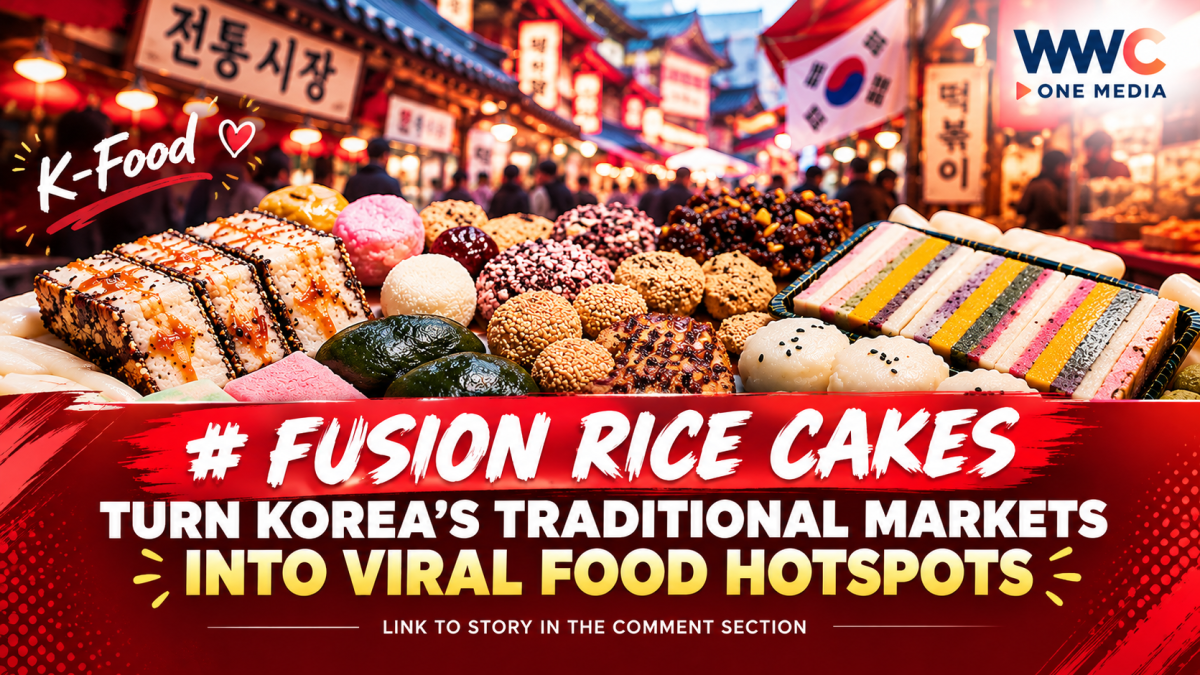
A surprising food trend is breathing new life into South Korea’s traditional markets, with fusion rice cakes becoming a viral attraction ahead of the Chuseok holiday.
Instead of lining up for the familiar songpyeon traditionally associated with Chuseok, shoppers are increasingly waiting for a modern twist: “pizza seolgi,” a steamed white rice cake topped with tomato sauce, cheese and pepperoni.
At Pungnyeon Tteok in Incheon’s Bupyeong Traditional Market, crowds recently stretched past several neighboring stores. The shop limits customers to four pieces each, yet the line continued to grow, with the rice cakes reportedly selling out before 6 p.m.
The shop’s owner said about 1,000 customers a day have been visiting since pizza seolgi was introduced roughly two months ago.
From Traditional Tteok to Viral Food Trend
The craze is not limited to one market.
Seoul’s Myeonmok Market has also seen a surge in demand after a local rice-cake shop began selling pizza seolgi. According to Korea Herald reporting, the product sells for around 2,000 won per piece, helping make the unusual combination accessible to customers looking for an inexpensive snack.
The trend reportedly originated at Yeongdodari Tteokbang in Busan before spreading through social media and short-form videos to other markets around the country. Seoul Economic Daily reported that searches for pizza seolgi jumped dramatically during the trend’s rapid rise.
But pizza isn’t the only reinvention of tteok.
Other modern varieties include rice cakes paired with mango, figs, sweet potato, bulgogi and other familiar or contemporary flavors, giving traditional rice-cake businesses new ways to attract customers.
Why Young Shoppers Are Suddenly Filling Traditional Markets
The appeal appears to come from several factors working together: novelty, social-media visibility, affordability and the familiarity of the rice-cake base.
Korea Herald reported that younger customers have been particularly drawn to the trend, while older shoppers are also joining the queues—sometimes after children or grandchildren introduce them to the new varieties.
That cross-generational appeal could be particularly significant for traditional markets, which have faced pressure from changing shopping habits and competition from supermarkets and online platforms.
Recent Seoul Economic Daily reporting highlighted the broader challenge: Korea’s traditional markets have continued to lose businesses, with the number of markets falling from 1,403 in 2024 to 1,392 in 2025.
Against that backdrop, a viral food product can do more than generate queues at a single shop.
One Viral Snack, More Foot Traffic
Business owners near popular rice-cake shops say the influx of visitors is spilling over into surrounding stores.
The Korea Times reported that merchants near Bupyeong Traditional Market have noticed increased customer traffic since pizza seolgi began attracting younger shoppers.
That makes the trend bigger than simply a new dessert craze. It illustrates how traditional food can be repackaged for social-media culture without completely abandoning its original identity.
South Korea’s tourism authorities describe tteok as a traditional food with numerous varieties, including injeolmi, kkultteok and chapssaltteok. Its chewy texture also makes it adaptable to contemporary dessert combinations.
For traditional-market vendors, the lesson may be increasingly clear: heritage food does not necessarily have to remain unchanged to remain relevant.
As younger consumers continue discovering these markets through viral food videos, a humble rice cake is becoming an unexpected bridge between Korean culinary tradition and modern food culture.
And with Chuseok bringing shoppers into markets across Korea, the biggest surprise may be what customers are choosing to take home.
WWC ONE MEDIA G,A