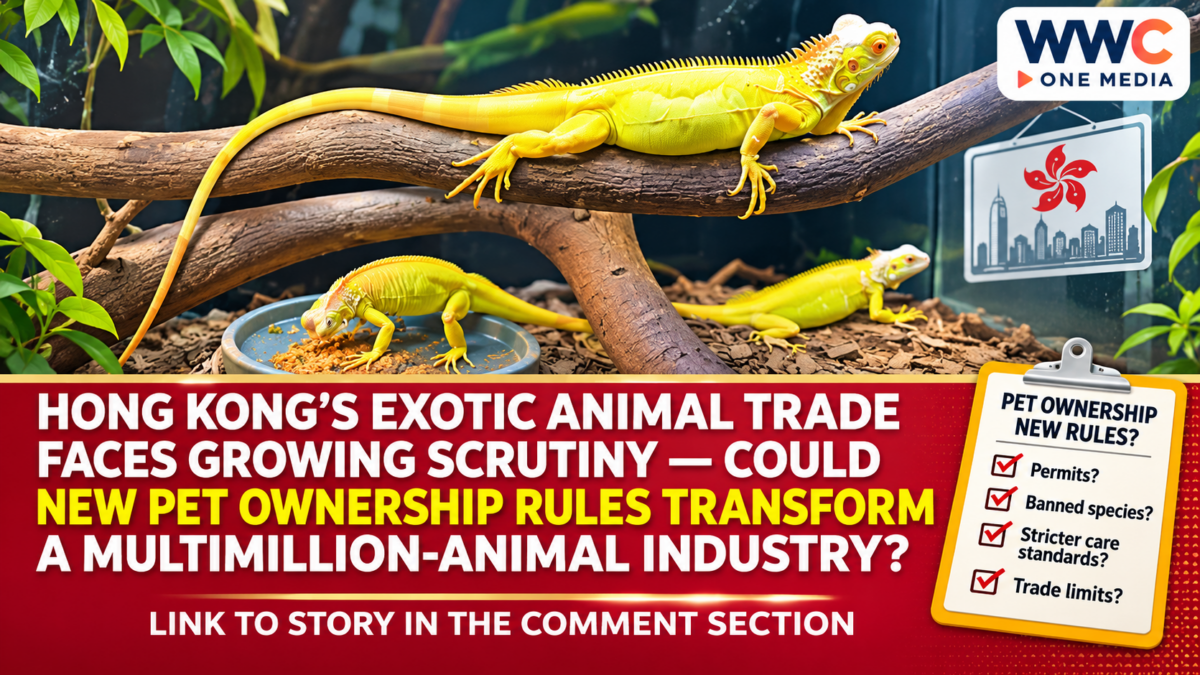
HONG KONG | November 26, 2026 — Hong Kong’s exotic pet industry faces continuing pressure for regulatory reform as conservation advocates seek stronger protections for endangered wildlife, improved animal welfare standards and more comprehensive safeguards against environmental and public health risks.
Between 2015 and 2022, Hong Kong imported approximately 5.7 million live exotic animals, primarily for the pet market, highlighting the territory’s considerable role in international wildlife commerce.
Conservation advocates have proposed a more selective approach to determining which exotic animals should be permitted for commercial trade and private ownership.
At the centre of the debate is a regulatory concept known as a positive list, which could change how businesses and consumers participate in the exotic animal market.
The broader question is whether existing wildlife regulations can adequately address the consequences of trading animals with complex environmental, biological and welfare requirements.
Hong Kong Exotic Pets: A Market Extending Beyond Traditional Animal Ownership
The scale and diversity of Hong Kong’s exotic animal market have created challenges that extend beyond ordinary pet ownership.
Earlier research into the territory’s wildlife imports identified more than 700 species during a five-year assessment period, including animals facing extinction risks.
Reptiles represented the largest category of imported exotic animals during that assessment.
The commercial appeal of unusual wildlife creates a difficult regulatory question. An animal’s popularity among collectors does not necessarily establish that it is suitable for private ownership.
Unlike conventional household pets, some exotic species may require specialised environmental conditions, diets, veterinary services and long-term care arrangements.
These concerns become particularly important when an owner is no longer capable of caring for an animal.
WWC ONE MEDIA previously examined this issue in its coverage of a 14-foot Burmese python surrendered to wildlife authorities after its owner’s death.
Although each species presents different requirements, the underlying policy question remains relevant: who assumes responsibility when an exotic animal can no longer remain in private care?
What Is a Positive List for Exotic Pets?
A positive list establishes which species are eligible for specified activities, potentially including importation, commercial sale and private ownership.
Rather than permitting an animal unless it has been expressly prohibited, such a framework would place greater emphasis on assessing species before allowing them into the regulated pet market.
The scope of restrictions would depend on the final legislation.
A species assessment could consider several factors, including conservation status, suitability for captivity, potential environmental consequences and risks to human or animal health.
For regulators, this approach could create a clearer basis for determining which animals are appropriate for commercial distribution.
For legitimate businesses, a clearly defined list could also reduce uncertainty about future inventory and compliance requirements.
However, any transition towards a positive-list system would raise practical questions.
How would existing pets be treated? Would businesses receive a transition period? Would specialised institutions qualify for exemptions?
Such decisions would become important if Hong Kong moves from advocacy proposals towards formal legislative development.
A comprehensive positive-list framework has not been established as enacted law in the records reviewed for this article.
Hong Kong’s International Turtle Trade Highlights Conservation Concerns
Turtles and tortoises provide a particularly significant example of the conservation issues surrounding the exotic animal market.
Research published in June 2026 found that Hong Kong imported more than 4.3 million live turtles and tortoises regulated under international endangered-species trade rules between 2015 and 2024.
The analysis also identified Hong Kong as the world’s leading importer of eight turtle and tortoise species during the assessed period.
These figures demonstrate the territory’s importance within international wildlife supply chains.
However, legal importation should not be confused with illegal trafficking. Internationally regulated species may be traded under particular conditions, depending on the applicable conservation classification and permits.
The regulatory challenge is determining whether animals have been obtained legally and whether their movement complies with the relevant restrictions.
This is especially important when demand for rare species creates a financial incentive for unlawful collection or inaccurate declarations.
Why Wildlife Imports Raise Biosecurity Questions
Conservation is only one dimension of the debate.
The movement of live animals across international borders can also raise questions about disease surveillance, veterinary preparedness and the protection of local ecosystems.
The potential consequences vary considerably between species.
An appropriate regulatory assessment would therefore need to consider the characteristics of individual animals rather than assume that every exotic species presents an identical threat.
Authorities must also consider what happens when imported animals escape or are deliberately released.
The establishment of non-native wildlife populations could create additional environmental management responsibilities.
Regional cases such as Sydney’s response to the detection of invasive fire ants illustrate the wider importance of preventing biological threats from becoming established.
The fire ant case involves a different species and introduction pathway. Nevertheless, it demonstrates why prevention, surveillance and early intervention matter in biosecurity policy.
For Hong Kong, a central policy challenge is assessing potential risks before animals enter the commercial market.
Hong Kong Has Already Announced Changes to Endangered Species Regulations
While proposals for a positive list remain part of a broader policy discussion, Hong Kong has separately announced amendments to existing endangered-species trade controls.
On October 16, 2026, the government gazetted an amendment order under the Protection of Endangered Species of Animals and Plants Ordinance, commonly identified as Cap. 586.
The changes implement updated international conservation requirements following the 20th Conference of the Parties to the Convention on International Trade in Endangered Species of Wild Fauna and Flora, or CITES.
The government announced December 31, 2026, as the commencement date for the new controls, with provisions affecting certain species deferred until June 5, 2027.
The changes involve additions, removals and revisions to species covered by international conservation classifications.
They also have potential implications for businesses handling regulated wildlife specimens.
For certain commercially held specimens, the government has announced a licensing grace period ending March 30, 2027.
These amendments should not be mistaken for the proposed comprehensive positive-list system. They represent changes to existing endangered-species controls rather than a general determination of which exotic animals may be kept as pets.
Could Stricter Regulations Transform the Exotic Pet Industry?
A more comprehensive regulatory framework could have implications for importers, breeders, distributors and specialist animal retailers.
Businesses might need to adjust their sourcing practices, maintain more detailed records or reconsider which species they offer.
A species-based approval system could also create opportunities for businesses capable of demonstrating responsible sourcing and appropriate animal care.
However, stricter rules would need to be accompanied by effective enforcement.
Regional wildlife enforcement developments, including Thailand’s investigation into an alleged attempt to smuggle protected wildlife, provide additional context for the challenges associated with cross-border wildlife commerce.
Any reform must distinguish between legitimate, compliant businesses and unlawful activities.
The effectiveness of a new framework would ultimately depend on its clarity, enforcement capacity and ability to address the risks associated with individual species.
What Happens Next?
Hong Kong’s forthcoming endangered-species controls represent a concrete regulatory development.
The wider positive-list proposal raises a separate set of policy questions concerning the future of exotic animal ownership.
If such a framework advances, businesses and pet owners will need clarity regarding permitted species, existing animals, licensing requirements and implementation timelines.
For conservation advocates, the central objective is to reduce environmental harm while ensuring that animals entering the market are suitable for the conditions in which they will be kept.
The long-term challenge is balancing legitimate commerce and consumer interests with responsibilities towards public health, animal welfare and biodiversity.
Frequently Asked Questions
How many exotic animals has Hong Kong imported?
Historical research documents approximately 5.7 million live exotic animal imports between 2015 and 2022, primarily for the pet trade.
What is a positive list for exotic pets?
A positive list identifies species explicitly permitted for specified activities, such as importation, sale or ownership, depending on the applicable regulations.
Has Hong Kong banned all exotic pets?
No general ban on exotic pet ownership has been established in the records reviewed. Existing restrictions apply to regulated species and activities.
When will Hong Kong’s new endangered-species controls take effect?
The government announced December 31, 2026, as the general commencement date, with changes affecting some species deferred until June 5, 2027.
Why are conservation advocates seeking stronger exotic pet regulations?
The proposed reforms address concerns involving biodiversity, responsible sourcing, suitability for captivity, animal welfare and potential public health risks.