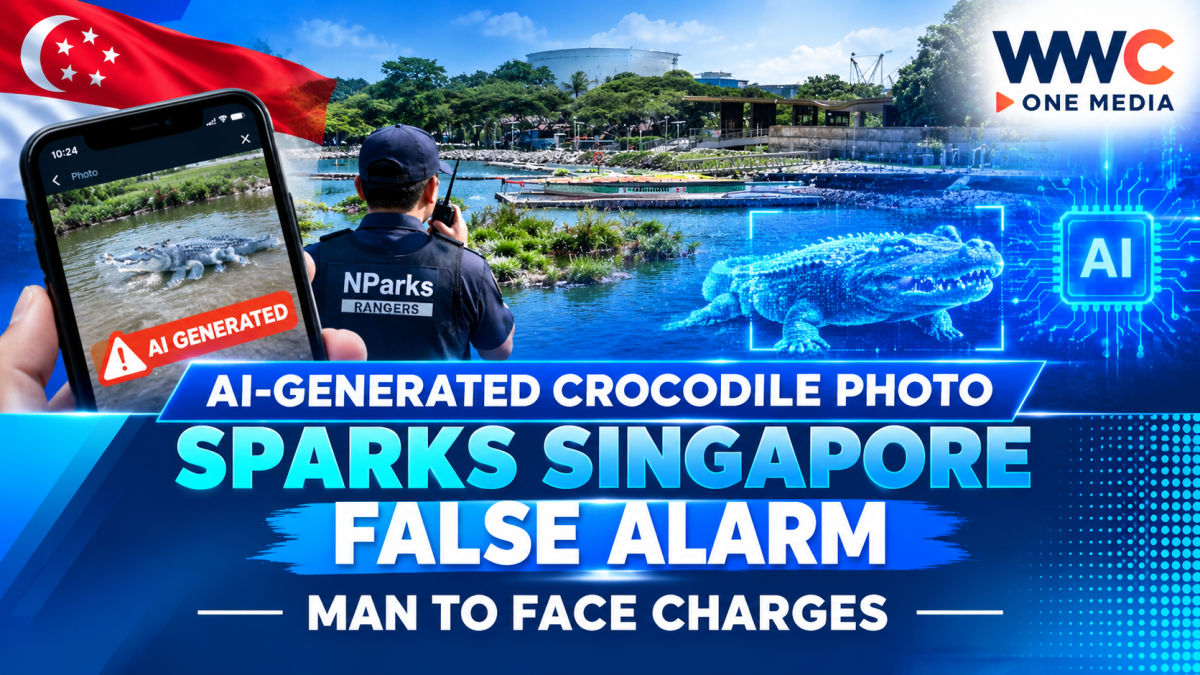
A fake crocodile photo generated with artificial intelligence triggered a real-world search operation at Singapore’s Pandan Reservoir, temporarily shutting down water activities and prompting authorities to investigate the supposed sighting.
A 30-year-old man is set to be charged on September 29 over the incident, after police said he allegedly created the AI-generated image and sent it to a colleague.
The incident began on August 20, when Singapore’s national water agency PUB received a report of a crocodile allegedly spotted at Pandan Reservoir. The report came with a photograph appearing to show the animal.
Authorities responded by suspending water activities at the reservoir for two days. PUB and the National Parks Board (NParks) also carried out search-and-capture operations while signs were placed around the area warning the public to exercise caution.
The following day, PUB said it had filed a police report after verifying that the photograph was fake. Search operations were stopped, and water activities resumed on August 22.
According to police, preliminary investigations found that the man had used AI to generate the fake crocodile image before sending it to his colleague. Police also said he subsequently deleted the image and the related application in an attempt to conceal his actions.
The man faces charges of communicating a false message and obstructing the course of justice.
If convicted of communicating a false message, he could face up to three years in jail, a fine of up to S$10,000, or both. A conviction for obstructing the course of justice can carry a sentence of up to seven years in prison, a fine, or both, according to police.
Singapore police warned that false information can do more than create public concern. Such reports can also result in government agencies deploying personnel and resources unnecessarily.
Authorities urged the public not to circulate false or manipulated information and specifically warned against submitting AI-generated or digitally altered images as genuine information to police or other government agencies.
The case highlights a growing challenge as AI-generated images become increasingly convincing: a fake image can be created in seconds, but verifying its authenticity can trigger a much larger response.
WWC ONE MEDIA G,A