Philippine businesses covered by the Bureau of Internal Revenue’s electronic invoicing rules have until December 31, 2026, to comply with the requirement to issue electronic invoices. The BIR launched its enhanced Electronic Invoicing and Sales Reporting System on October 27, giving taxpayers a government platform as the deadline approaches.
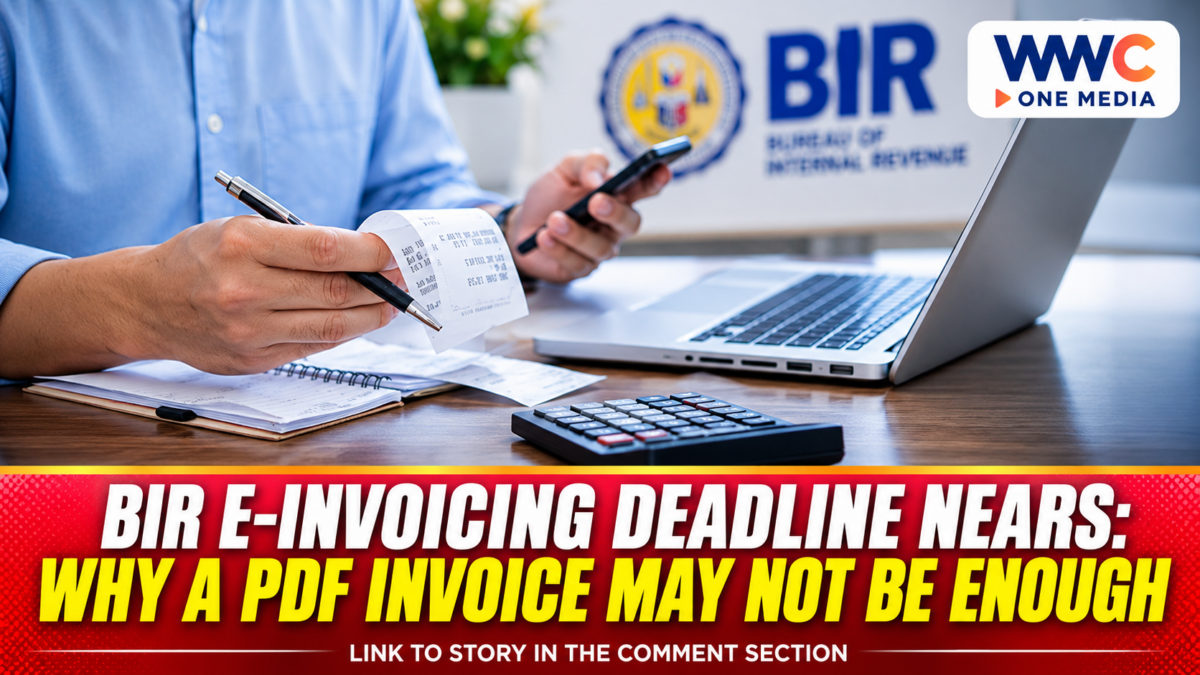
The transition is more than a switch from printed receipts to digital files. Under Revenue Memorandum Circular No. 98-2026, an electronic invoice must be generated through a compliant accounting or invoicing system, transmitted digitally to the buyer and structured so its data can be extracted and processed for the BIR. A document simply created in Word or Excel does not qualify.
The rules matter because the deadline covers specific taxpayer groups, not every business in exactly the same way. Companies must identify whether they fall within the mandatory categories, check their systems and secure the required authority before issuing electronic invoices.
BIR e-invoicing: Who must comply by December 31?
The BIR’s Revenue Memorandum Circular No. 98-2026 identifies the taxpayers covered by the electronic invoicing requirement.
These include businesses engaged in e-commerce or internet transactions classified as small, medium or large taxpayers; taxpayers under the Large Taxpayers Service; businesses classified as large taxpayers under the Ease of Paying Taxes framework; and taxpayers using a Computerized Accounting System, or CAS, or a Computerized Books of Accounts system with electronic invoicing and other invoicing software.
The circular also allows the Commissioner of Internal Revenue to require other taxpayers to comply.
Micro taxpayers are exempt from the December 31 mandatory electronic invoicing deadline under the circular. Businesses outside the mandatory categories may voluntarily adopt electronic invoicing, subject to the applicable BIR requirements.
This means that business owners should not assume that the rules apply only to large corporations. An online seller classified as a small or medium taxpayer, for example, may fall within the covered group. The classification and the nature of the business activity both matter.
For companies with several registered branches, the circular states that compliance applies to the taxpayer as a whole, including the head office and its branches. Businesses therefore need to review their invoicing arrangements across locations rather than treating each outlet as an unrelated operation.
A digital receipt is not automatically an electronic invoice
One of the most important distinctions in the new rules concerns the format and capabilities of the invoice.
The BIR requires an electronic invoice to be generated by duly registered, approved or accredited accounting or invoicing software in a structured electronic format. It must also be transmitted digitally to the buyer, purchaser or client through channels such as email, online viewing, a QR code, mobile applications or web-based platforms.
The invoice data must also be capable of electronic extraction, processing and transmission to the BIR for electronic sales reporting purposes.
This is why a PDF file sent to a customer does not automatically satisfy the definition. The underlying system must meet the required technical conditions. The same applies to invoices manually prepared using Microsoft Word, Microsoft Excel, Google Docs or Google Sheets: the circular expressly says these are not valid electronic invoices for tax compliance purposes.
Businesses using existing computerized systems should also examine their actual capabilities. Printing an invoice generated by a point-of-sale or accounting system does not make it an electronic invoice if the system cannot electronically issue and transmit the invoice to the buyer and handle the required sales data.
The distinction is significant for companies that have already invested in accounting software. Having a digital system is not the same as having one that meets the BIR’s electronic invoicing standards.
The Permit to Issue comes before electronic invoicing
The compliance process also involves a formal approval step.
Under RMC No. 98-2026, covered taxpayers must secure a Permit to Issue Electronic Invoice, or PTI, from the BIR before generating or issuing electronic invoices. The application is filed with the Revenue District Office or Large Taxpayer Office where the taxpayer is registered.
The BIR is given 20 working days from receipt of complete documents to evaluate the application and determine compliance. Once approved, the permit identifies the authorised software or system and its corresponding coverage.
This requirement makes preparation important. Businesses need to identify the system they intend to use, establish whether it meets the technical rules and prepare the required application documents. A late application with incomplete requirements could create additional pressure as the deadline approaches.
The circular also requires covered taxpayers to obtain EIS Certification within six months from the issuance of their PTI. Failure to secure the certification is a ground for revocation of the permit.
For businesses with multiple branches or different invoicing systems, the approval details also matter. The circular sets out how permits identify the head office, branches and authorised software arrangements.
BIR has launched the enhanced EIS, but businesses still have choices
The BIR officially launched the enhanced Electronic Invoicing and Sales Reporting System on October 27, 2026, at its National Office. The agency described the platform as a way for taxpayers to issue electronic receipts and invoices.
The system is part of the bureau’s wider digitalisation programme. WWC ONE MEDIA previously examined the BIR’s broader tax modernisation agenda, which includes efforts to improve digital services and tax administration.
The circular does not require every covered business to use one single commercial provider. Taxpayers may use an in-house solution, commercially acquired electronic invoicing software or the services of an Electronic Invoicing Service Provider.
The BIR has also extended the deadline for applications from entities seeking accreditation as Electronic Invoicing Service Providers to December 1, 2026. That date applies to service-provider accreditation applications, not to the December 31 compliance deadline imposed on covered taxpayers.
The distinction is important for businesses choosing their technology. A company may use an in-house or commercial solution rather than relying on an external service provider, provided the system satisfies the BIR’s applicable requirements and the taxpayer obtains the necessary permit and certification.
Electronic invoicing and electronic sales reporting are separate obligations
The wording of the BIR circular also addresses a possible source of confusion: issuing an electronic invoice and complying with electronic sales reporting are separate obligations.
Under the circular, covered taxpayers must issue electronic invoices by December 31, 2026. However, electronic sales reporting under Section 237-A of the Tax Code will be required only after the BIR issues the implementing policies, guidelines and procedures for that purpose.
The circular also says the Permit to Transmit requirement will apply only after notification or a directive from the Commissioner of Internal Revenue for compliance with electronic sales reporting.
This distinction should prevent businesses from treating every technical requirement as if it has the same deadline. The immediate year-end requirement is the issuance of compliant electronic invoices, together with the necessary permit and system arrangements.
The wider shift is part of a more data-driven tax administration system. WWC ONE MEDIA has previously examined the BIR’s work with the International Monetary Fund on compliance-risk management, as well as its development of an AI tax assistant with Ayala. These are separate initiatives, but they reflect the growing role of digital information in tax administration.
What happens next
With December 31 approaching, covered businesses need to establish whether they are within the mandatory categories, assess their existing invoicing systems and complete the BIR permit process.
The practical questions are whether the chosen software can generate structured electronic invoices, transmit them to customers, support the required data extraction and meet the BIR’s technical standards. Companies should also consider how the system will operate across branches and what procedures will be followed during internet, power or system interruptions.
The BIR circular allows a duly authorised manual invoice to be used when technical problems or other specified circumstances prevent electronic issuance. However, the business must still document the transaction, and the manual invoice must be replaced by a corresponding electronic invoice after the system is restored.
The deadline is therefore not simply about installing software. It requires a working process, formal authorisation and the ability to maintain reliable transaction records.
For businesses, the central test is whether their invoicing system is compliant in actual operation—not merely whether they can send customers a digital copy of a receipt.
Frequently asked questions
When is the BIR e-invoicing deadline in the Philippines?
Covered taxpayers must comply with the electronic invoice issuance requirements on or before December 31, 2026.
Which businesses are required to issue electronic invoices?
The covered groups include certain small, medium and large e-commerce taxpayers, taxpayers under the Large Taxpayers Service, large taxpayers under the Ease of Paying Taxes framework and taxpayers using specified computerized accounting or invoicing systems. Other taxpayers may also be required by the Commissioner.
Are micro taxpayers required to comply by December 31, 2026?
No. Micro taxpayers are exempt from the mandatory electronic invoicing deadline under RMC No. 98-2026.
Is a PDF invoice or Excel invoice enough?
No. The invoice must be generated through a compliant system in a structured electronic format, transmitted digitally to the buyer and capable of having its data extracted and processed for BIR reporting. Manually prepared Word and Excel invoices do not qualify.
Do businesses need a BIR permit before issuing electronic invoices?
Yes. Covered taxpayers must secure a Permit to Issue Electronic Invoice before generating or issuing electronic invoices. They must also obtain EIS Certification within six months from the issuance of the permit.